
SupremeCourt – Supreme Court to Examine Appeals in Bhojshala Complex Dispute
SupremeCourt –The Supreme Court has agreed to consider a series of appeals challenging the Madhya Pradesh High Court’s verdict on the Bhojshala complex in Dhar, bringing the long-running dispute back before the country’s highest court.
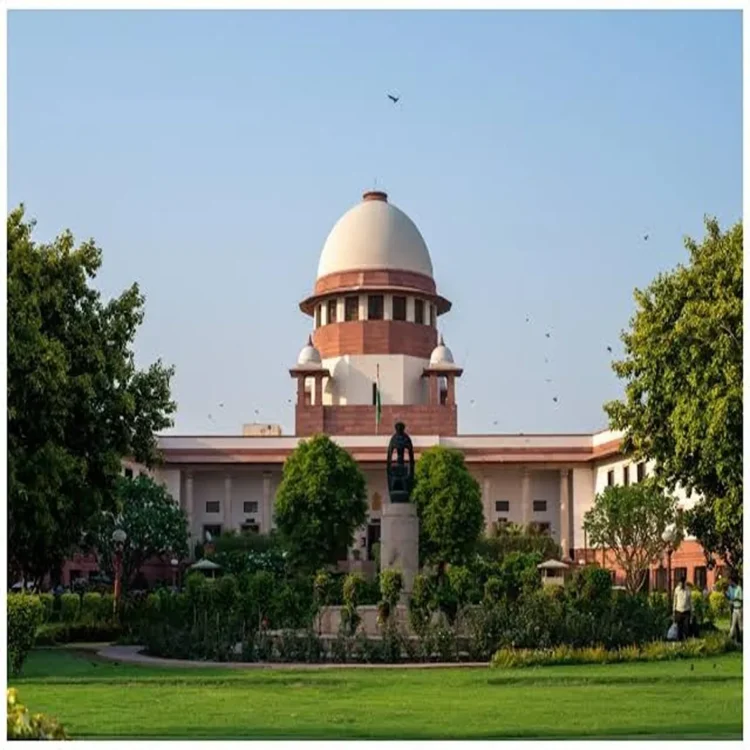
The Supreme Court on Monday agreed to hear petitions filed against the Madhya Pradesh High Court’s decision that declared the disputed Bhojshala complex in Dhar district to be a temple dedicated to Goddess Saraswati. A Bench headed by Chief Justice Surya Kant, along with Justices Joymalya Bagchi and V. Mohan, took note of submissions made by senior advocate Huzefa Ahmadi and advocate Nizam Pasha, who appeared on behalf of the Muslim appellants and requested an early hearing of the matter.
Supreme Court Seeks Procedural Compliance
During the proceedings, the Chief Justice instructed the petitioners to remove procedural defects in their appeals before listing them for hearing. The Bench assured the parties that once the required formalities are completed, the matter will be placed before an appropriate Bench for detailed consideration.
The appeals have been filed by members of the Muslim community who are challenging the High Court’s ruling delivered on May 15 concerning the Bhojshala-Kamal Maula Mosque complex, a protected archaeological monument that has remained at the center of a longstanding religious and legal dispute.
High Court Declared Religious Character of the Site
In its judgment, the Madhya Pradesh High Court held that the religious character of the disputed complex is that of Bhojshala, a temple dedicated to Goddess Saraswati, also referred to as Vagdevi. The division Bench comprising Justices Vijay Kumar Shukla and Alok Awasthi stated that its findings were based on archaeological records, historical documents and scientific evidence presented before the court.
The High Court also ruled that the site would continue to remain a protected monument under the relevant heritage protection law while directing the Archaeological Survey of India (ASI) to exercise full supervisory authority over its preservation, conservation and regulation of religious access.
Earlier ASI Arrangement Set Aside
A significant part of the High Court’s decision was the cancellation of an Archaeological Survey of India order issued in April 2003. That arrangement had permitted Hindu devotees to perform worship on Tuesdays while allowing Muslims to offer Friday prayers at the complex.
The court further observed that the Union Government and the ASI should determine the future administration and management of the Bhojshala complex, including matters connected with its preservation and historical significance as a center associated with Sanskrit learning.
Observations on Mosque Land and Idol Representation
While deciding the dispute, the High Court also stated that the Madhya Pradesh government may consider allocating suitable land elsewhere in Dhar district for the construction and administration of a mosque, subject to legal provisions. The court said such a step could help safeguard the religious rights of the Muslim community.
Additionally, the judgment noted that the Central Government may examine representations seeking the return of the idol of Goddess Saraswati, which petitioners claim is currently housed in a museum in London, and consider its reinstallation within the complex in accordance with law.
Historical Findings and Appeals Before Supreme Court
According to the High Court, archaeological reports and historical records indicate that the structure originally functioned as a Hindu temple and a center for Sanskrit education established during the reign of Raja Bhoj in the 11th century. The court referred to ASI reports and historical inscriptions while concluding that the monument predates later claims relating to the mosque.
The High Court also criticized the ASI for what it described as lapses in protecting and managing the monument over the years, saying the agency had failed to adequately discharge its statutory responsibilities.
Following the High Court verdict, the Muslim side approached the Supreme Court seeking its intervention. Hindu parties have already filed caveats before the apex court, requesting that no order be passed in the matter without first hearing their submissions. The Supreme Court is now expected to hear the appeals after procedural objections in the petitions are addressed.