
Urban Infrastructure – Gurugram’s Monsoon Troubles Highlight Longstanding Gaps in City Planning
Urban Infrastructure –The first spell of this year’s monsoon has once again revealed the persistent civic challenges facing Gurugram, with widespread waterlogging disrupting daily life across the city. Flooded roads, submerged underpasses, stalled traffic, and stranded commuters became familiar scenes as heavy rain tested the city’s infrastructure. Residential neighbourhoods also witnessed water accumulation, while many office-goers spent long hours navigating severely congested roads.
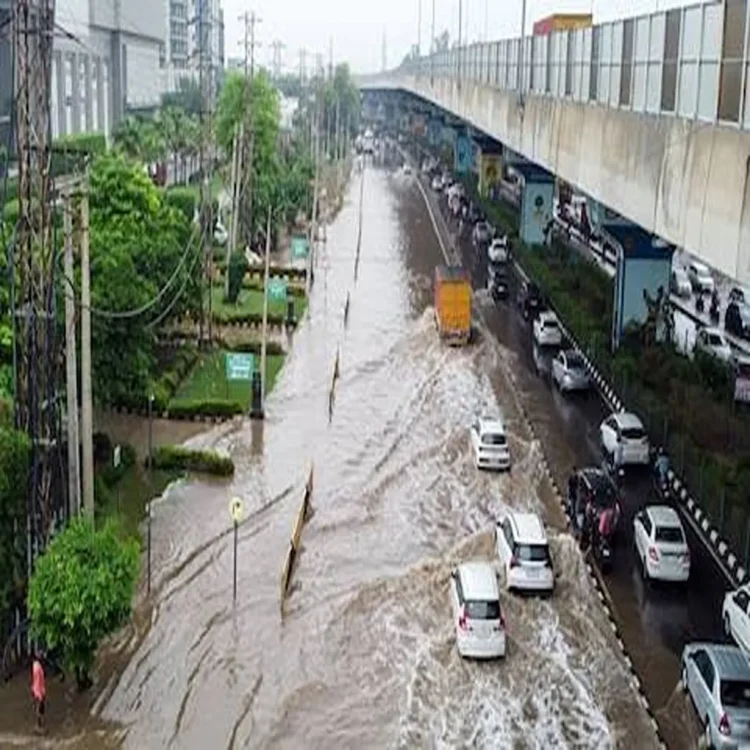
Monsoon Exposes Recurring Civic Challenges
Despite the rainfall, air quality remained at an unsatisfactory level, suggesting that the showers were insufficient to significantly improve pollution levels while still being intense enough to overwhelm drainage systems. Similar situations have become an annual occurrence, raising fresh concerns about the city’s preparedness for seasonal weather. Although neighbouring urban areas also experienced disruptions, Gurugram continues to attract greater attention because of its reputation as one of India’s most expensive real estate markets.
Growth Outpaces Essential Infrastructure
Over the years, substantial investments have been announced to improve roads, drainage networks and civic facilities. However, each monsoon season raises questions about the effectiveness of these projects. While the city’s official name changed from Gurgaon to Gurugram to reflect its historical roots, recurring infrastructure shortcomings continue to overshadow that transition.
The situation has revived a broader debate about whether the city’s civic development has kept pace with its economic success. Gurugram is widely recognised as a major corporate and business destination, yet repeated disruptions during heavy rainfall highlight the gap between rapid urban expansion and public infrastructure.
Rise of the Millennium City
Gurugram earned its identity as the “Millennium City” during the late 1990s and early 2000s, when multinational companies established large offices outside Delhi. With greater land availability, comparatively flexible development policies and faster project approvals, the region witnessed an extraordinary construction boom.
Large stretches of agricultural land were transformed into business districts, luxury housing projects, shopping centres and technology parks within a relatively short period. This rapid transformation projected an image of a modern economic hub, attracting businesses, professionals and investors from across the country. However, public infrastructure did not expand at the same pace as commercial and residential development.
Fragmented Development Creates Long-Term Problems
Unlike cities where governments first establish roads, drainage, sewage networks and public transport before allowing large-scale construction, Gurugram developed through multiple private projects that often progressed independently. Residential complexes, commercial zones and gated communities expanded rapidly, but the supporting civic systems remained uneven and insufficient.
The effects become especially visible during the monsoon. Inadequate drainage capacity, shrinking natural water channels and the disappearance of wetlands have increased the risk of flooding across several parts of the city. Damaged roads and delayed maintenance further worsen commuting conditions during periods of heavy rainfall.
Real Estate Demand Remains Strong
Interestingly, these civic shortcomings have not significantly reduced demand for property in Gurugram. The city’s strong employment opportunities, corporate presence and economic contribution continue to attract buyers and investors. Many residential developments promote premium amenities such as clubhouses, rooftop facilities and lifestyle services, while broader civic concerns outside gated communities often receive less attention.
Future Planning Becomes Increasingly Important
Urban experts have repeatedly pointed to the need for integrated planning as climate patterns become more unpredictable. Rising traffic congestion, seasonal water shortages, increasing rainfall intensity and dependence on private vehicles are adding pressure to an already strained urban system.
The recurring disruption caused by monsoon rains highlights the importance of long-term investment in drainage, transport, land use planning and public services. As Gurugram continues to expand, strengthening coordinated urban governance may prove essential to ensuring that economic growth is matched by reliable civic infrastructure capable of supporting residents throughout the year