
WaterAgreement – Rajasthan and Haryana Seal Historic Pact to Boost Long-Term Water Security
WaterAgreement – After nearly three decades of discussions, Rajasthan and Haryana have formally signed a landmark agreement to facilitate the supply of Yamuna river water, marking a significant breakthrough in inter-state cooperation. The agreement, signed in New Delhi on Monday, clears the path for a major water infrastructure project valued at Rs 34,102 crore, which is expected to improve water availability across several regions of Rajasthan and support long-term development.
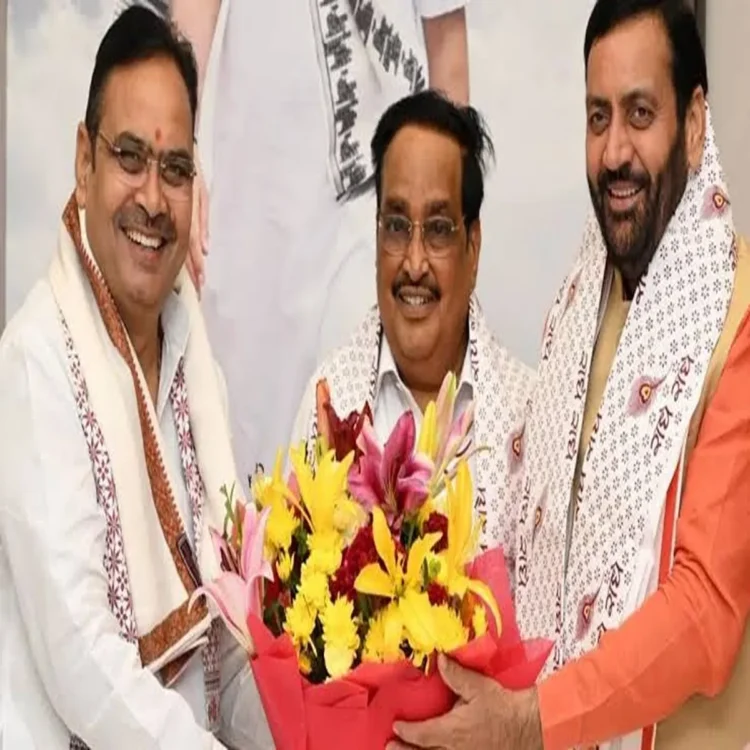
Agreement Signed in Presence of Senior Leaders
The agreement was finalized during a meeting attended by Union Home and Cooperation Minister Amit Shah, Union Jal Shakti Minister C. R. Patil, Rajasthan Chief Minister Bhajan Lal Sharma, Haryana Chief Minister Nayab Singh Saini, along with senior officials representing the Central government and both state administrations. The signing concludes a dispute that had remained unresolved for almost 30 years.
Rajasthan CM Calls the Pact a Major Milestone
Speaking after the signing ceremony, Chief Minister Bhajan Lal Sharma described the agreement as an important achievement for the state and said it reflects the growing spirit of cooperation between governments. He stated that ensuring water security remains an essential part of Prime Minister Narendra Modi’s long-term vision for national development under the Viksit Bharat 2047 initiative.
According to Sharma, the agreement demonstrates how coordinated efforts between the Centre and states can resolve long-pending challenges while creating opportunities for sustainable growth. He also said that water should be viewed not only as a natural resource but as a foundation for economic progress, agriculture and the well-being of future generations.
Centre’s Role Praised in Resolving the Dispute
The Rajasthan Chief Minister acknowledged the role played by Union Home Minister Amit Shah in helping both states reach a consensus. He said Shah’s continuous engagement encouraged constructive dialogue and helped remove obstacles that had delayed the agreement for decades.
Sharma also appreciated Union Jal Shakti Minister C. R. Patil for supporting the project by facilitating the required technical assessments and administrative approvals, allowing the proposal to move toward implementation.
Massive Water Pipeline Project Planned
As part of the agreement, Rajasthan will receive its allocated 577 million cubic metres (MCM) of Yamuna water from the Hathnikund Barrage in Haryana. The water will be transported to the Hansiawas Reservoir in Rajasthan’s Churu district through an underground pipeline network stretching approximately 295.5 kilometres.
The infrastructure plan includes three large-diameter pipelines measuring 3.6 metres each, supported by inspection roads, artificial reservoirs and a modern digital system designed to monitor and manage water distribution efficiently. The project also includes arrangements to provide drinking water at ten designated locations within Haryana.
Project Execution to Be Managed by Dedicated Agency
Officials said the Detailed Project Report (DPR) has already been uploaded to the Central Water Commission’s e-PAMS portal. Haryana has also granted preliminary approval for the proposed alignment of the pipeline, allowing the project to move into its next stage.
To oversee implementation, operation and long-term maintenance, a dedicated Special Purpose Vehicle named the Rajasthan Haryana Yamuna Water Project-SPV (RHYW-SPV) will be established. The agency will coordinate execution of the project while ensuring efficient management of the extensive infrastructure.
Expected Benefits for Water-Stressed Regions
The Rajasthan government believes the project will significantly strengthen water availability across the state, particularly in drought-prone areas such as the Shekhawati region. Apart from improving access to drinking water, officials expect the initiative to support agricultural productivity, encourage industrial investment and contribute to broader socio-economic development.
With the decades-old agreement now in place, both Rajasthan and Haryana have taken a major step toward collaborative water resource management, setting the stage for one of the country’s largest inter-state water infrastructure projects.