
Stock Market – Indian Benchmark Indices End Lower as Oil Prices Weigh on Investor Sentiment
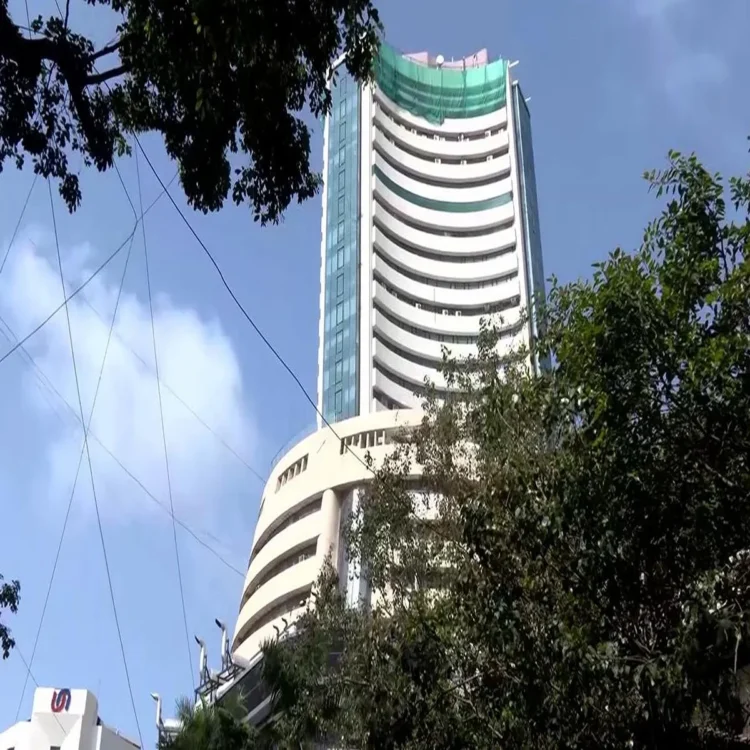
Stock Market – Indian stock markets closed in negative territory on Monday as investors turned cautious amid a sharp rise in international crude oil prices and growing geopolitical uncertainty in West Asia. The weakness in global sentiment, coupled with concerns about inflation and future monetary policy, led to broad-based selling in key benchmark indices. The BSE Sensex declined 442.93 points, or 0.57 percent, to finish at 77,708.52, while the NSE Nifty 50 slipped 95.80 points, or 0.39 percent, ending the session at 24,238.50.
Rising Oil Prices Raise Fresh Economic Concerns
Market participants closely tracked the continued increase in crude oil prices after the breakdown of the June ceasefire between the United States and Iran. Analysts believe the renewed tensions have pushed energy prices higher, creating fresh concerns over inflation and increasing pressure on economies worldwide.
Vinod Nair, Head of Research at Geojit Investments Limited, said crude oil prices have climbed close to the USD 90 per barrel mark following the escalation in regional tensions. According to him, the uncertainty is likely to remain for some time as military activity expands and travel advisories issued for US citizens continue. He added that these developments may influence monetary policy decisions during the second half of 2026, with many central banks expected to maintain a tighter policy stance to control inflation.
Interest Rate Outlook Remains in Focus
Nair also pointed out that rising inflationary pressures and higher global bond yields have increased expectations that interest rates could remain elevated or even move higher in the coming months. Despite these concerns, he noted that the first round of corporate earnings for the June quarter has delivered encouraging results.
He highlighted that public sector banks, oil and gas companies, and metal firms have reported healthy performances so far. Mid-cap and small-cap stocks have also shown resilience, supported by stronger earnings expectations and improving business activity. This has continued to create selective investment opportunities even as external risks remain significant.
Sector Performance Shows Mixed Trend
Trading across sectors reflected a mixed picture during Monday’s session. Private banking stocks witnessed the steepest decline, with the Nifty Private Bank index falling 2.27 percent. The Nifty Auto index slipped 0.26 percent, while information technology shares also ended lower with the Nifty IT index losing 0.22 percent.
On the positive side, several defensive and commodity-linked sectors outperformed. The Nifty PSU Bank index emerged as the strongest performer, advancing 2.78 percent. The Nifty Pharma index gained 1.40 percent, followed by Nifty Media, which rose 1.09 percent. Metal stocks also attracted buying interest, with the Nifty Metal index climbing 0.86 percent, while the Nifty FMCG index added 0.65 percent.
Currency and Commodity Markets Remain Under Watch
At the time of reporting, Brent crude oil was trading around USD 88.19 per barrel, remaining close to recent highs. Meanwhile, the Indian rupee traded at Rs 96.45 against the US dollar, reflecting continued pressure from elevated crude prices and global market uncertainty.
Riyank Arora, Associate Vice President – HNI & Derivatives at Hedged.in, said Monday’s decline appeared to be a phase of profit booking after the market’s recent gains rather than a reversal of the broader trend. He stated that as long as the benchmark indices remain above important support levels, the overall market outlook continues to stay constructive. He also advised investors to follow a disciplined approach, focusing on buying quality stocks during market declines while carefully managing risk.
Asian Markets Also Finish Lower
Weakness was not limited to Indian equities, as several major Asian markets also ended the day with losses. Japan’s Nikkei 225 recorded a decline of more than 4 percent, while South Korea’s KOSPI dropped 4.67 percent. Singapore’s Straits Times Index also closed lower, and Taiwan’s weighted index finished the session in negative territory, highlighting the cautious mood across regional financial markets.