
Politics – PM Modi Highlights Bengal Development During Hooghly River Visit
Politics – Prime Minister Narendra Modi spent Friday morning along the banks of the Hooghly River in Kolkata, where he reflected on the cultural importance of the Ganga and reiterated his government’s commitment to the growth and well-being of West Bengal.
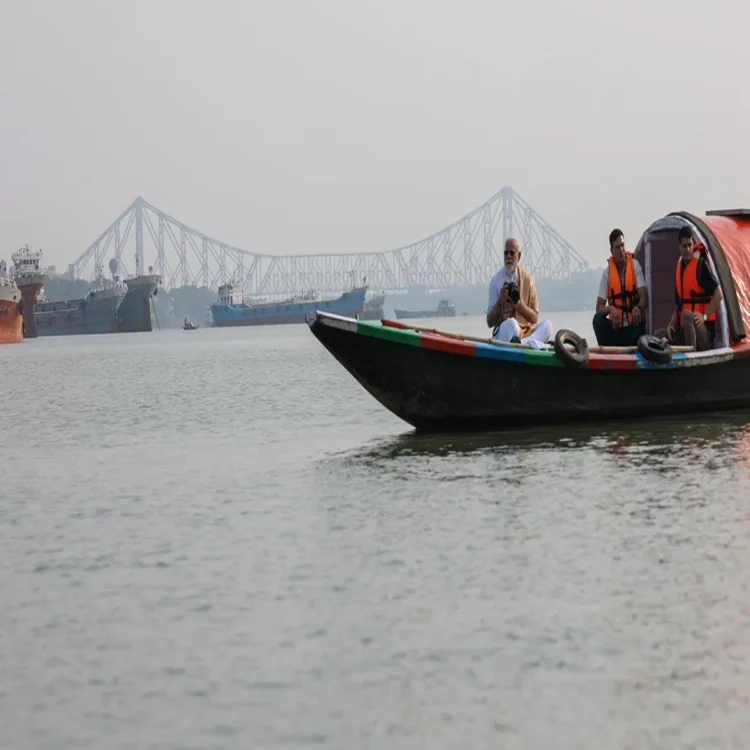
A Quiet Moment Along the Hooghly
During his visit, the Prime Minister took a brief boat ride and paused to spend some time by the riverside. He described the moment as an opportunity to express gratitude to the Ganga, which holds deep spiritual and cultural meaning for the people of Bengal. Sharing his thoughts on social media, he noted that the river is not just a waterway but an enduring symbol woven into the identity and traditions of the region.
He emphasized that for many Bengalis, the Ganga represents more than faith—it reflects a civilizational legacy that continues to shape everyday life. According to him, the river’s presence is felt in both cultural practices and collective memory.
Interaction with Local Residents
While at the riverbank, the Prime Minister also met several local residents, including boat operators and people out for their morning walks. He acknowledged the dedication and resilience of the boatmen, describing their work ethic as admirable. These informal interactions, he said, offered a glimpse into the daily lives of ordinary citizens and reinforced the importance of grassroots engagement.
Observers noted that such moments often form part of broader outreach efforts, allowing leaders to connect directly with communities outside formal settings.
Reaffirming Commitment to State Development
The visit was not only symbolic but also carried a political message. The Prime Minister reiterated his administration’s focus on accelerating development initiatives in West Bengal. He stressed the importance of ensuring economic progress and improving living standards for residents across the state.
According to his remarks, the government remains committed to supporting infrastructure, employment opportunities, and long-term growth in the region. The message comes at a time when development remains a central theme in political discourse within the state.
High Voter Turnout in First Phase of Polls
The visit coincided with ongoing Assembly elections in West Bengal. The first phase of voting, held a day earlier across multiple districts in both northern and southern parts of the state, recorded a turnout of 92.59 percent. This figure marks the highest participation ever seen in the opening phase of elections in the state, reflecting strong voter engagement.
Election officials described the polling process as largely smooth, with voters turning out in large numbers from early morning hours.
Intensifying Political Contest
The elections have evolved into a closely watched contest between the ruling All India Trinamool Congress and the Bharatiya Janata Party. The political atmosphere has grown increasingly intense, with both sides actively campaigning and addressing key issues, including voter list revisions and governance.
As part of his campaign efforts, the Prime Minister addressed a rally in Krishnanagar, located in Nadia district. During his speech, he made remarks targeting the ruling party, referencing a recent campaign moment involving local street food. His comments drew attention as he suggested that political reactions had been disproportionate to a simple gesture.
Upcoming Phases and Counting Schedule
With the first phase complete, attention now turns to the next round of polling, scheduled for April 29. Authorities have indicated that preparations are in place to ensure smooth conduct across all constituencies.
The counting of votes is set to take place on May 4, when the final outcome of the elections will be determined. Political observers expect the results to have significant implications for the state’s future direction as well as the broader national landscape.