
Parliament – Women’s Reservation Bill Faces Numbers Challenge in Lok Sabha
Parliament – The government-led National Democratic Alliance (NDA) is facing a significant arithmetic challenge in Parliament as it seeks to pass the proposed women’s reservation legislation, which requires a special majority to become law.
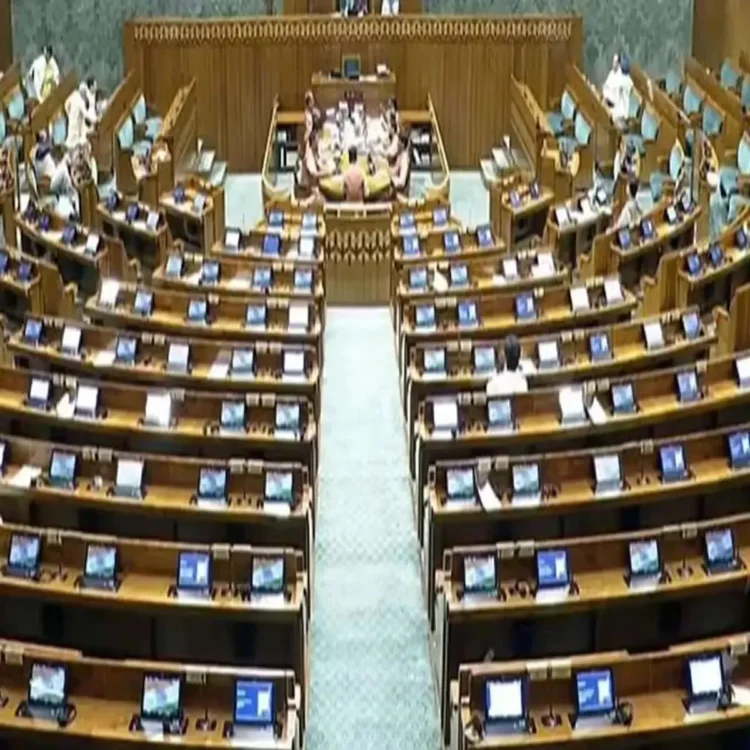
Numbers Fall Short of Required Majority
The NDA currently commands the support of 293 members in the Lok Sabha, representing just over half of the total strength. However, for a constitutional amendment bill to pass, at least two-thirds of the members present and voting must support it. This means a minimum of 360 votes would be required if all 540 members participate in the voting process.
The opposition bloc, with 233 members, holds a substantial presence. Additionally, there are 14 MPs who are either independents or belong to smaller parties such as the YSR Congress Party, AIMIM, and Shiromani Akali Dal, none of whom have clearly committed their support to the bill.
Opposition’s Role Becomes Crucial
For the legislation to clear the Lok Sabha, the ruling alliance would need either direct backing from opposition parties or strategic abstentions. Political observers note that if at least two key opposition groups—such as the Samajwadi Party, Trinamool Congress, or DMK—choose not to participate in the vote, it could ease the path for the NDA.
The Congress, which holds 98 seats, also remains a decisive factor. Without some level of cooperation or abstention from opposition benches, the numbers remain tight for the government.
Upper House Arithmetic Adds Another Layer
Even if the bill manages to pass in the Lok Sabha, it must also secure approval in the Rajya Sabha. In the upper house, the NDA holds 141 seats, accounting for around 58 percent of the total strength. The opposition has 83 members, while approximately 20 MPs from other parties and independents could play a key role.
To pass the constitutional amendment in the Rajya Sabha, the NDA would need the support of at least 163 members present and voting. This makes the stance of regional parties and unaffiliated MPs critical in determining the outcome.
Internal Concerns Within the Ruling Alliance
Sources indicate that some members within the ruling alliance have privately acknowledged the difficulty in securing the required numbers. The challenge lies not only in gathering support but also in ensuring full attendance and participation during voting.
Passing a constitutional amendment requires more than a simple majority. It demands both a majority of the total membership and a two-thirds majority of those present and voting, making it one of the most stringent legislative requirements.
Prime Minister Appeals for Broad Support
During the debate in the Lok Sabha, Prime Minister Narendra Modi urged all parties to support the bill, framing it as a step forward for gender representation. He stated that while the government would accept responsibility if the opposition opposed the bill, it would also be willing to share full credit if there was unanimous support.
Bills Introduced After Heated Debate
The Constitution (131st Amendment) Bill, which seeks to modify provisions related to women’s reservation, was introduced following an intense discussion lasting around 40 minutes. The opposition demanded a division of votes before its introduction.
The bill was eventually introduced with 251 members voting in favor and 185 against. Alongside it, two additional bills—the Delimitation Bill and the Union Territories Laws (Amendment) Bill—were also presented. These aim to operationalize the proposed reservation framework in Union territories such as Delhi, Puducherry, and Jammu and Kashmir.
What Lies Ahead
If the bill fails to pass in the Lok Sabha, it will not proceed to the Rajya Sabha, effectively halting the legislative process. With numbers finely balanced and political negotiations ongoing, the coming days are expected to be crucial for the future of the proposed reform.