
WaterCrisis – Delhi CM’s Evaporation Remark Sparks Fresh Political Row
WaterCrisis – A statement made by Delhi Chief Minister Rekha Gupta regarding the ongoing water shortage in the national capital has triggered widespread criticism from opposition leaders and social media users. Her comments, made during a public event while discussing the city’s water challenges amid extreme summer temperatures, quickly gained attention online and reignited debate over the government’s handling of civic issues.
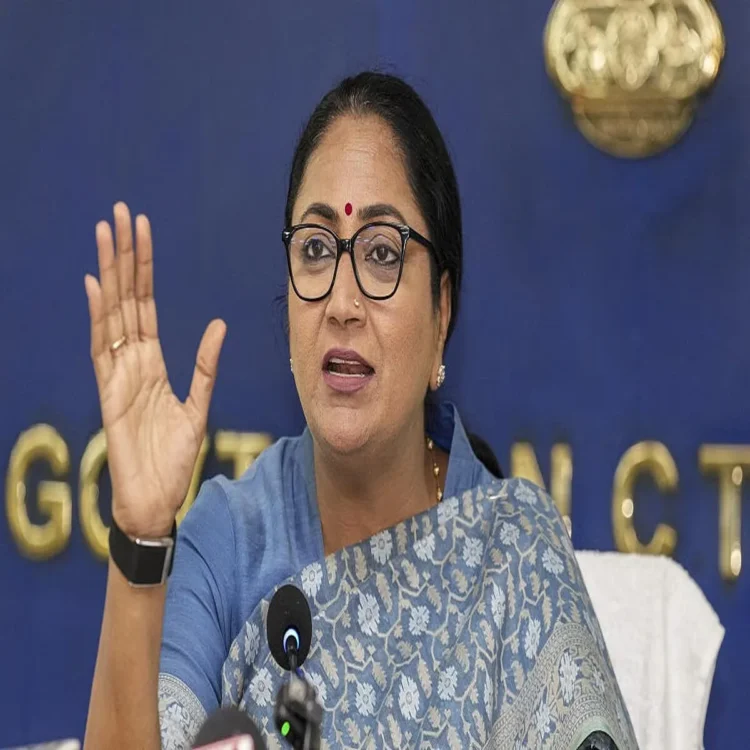
Comment on Water Shortage Draws Attention
Speaking about the water supply situation, Gupta linked the shortage to the severe heatwave affecting the city. She stated that high temperatures had not only increased public inconvenience but had also contributed to water loss through evaporation, further intensifying the supply problem. Shortly after the event, a video of her remarks circulated widely across social media platforms, drawing mixed reactions.
Opposition Targets the Chief Minister
The remarks provided fresh ammunition to opposition parties. The Aam Aadmi Party (AAP) shared the video on its social media account and responded with sarcasm, pointing to waterlogged roads in parts of Delhi. The party questioned whether the standing water on city streets would also disappear through evaporation, using the incident to criticize the administration’s management of urban infrastructure.
Congress spokesperson Supriya Shrinate also reacted strongly, expressing concern over the statement and arguing that such comments were troubling at a time when residents were facing genuine water-related difficulties. Her criticism added to the growing political debate surrounding the issue.
BJP Leaders Rally Behind Gupta
Amid the criticism, Bharatiya Janata Party leaders defended the Chief Minister. Party spokesperson Shehzad Poonawalla accused opposition parties of deliberately misrepresenting Gupta’s remarks to create controversy. He argued that political rivals were attempting to build a misleading narrative rather than focusing on the broader challenges posed by extreme weather conditions and resource management.
Earlier Remarks Had Also Triggered Debate
This is not the first occasion on which Gupta’s public statements have attracted scrutiny. In a previous event focused on technological solutions and innovation, she made comments about certain tree species commonly found across Delhi, including safeda, babool and kikar. Her observation that these trees do not provide oxygen sparked criticism from environmental observers and political opponents.
AAP leader and former Delhi minister Saurabh Bhardwaj later shared a clip of those remarks on social media, questioning the Chief Minister’s understanding of environmental issues and pollution control measures.
Past Pollution Comments Resurface
The latest controversy has also revived discussion about Gupta’s earlier comments on air pollution management. During a leadership summit held last year, she was asked about air quality monitoring and the role of pollution hotspots in the city.
In response, Gupta explained that efforts should be concentrated in areas experiencing the highest pollution levels and suggested measures such as water spraying and soil improvement. Her remarks drew attention because she appeared to compare Air Quality Index measurements with temperature readings, leading to confusion and criticism from opponents.
Kejriwal Had Questioned the Explanation
Following those comments, AAP national convener Arvind Kejriwal publicly challenged the Chief Minister’s explanation. He alleged that pollution-control measures were being focused around monitoring locations in a way that could influence reported readings rather than address pollution across the city. Kejriwal also questioned the comparison between AQI monitoring and temperature measurement, arguing that the explanation lacked scientific basis.
Political Debate Continues
The latest exchange highlights the increasingly sharp political competition in Delhi, where issues such as water availability, pollution control and civic infrastructure remain central public concerns. As summer temperatures continue to place pressure on resources, discussions surrounding government policy and public communication are likely to remain under close scrutiny from both political parties and residents.