
Parliament – Key Education and MSME Bills Set for Crucial Debate in Both Houses
Parliament –Parliament is expected to witness an important legislative agenda on Tuesday as both Houses prepare to discuss and advance several significant Bills. The Lok Sabha is scheduled to consider and vote on the Public Examinations (Prevention of Unfair Means) Amendment Bill, 2026, while the Rajya Sabha will take up the introduction of the Micro, Small and Medium Enterprises Development (Amendment) Bill, 2026. The Upper House is also expected to deliberate on and pass the Prevention of Insults to National Honour (Amendment) Bill, 2026.
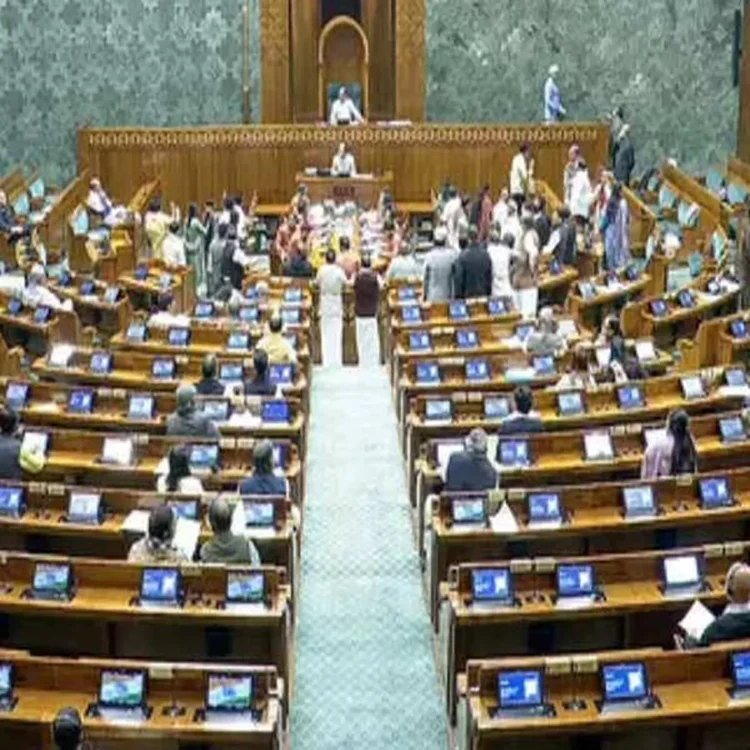
Lok Sabha to Focus on Examination Reform Bill
As per the official business agenda for July 28, Union Minister of State for Personnel, Public Grievances and Pensions Jitendra Singh will seek the Lok Sabha’s approval to consider and pass the Public Examinations (Prevention of Unfair Means) Amendment Bill, 2026. The proposed legislation seeks changes to the Public Examinations (Prevention of Unfair Means) Act, 2024, with the objective of strengthening safeguards against paper leaks and other forms of examination malpractice. It is the only Bill listed for discussion and passage in the Lower House during the day’s legislative business.
Routine Parliamentary Business Before Legislative Debate
Proceedings in the Lok Sabha will begin with the Question Hour, after which several Union Ministers, including Jitin Prasada, Ram Nath Thakur, Nityanand Rai, SP Singh Baghel, BL Verma, Bandi Sanjay Kumar and Pabitra Margherita, are scheduled to table official papers before the House.
Members Kanimozhi Karunanidhi and Rao Rajendra Singh will present two reports prepared by the Parliamentary Standing Committee on Consumer Affairs, Food and Public Distribution regarding the Demands for Grants for the financial year 2026-27. Additionally, Jitin Prasada and Ram Nath Thakur are expected to make statements outlining the government’s action on recommendations submitted by parliamentary committees.
AIIMS Election Motion Also Listed
The Lower House agenda also includes a proposal by Union Health Minister Jagat Prakash Nadda for the election of one Lok Sabha representative to the All India Institute of Medical Sciences (AIIMS), Guwahati. The motion is scheduled before discussions under Rule 377.
Rajya Sabha to Introduce MSME Amendment Bill
In the Rajya Sabha, Union Minister Jitan Ram Manjhi is set to introduce the Micro, Small and Medium Enterprises Development (Amendment) Bill, 2026. The proposed legislation aims to make further amendments to the MSME Development Act, 2006, which governs the framework for the country’s micro, small and medium enterprises sector.
The Upper House will also continue its discussion on the Prevention of Insults to National Honour (Amendment) Bill, 2026. Union Home Minister Amit Shah is expected to move the legislation for its final approval during the sitting.
Reports and Ministerial Statements Scheduled
Apart from legislative work, the Rajya Sabha agenda includes the laying of official papers by Ministers Pankaj Chaudhary, Anupriya Patel, BL Verma, Shantanu Thakur and Harsh Malhotra. The House will also receive reports from the Department-related Parliamentary Standing Committee on Consumer Affairs, Food and Public Distribution, along with ministerial statements detailing progress made on implementing committee recommendations.
Bill Introduced Amid Opposition Protest
The Public Examinations (Prevention of Unfair Means) Amendment Bill, 2026 was introduced in the Lok Sabha on Monday by Jitendra Singh during a noisy session marked by protests from Opposition members. The House was later adjourned until 2 pm amid persistent sloganeering.
The Opposition continued its demonstrations over allegations of police action against students who participated in the July 20 “Sansad Chalo” protest. Despite the disruptions, the government proceeded with introducing the amendment Bill, which is intended to reinforce the legal framework for preventing examination fraud and ensuring greater integrity in public recruitment and academic examinations.