
Parliament – Opposition Pushes for Special Debates on Defection Law and Cauvery Issue
Parliament – The Opposition has sought urgent discussions in both Houses of Parliament on key national matters, including changes to the Anti-Defection Law and concerns over the Centre’s response in the Cauvery river water dispute.
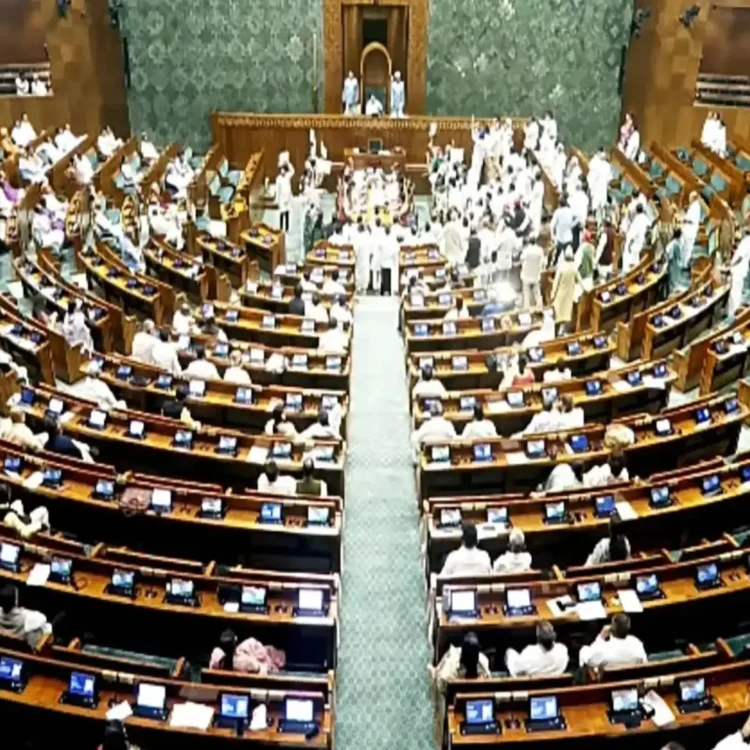
The Opposition stepped up its efforts ahead of Wednesday’s parliamentary proceedings by submitting separate notices in the Lok Sabha and Rajya Sabha, requesting that scheduled business be suspended to allow immediate debates on issues they described as being of significant public importance. The demands focus on electoral reforms, political accountability, and the long-standing Cauvery water-sharing dispute.
Call for Fresh Anti-Defection Framework
In the Lok Sabha, Congress MP Manish Tewari submitted an adjournment motion seeking a detailed discussion on introducing a new Anti-Defection Law. According to his notice, the existing legislation requires substantial revision to deal with large-scale political defections that, in his view, are driven by opportunism rather than ideological differences.
Tewari proposed that the House suspend Question Hour, Zero Hour, and all other listed business for the day to examine the framework of a revised law. He argued that any new legislation should discourage mass political defections while protecting the right of elected representatives to express genuine disagreement and independent views both inside Parliament and in state legislatures.
The Congress leader maintained that strengthening the legal framework would improve political stability without restricting legitimate democratic debate or constructive dissent.
Rajya Sabha Notice on Cauvery Water Dispute
In the Rajya Sabha, MP Praveen Chakravarthy submitted a motion under Rule 267 seeking suspension of the day’s proceedings to discuss what he described as an inconsistent response from the Ministry of Jal Shakti concerning the Cauvery water dispute.
His notice referred to the Ministry’s written reply to an Unstarred Question answered on July 27, 2026. Chakravarthy questioned the government’s interpretation regarding Karnataka’s requirement to obtain consent from downstream states before undertaking construction projects across the Cauvery river.
He also highlighted the recent direction issued by the Cauvery Water Regulation Committee, which instructed Karnataka to release 4 TMC ft of water immediately, stating that the matter deserved urgent parliamentary attention because of its impact on interstate relations and water management.
Alleged Difference Between Government Positions
According to Chakravarthy, the Ministry’s latest written response differs from the stand presented in Parliament in 2021 by the then Union Jal Shakti Minister Gajendra Singh Shekhawat. He pointed out that the earlier statement had indicated that Karnataka’s permission to prepare the Detailed Project Report for the Mekedatu project was conditional and required the consent of lower riparian states under the Inter-State River Water Disputes Act.
The recent reply, however, stated that the Supreme Court’s judgment delivered on February 16, 2018, does not require Karnataka to obtain approval from Tamil Nadu, Kerala, or the Union Territory of Puducherry before constructing structures across the Cauvery river.
Chakravarthy argued that the difference between the two official positions raises important questions that should be clarified by the government before Parliament.
Concerns Over Farmers and Water Security
The Rajya Sabha member said the reported change in the Centre’s position could have significant implications for farmers in Tamil Nadu, particularly those dependent on irrigation in the Cauvery delta region. He maintained that any uncertainty over water-sharing arrangements directly affects agricultural livelihoods and regional water security.
Emphasising the urgency of the matter, Chakravarthy urged the Upper House to take up the discussion without delay, especially at a time when the implementation of the Cauvery Water Regulation Committee’s latest directive remains under close watch.
With both Houses receiving notices on separate issues before proceedings begin, attention will now turn to whether the presiding officers allow these requests for special discussions or continue with the scheduled legislative agenda.