
LiquorBan – Farooq Abdullah Rules Out Immediate Alcohol Prohibition in J&K
LiquorBan – The discussion around a possible liquor ban in Jammu and Kashmir has gathered momentum after National Conference president and former Chief Minister Farooq Abdullah indicated that the Union Territory is unlikely to impose a complete prohibition on alcohol sales in the near future. His remarks came at a time when political parties and religious groups are demanding stricter action against liquor consumption across the region.
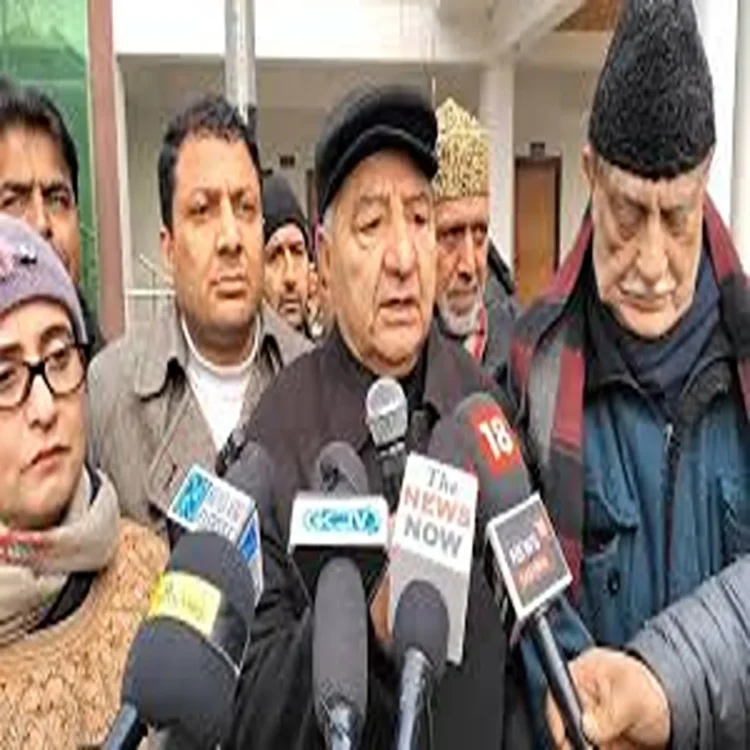
Farooq Abdullah, while speaking to reporters during a public event on Tuesday, said banning liquor would not stop people from consuming alcohol. According to him, those who wish to drink would continue to find ways to obtain it, even if sales were restricted locally. He stated that alcohol could still be brought in from outside Jammu and Kashmir if a complete ban was introduced.
Debate Over Revenue and Practical Challenges
Referring to an earlier political conversation from the late 1970s, Abdullah recalled an interaction involving his father, Sheikh Mohammad Abdullah, and former Prime Minister Morarji Desai. He said Desai had once suggested shutting liquor outlets in Kashmir due to his opposition to alcohol consumption. However, Sheikh Abdullah reportedly responded that the government would need financial support to compensate for the revenue earned through liquor sales before implementing such a move.
Farooq Abdullah maintained that if the central government agreed to offset the financial losses linked to liquor revenue, the administration could act swiftly on the matter. He added that the issue was not merely political but also connected to governance and economic realities.
Political Tensions Continue to Rise
The liquor policy has become a major political flashpoint in Jammu and Kashmir over the past few weeks. Opposition leaders, several religious figures, and even some voices within the ruling alliance have demanded a complete prohibition on the sale and purchase of alcohol.
Without directly naming the Peoples Democratic Party (PDP), Abdullah questioned why objections were not raised when liquor shops were established in different areas in previous years. He argued that those criticizing the current government should also explain their silence during earlier administrations.
The debate intensified further after Chief Minister Omar Abdullah recently defended the presence of liquor outlets in the Union Territory. He said that no individual was being forced to consume alcohol and that those visiting such shops were doing so by personal choice.
Omar Abdullah Clarifies Government Position
Following criticism from opposition parties and religious groups, Omar Abdullah later clarified the government’s stand. He explained that liquor outlets primarily cater to individuals whose religious beliefs permit alcohol consumption. He also pointed out that no previous government in Jammu and Kashmir had enforced a complete ban on liquor sales.
The Chief Minister stressed that the administration was not promoting alcohol use. According to him, the government has avoided opening new liquor shops and has attempted to ensure that existing outlets are not located in places where young people could be negatively influenced.
He further said that while Islam does not allow alcohol consumption, the administration must also consider people from different communities and backgrounds living in Jammu and Kashmir.
Opposition and Religious Leaders Demand Ban
PDP leader Iltija Mufti strongly criticized the Chief Minister’s explanation and questioned the logic behind rejecting a ban. She pointed to states such as Gujarat and Bihar, where alcohol prohibition has been implemented despite diverse populations and communities.
Mufti also accused the government of ignoring the religious sentiments of the Muslim-majority region. Her remarks added to the growing criticism from religious scholars and community leaders who have described alcohol as harmful to society and future generations.
Jammu and Kashmir’s Grand Mufti has also publicly called for a complete prohibition on liquor sales and purchases, describing alcohol as a source of social problems and moral decline. Several religious organizations have echoed similar concerns, urging the administration to reconsider its policy.
As the controversy continues, the liquor debate is expected to remain a sensitive political and social issue in Jammu and Kashmir in the coming weeks.