
Heritage – ASI Plans Modern Cultural Hub at Delhi’s Historic Purana Qila
Heritage – Purana Qila, one of Delhi’s oldest historical landmarks, is set to undergo a major transformation as the Archaeological Survey of India (ASI) prepares an ambitious plan to turn the centuries-old fort into a vibrant cultural destination.
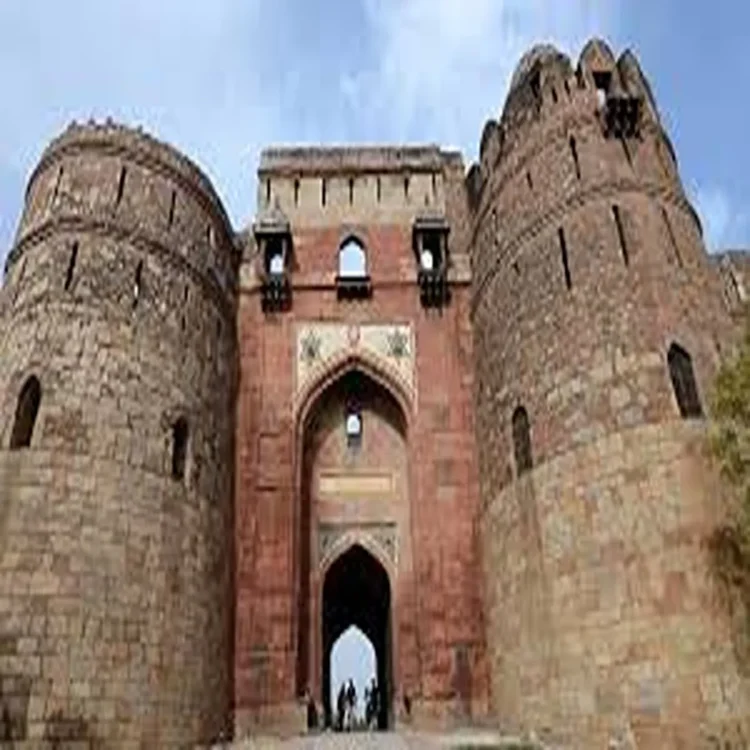
The proposed redevelopment project aims to connect the existing Gallery of Confiscated and Retrieved Antiquities and the site museum with a newly designed Interpretation Centre. Officials believe the initiative will help visitors better understand the fort’s long and layered history while improving the overall museum experience.
New Interpretation Centre Planned
According to project documents reviewed recently, the ASI intends to create an interactive cultural space featuring digital exhibitions, immersive visual presentations, and carefully curated thematic galleries. The Interpretation Centre will use modern display technologies such as touchscreen systems, multilingual information panels, and projection-based storytelling methods.
Unused and partially vacant chambers located along the western fortification wall between the current museum sections are expected to be redesigned as part of the expansion. The new layout is being planned to improve visitor movement and create a smoother historical narrative throughout the complex.
The galleries will trace Delhi’s historical journey beginning from the era associated with the legendary city of Indraprastha and continuing through several important dynasties up to the medieval period.
Antiquities Gallery Remains Key Attraction
Purana Qila already houses the country’s first Gallery of Confiscated and Retrieved Antiquities, which was inaugurated in 2019. The gallery currently displays 198 artefacts recovered or seized from various illegal trafficking operations and historical investigations.
These objects belong to the Central Antiquity Collection (CAC), which is also situated inside the Purana Qila complex. The collection stores artefacts discovered during ASI excavations and explorations conducted across the country.
In addition, the CAC preserves items recovered with assistance from several agencies, including the Ministry of External Affairs, police departments, customs officials, the Central Bureau of Investigation (CBI), and the Directorate of Revenue Intelligence. Officials stated that the collection contains nearly 2.70 lakh antiquities, including around 4,500 confiscated objects.
Excavation Sites to Open for Public Viewing
Archaeologists consider Purana Qila one of Delhi’s most historically significant locations due to evidence of continuous habitation spanning nearly 2,500 years. Excavations at the site have uncovered remains linked to multiple historical periods, including the pre-Mauryan, Mauryan, Shunga, Kushana, Gupta, Rajput, Sultanate, and Mughal eras.
Several rounds of excavations have taken place inside the fort over the decades. The most recent digging operations were conducted between 2020 and 2023, while earlier excavation phases were carried out during 2013-14 and 2017-18. Well-known archaeologist Professor B.B. Lal had also led important excavation work at the fort during the 1950s and again between 1969 and 1973.
As part of the latest development proposal, ASI plans to open selected excavation trenches for scholars and visitors. These areas include discoveries such as a Mauryan-period terracotta ring well and remains of residential structures dating back to the Kushan and Gupta periods.
Visitor Facilities to Be Upgraded
Despite its archaeological importance and major monuments such as the Qila-i-Kuhna Mosque, Sher Mandal, and the massive fort walls, officials believe Purana Qila has not attracted as many visitors as several other heritage sites in Delhi.
Current annual visitor numbers are estimated at over 2.6 lakh, but authorities aim to significantly improve public engagement through better presentation and upgraded infrastructure.
To encourage tourism, the project also proposes protective canopies, elevated viewing decks, and dedicated walkways around sensitive excavation zones. These additions are expected to allow visitors to observe ancient structures closely while ensuring long-term preservation of the remains.