
Governance – Centre Suggests Expanded Democratic Powers Framework for Ladakh
Governance – The union government has proposed a new administrative framework aimed at increasing legislative, financial, and executive powers in Ladakh while keeping the region within the existing Union Territory structure. The proposal emerged after a high-level discussion between civil society groups and senior officials in New Delhi.
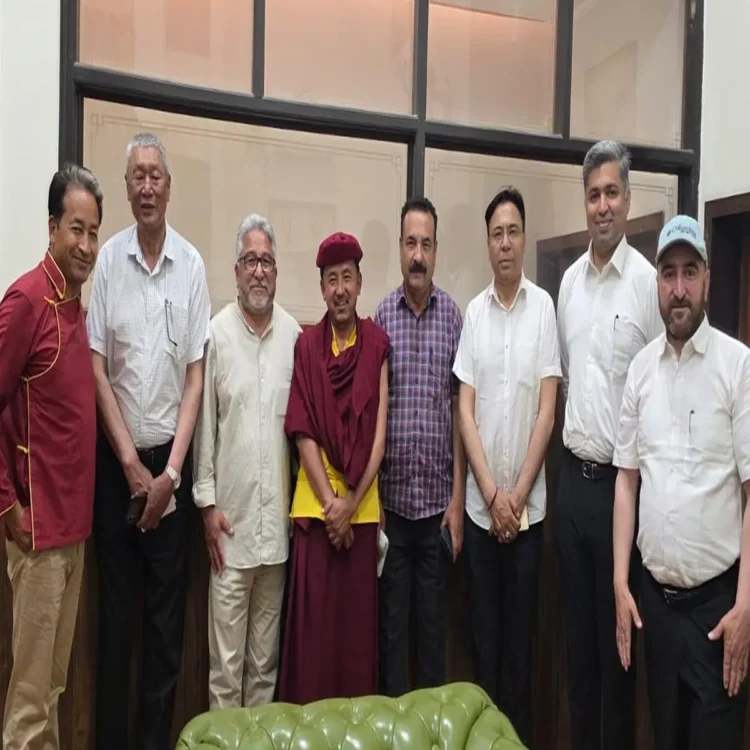
Key Meeting Between Civil Society Groups and Centre
Representatives of the Leh Apex Body (LAB) and the Kargil Democratic Alliance (KDA) held detailed talks with officials from the Ministry of Home Affairs on Friday regarding Ladakh’s future governance structure. Ladakh Chief Secretary Ashish Kundra was also present during the meeting, which focused on political representation, constitutional protections and administrative reforms in the Union Territory.
Environmental activist and reform advocate Sonam Wangchuk participated in the discussions as well. Wangchuk had recently been released from detention under the National Security Act earlier this year.
In-Principle Understanding Reached
Following the discussions, the LAB and KDA issued a joint statement saying both sides had arrived at an “in-principle understanding” concerning democratic restoration and constitutional safeguards for Ladakh. According to the statement, the proposed protections would follow the framework of Articles 371A, 371F and 371G, which currently provide special provisions to Nagaland, Sikkim and Mizoram.
The civil society groups described the talks as constructive and said the discussions reflected a shared effort to create a more inclusive and stable governance model for the region.
Proposal Includes Elected Legislative Structure
Under the proposed arrangement, significant legislative, executive and financial powers would be transferred to elected representatives through a Union Territory-level legislative body. The framework also reportedly suggests bringing senior bureaucratic officials, including the Chief Secretary, under the authority of an elected administration led by a proposed Chief Minister.
Delegation members stated that the move could strengthen democratic participation in Ladakh and improve administrative accountability within the Union Territory.
Statehood Linked to Financial Capacity
During the meeting, Union government officials reportedly explained that immediate full statehood for Ladakh remains difficult due to the region’s limited revenue-generating capacity. Officials pointed out that Ladakh currently depends heavily on central financial support for administrative expenses, salaries and public services.
However, the proposed model is expected to gradually prepare the region for possible statehood in the future if revenue benchmarks and economic requirements are achieved over time.
Long-Standing Demands of Ladakh Groups
Since 2020, both the LAB and KDA have consistently demanded constitutional safeguards, restoration of democratic governance and inclusion of Ladakh under the Sixth Schedule of the Constitution. Community leaders have argued that such protections are necessary to preserve Ladakh’s tribal identity, cultural traditions and local governance rights.
The latest talks are being viewed as a significant step after several earlier rounds of discussions failed to produce a clear outcome.
Background of Previous Tensions
Ladakh became a separate Union Territory in 2019 after the abrogation of Article 370 and the division of the former state of Jammu and Kashmir into two Union Territories.
Negotiations between Ladakhi groups and the Centre had stalled after violent unrest in Leh on September 24, 2025. During the clashes, four people, including a veteran of the Kargil War, lost their lives in police firing. The incident had intensified political tensions and delayed further dialogue.
The previous meeting of the high-powered committee led by Minister of State for Home Affairs Nityanand Rai had also ended without a final agreement.
New Administrative Developments in Ladakh
The recent discussions gained momentum after Ladakh Lieutenant Governor Vinai Saxena approved the notification of five new districts in April. The newly notified districts include Nubra, Sham, Changthang, Zanskar and Drass.
The plan for the additional districts had originally been announced by Union Home Minister Amit Shah in August 2024 as part of broader administrative restructuring efforts in the region.
The LAB and KDA stated that they will continue consultations with the Ministry of Home Affairs and constitutional experts to finalise the legal and operational details of the proposed governance framework.