
FuelPrices – Kharge Criticises Centre as Petrol Nears Rs 100 Mark
FuelPrices – Congress president Mallikarjun Kharge intensified his criticism of the Central government on Saturday after fresh increases in petrol and diesel prices pushed fuel rates closer to record highs in several cities across the country.
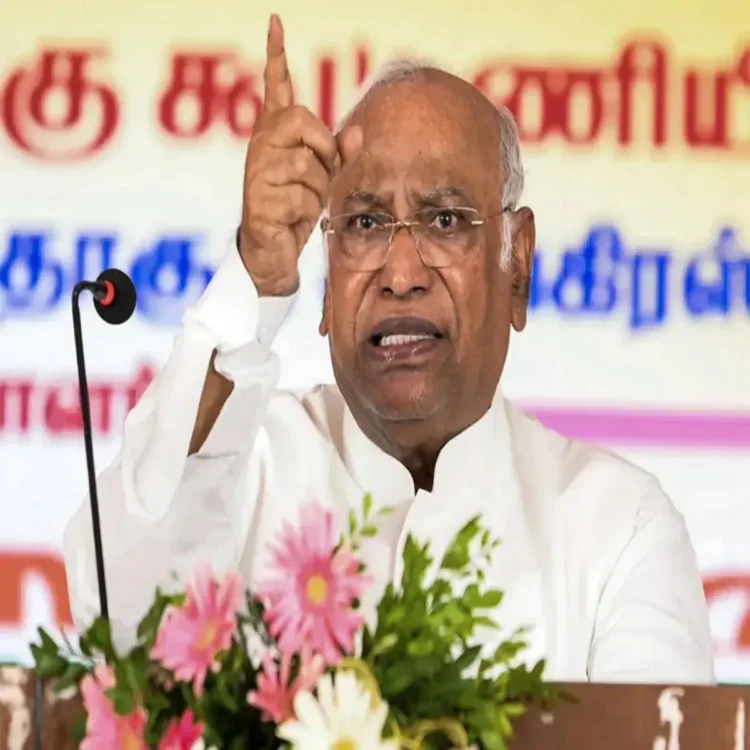
The senior Congress leader accused the BJP-led administration of placing an increasing financial burden on ordinary citizens through repeated fuel price revisions. In a post shared on social media platform X, Kharge alleged that the government continued to benefit from high fuel taxes while consumers struggled with mounting daily expenses.
Congress Questions Government’s Fuel Pricing Strategy
Kharge claimed that the Centre had failed to provide relief to citizens during periods when international crude oil prices had declined. According to him, instead of reducing fuel prices at the time, the government retained the gains through taxes and levies.
He further argued that the latest revisions reflected what he described as a gradual financial strain on the public. Referring to the repeated increases in petrol and diesel rates over recent days, he alleged that the ruling party was collecting significant revenue from fuel taxation while offering little assistance to consumers affected by inflation.
The Congress chief also renewed political criticism directed at Prime Minister Narendra Modi, questioning the government’s handling of the economic situation and alleging shortcomings in leadership during periods of rising living costs.
International Examples Highlighted in Political Attack
While responding to the government’s earlier comparisons between Indian fuel prices and rates in other countries, Kharge cited several nations that introduced relief measures during periods of global energy instability linked to tensions in West Asia.
He pointed to Italy’s decision to reduce fuel-related taxes, Australia’s move to lower excise duties, and Germany’s tax reductions aimed at easing pressure on consumers. Kharge also mentioned relief measures announced in the United Kingdom, including financial support for households and tax reductions on fuel and electricity.
In addition, he referred to Ireland’s energy relief package, which reportedly helped reduce petrol and diesel prices for consumers through government intervention.
According to Kharge, these international steps demonstrated how governments in other countries attempted to shield citizens from rising fuel costs during global disruptions.
Petrol and Diesel Prices Continue Upward Trend
The criticism from the Congress president came shortly after another increase in retail fuel prices on Saturday. Petrol and diesel prices were raised by as much as 91 paise per litre, continuing a pattern of revisions introduced over the past several days.
In Delhi, the price of petrol climbed from Rs 98.64 to Rs 99.51 per litre, while diesel rates increased from Rs 91.58 to Rs 92.49 per litre.
This marks the third fuel price increase since May 15, when state-run oil marketing companies began adjusting rates following higher global energy costs linked to geopolitical tensions in West Asia.
Earlier this month, petrol and diesel prices were increased by Rs 3 per litre, followed by another rise of around 90 paise on May 19. Combined with the latest revision, fuel prices have increased by nearly Rs 5 per litre within a span of less than 10 days.
Rising Fuel Costs Add to Inflation Concerns
The latest hike has renewed debate over the broader impact of fuel prices on household budgets and transportation costs. Economists often note that sustained increases in petrol and diesel prices can influence inflation by raising logistics and supply chain expenses across multiple sectors.
Opposition parties have continued to demand tax reductions on fuel to provide immediate relief to consumers, while the government has maintained that international market conditions and global crude oil movements significantly affect domestic pricing decisions.
With fuel rates nearing the Rs 100 mark again in the national capital, political exchanges over taxation, inflation and economic management are expected to intensify further in the coming days