
GlobalCrisis – India Convenes All-Party Meet Over West Asia Conflict
GlobalCrisis – The Government of India has scheduled an all-party meeting on Wednesday to deliberate on the escalating situation in West Asia, reflecting growing concern over its wide-ranging implications. The move comes amid heightened geopolitical tensions and increasing disruptions affecting global trade and energy supplies.
Prime Minister Highlights Serious Concerns in Parliament
Earlier this week, Prime Minister Narendra Modi addressed Parliament, describing the ongoing developments in West Asia as deeply concerning. He noted that the situation presents complex challenges that extend beyond economic risks, touching upon national security and humanitarian dimensions as well.
The Prime Minister emphasized that the crisis is not confined to one region but has far-reaching global consequences. He pointed out that India’s strong trade ties with countries in West Asia make the situation particularly significant for the nation’s economic stability. A substantial portion of India’s crude oil and natural gas imports originates from this region, making any disruption a matter of immediate concern.
Defence Preparedness Reviewed Amid Rising Tensions
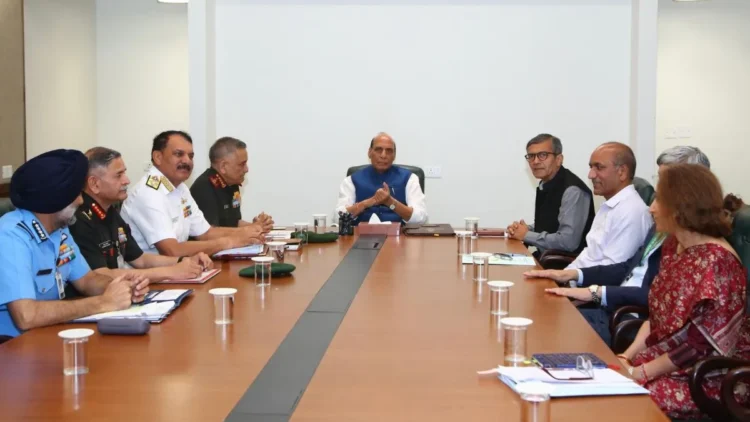
In response to the evolving scenario, Defence Minister Rajnath Singh chaired a high-level meeting on Tuesday to assess India’s defence readiness. The review focused on both global and regional security developments, ensuring that the country remains prepared for any potential impact.
Senior military leadership participated in the discussions, including Chief of Defence Staff General Anil Chauhan, Air Chief Marshal Amar Preet Singh, Army Chief General Upendra Dwivedi, and Navy Chief Admiral Dinesh K Tripathi. Officials from the Defence Research and Development Organisation were also present, underlining the importance of coordinated preparedness across multiple sectors.
Conflict Disrupts Key Trade Routes
The ongoing conflict in West Asia has now entered its fourth week, significantly affecting maritime trade routes, particularly through the Strait of Hormuz. This vital passage handles a major share of global oil shipments, and any disruption has immediate repercussions for international markets.
Shipping activity in the region has been impacted, raising concerns about supply chain interruptions and rising transportation costs. These developments are being closely monitored by Indian authorities, given their potential effect on domestic fuel prices and overall economic stability.
Escalation Triggers Regional Instability
The crisis intensified following military actions involving the United States and Israel targeting Iran. The situation further deteriorated after the reported killing of Iran’s Supreme Leader, Ayatollah Ali Khamenei, on February 28.
In response, Iran launched retaliatory strikes against assets linked to both the United States and Israel across several Gulf nations. This escalation has expanded the conflict beyond its initial scope, turning it into a broader regional confrontation.
The ongoing hostilities have contributed to instability across the region, with several countries facing heightened security challenges. The ripple effects are being felt globally, particularly in energy markets and international trade networks.
India Closely Monitoring Developments
Indian officials continue to track the situation carefully, balancing diplomatic engagement with strategic preparedness. The upcoming all-party meeting is expected to provide a platform for political consensus on how best to navigate the crisis.
With economic, security, and humanitarian concerns intertwined, India’s response is likely to focus on safeguarding national interests while contributing to broader efforts aimed at regional stability.
The government’s proactive approach signals the seriousness of the situation and underscores the importance of coordinated action in the face of rapidly changing global dynamics.