
Festival – Thousands Join Sacred Vaikasi Visakam and Fire-Walking Celebrations in Tamil Nadu
Festival – Thousands of devotees thronged the Thiruparankundram Murugan Temple in Madurai on Friday to observe Vaikasi Visakam, one of the most significant festivals dedicated to Lord Murugan. The occasion marks the deity’s birth star and holds deep spiritual importance for worshippers across Tamil Nadu. Large crowds arrived at the temple from different districts to take part in the celebrations and seek blessings.’
Special Rituals Mark the Sacred Occasion
The temple, regarded as one of the six most revered abodes of Lord Murugan, witnessed extensive religious ceremonies throughout the day. Priests conducted special pujas and abhishekams for the presiding deity, while devotees participated in traditional acts of worship. Many carried elaborately decorated kavadi structures, floral offerings, and milk pots as symbols of devotion and gratitude.
Several worshippers also observed longstanding religious vows as part of the festival. Some took part in body-piercing rituals involving cheeks and tongues, reflecting personal faith, spiritual discipline, and thanksgiving to the deity. The atmosphere remained filled with devotional chants and prayers as devotees gathered in large numbers within the temple premises.
Crowd Management Arrangements in Place
With a significant increase in footfall expected for the festival, temple administrators coordinated closely with local police and civic authorities to ensure smooth movement of devotees. Security measures, crowd-control systems, and other logistical arrangements were implemented to facilitate the orderly conduct of the celebrations and maintain safety throughout the event.
Fire-Walking Festival Draws Large Participation
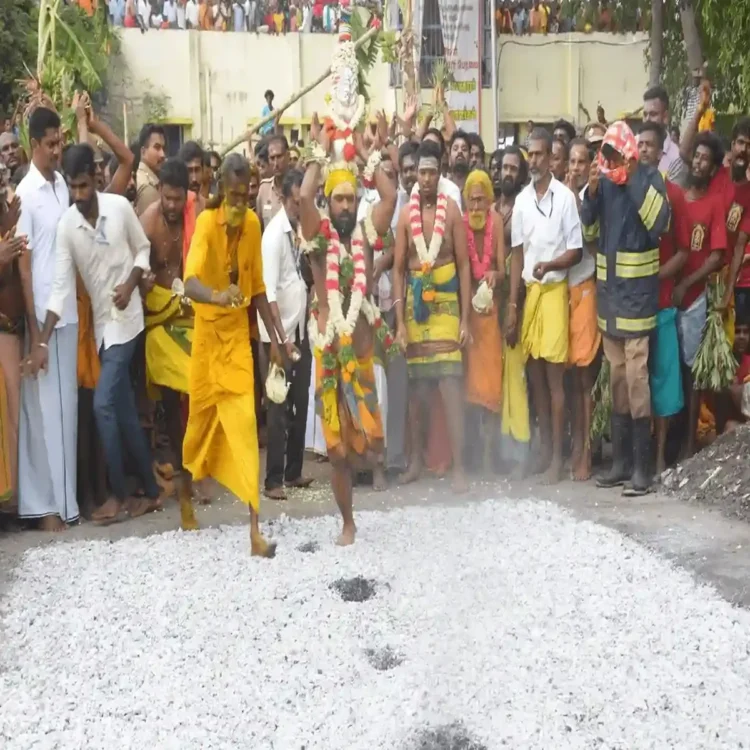
Earlier in the day, another major religious event took place at the historic Sri Kamatchi Amman Temple located in Karuvalakkarai village near Mayiladuthurai. A large number of devotees participated in the traditional Theemithi, or fire-walking festival, fulfilling vows by walking barefoot across a bed of burning embers.
The centuries-old temple, administered by the Hindu Religious and Charitable Endowments Department, serves as an important spiritual center for thousands of families in the region who regard the goddess as their family deity.
Traditional Ceremonies and Sacred Procession
The festival featured a series of religious rituals, including Maha Abhishekam, Sandalwood Alankaram, and Maha Deeparadhana. Before the fire-walking ceremony began, participating devotees received sacred protective threads during a ritual conducted along the banks of the River Cauvery.
Following the preparations, the ceremonial Sakthi Karagam procession commenced. Accompanied by traditional percussion instruments and devotional music, devotees carried the sacred offering through the village in a colorful display of faith and community participation.
Devotees Fulfil Vows Through Ancient Tradition
After reaching the temple grounds, the Sakthi Karagam was ceremonially taken across the specially prepared fire pit. Subsequently, hundreds of devotees walked across the glowing embers as part of their religious vows. The ritual, passed down through generations, remains a significant expression of devotion for many worshippers.
The celebrations continued with Maha Deeparadhana, after which the Sakthi Karagam was placed inside the sanctum. Many devotees also lit traditional Mavilakku lamps made from rice flour and offered prayers to the goddess, seeking blessings for their families and communities.
Grand Conclusion to the Festival
The festivities concluded with a ceremonial procession of the deity through village streets on a beautifully decorated Pushpa Pallakku, or flower palanquin. Fireworks illuminated the night sky as thousands of devotees gathered along the route to witness the procession and receive darshan. The event brought together people from different regions, reflecting the enduring cultural and spiritual traditions associated with Tamil Nadu’s temple festivals.