
Politics – Trump’s Expanding Presidential Authority Sparks Debate Ahead of America 250
Politics – As the United States prepares to mark 250 years since its founding, political debate over executive authority has intensified, with President Donald Trump’s leadership style becoming a central point of national discussion.
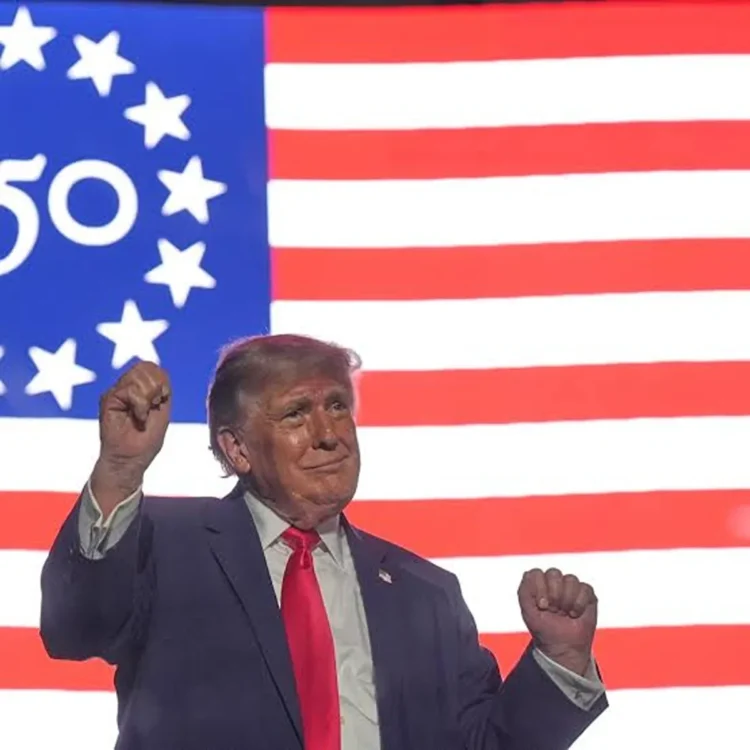
As celebrations begin for the 250th anniversary of American independence, President Donald Trump has placed himself at the center of many public events. A campaign-style gathering on the National Mall and prominent displays featuring his image across federal buildings in Washington have drawn attention from supporters and critics alike. While the administration presents these events as part of a broader patriotic celebration, opponents argue that the president’s highly visible role has overshadowed the bipartisan plans originally intended to commemorate the historic milestone.
Growing Debate Over Executive Authority
Since returning to the White House in January 2025, Trump has taken a series of actions that have fueled discussions about the scope of presidential power. His administration has appointed close political allies to senior government positions, directed the Justice Department toward investigations involving political opponents, and expanded the federal government’s involvement in several domestic issues. These decisions have prompted constitutional scholars and political observers to question whether executive authority is being stretched beyond traditional boundaries.
Trump has consistently rejected suggestions that his leadership resembles monarchical rule. On multiple occasions, he has stated publicly that he is acting within the powers granted to the presidency and according to the mandate voters provided during the election.
Historical Comparisons Return to Public Debate
Comparisons between powerful American presidents and monarchs have appeared throughout the country’s history, but some historians argue that recent developments have renewed those conversations. Princeton University historian Julian Zelizer said concerns surrounding concentrated executive power closely resemble debates that influenced America’s founding principles.
The discussion gained additional attention after the White House shared social media content referring to Trump and King Charles III as “Two Kings” during an official meeting earlier this year. Trump had also previously described himself online as “the king” while celebrating the cancellation of a New York City transportation policy, a remark that generated widespread political reaction.
Meanwhile, protest groups opposing the administration have adopted the slogan “No Kings,” arguing that excessive presidential authority threatens constitutional checks and balances established by the nation’s founders.
Courts Continue to Test Presidential Powers
Legal challenges remain one of the most significant checks on the administration’s authority. Several disputes involving executive powers have reached the US Supreme Court, where conservative justices have delivered rulings that both expanded and limited presidential authority.
A landmark 2024 decision granting broad immunity for official presidential actions significantly affected multiple legal cases involving Trump. However, the Court has also ruled against the administration in certain matters, including disputes over tariff authority and appointments to independent federal agencies, demonstrating that judicial oversight continues to shape the limits of executive power.
Legal experts remain divided over the long-term implications. Some argue that recent rulings strengthen the presidency, while others maintain that constitutional safeguards continue to prevent unchecked authority.
Financial Interests Draw Renewed Scrutiny
Questions surrounding Trump’s business activities have also remained a major focus during his second term. Financial disclosures and cryptocurrency ventures linked to the president and his family have attracted criticism from ethics experts, who argue that the overlap between private business interests and public office deserves closer examination.
The administration has defended these activities, maintaining that all financial dealings comply with existing laws. Nevertheless, watchdog groups and political opponents continue to call for stronger safeguards designed to prevent potential conflicts of interest involving future presidents.
Justice Department Decisions Face Political Criticism
Another major area of controversy involves the relationship between the White House and the Department of Justice. Critics contend that investigations involving political rivals risk undermining the department’s long-standing independence, while supporters argue that no individual should receive special treatment under the law.
Recent legal actions involving several prominent political figures have intensified partisan disagreement in Washington. Although some cases have been dismissed by courts, others remain under review, ensuring that questions about executive influence over federal law enforcement will likely remain part of the national political debate.
As the United States approaches its historic 250th anniversary in 2026, the conversation surrounding presidential authority, constitutional limits, and democratic institutions is expected to remain one of the defining political issues shaping the country’s future.