
EducationPolicy – Supreme Court Declines Immediate Relief on CBSE Language Rule
EducationPolicy – The Supreme Court on Thursday refused to grant interim relief against the implementation of the Central Board of Secondary Education’s (CBSE) three-language framework for Class 9 students, which is scheduled to take effect from the 2026-27 academic year. The court made it clear that there was no basis for issuing a temporary stay at this stage and decided to hear the matter alongside other related petitions next month.
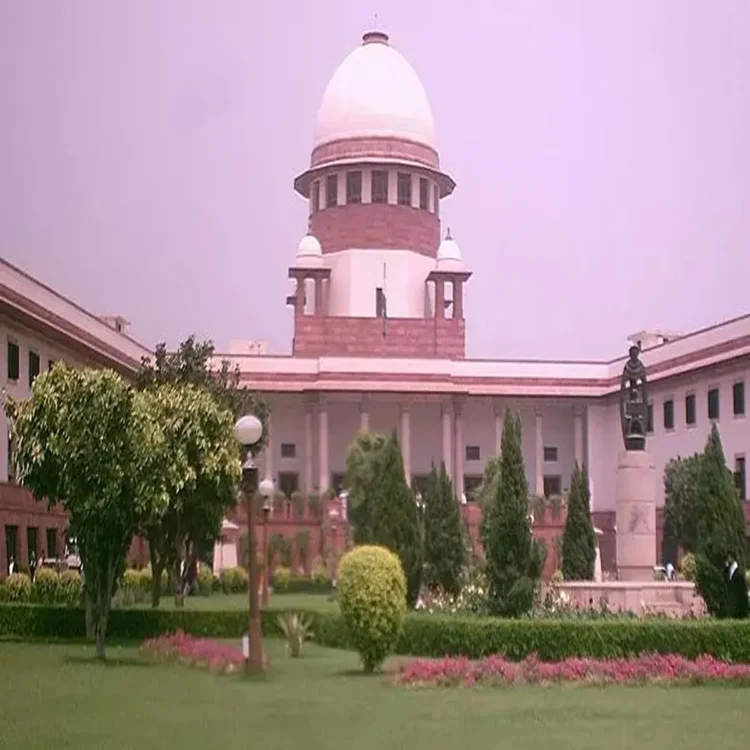
Court Refuses Temporary Suspension
A bench headed by Chief Justice Surya Kant and Justice V. Mohana considered a petition filed by the non-governmental organization Friends of People for Active Democracy. After a brief hearing, the bench stated that the issue had already been extensively argued and did not warrant any interim protection. The judges directed that the petition be linked with other pending cases concerning the same policy.
The court also fixed July 14 as the next date of hearing, when all related matters will be taken up together for detailed consideration.
Discussion During the Hearing
Representing the petitioner, counsel informed the court that the challenge was not directed at the concept of a three-language system itself but at the manner in which the policy was being implemented. During the proceedings, Chief Justice Kant made a light-hearted observation regarding the name of the organization and asked whether such a title was intended to create apprehension among either judges or the public.
The lawyer clarified that the trust had existed since 2013 and that its name was longstanding. He further pointed out that CBSE was expected to release detailed implementation guidelines by mid-June.
Earlier Notice Issued by Supreme Court
The case has been under judicial examination since May 27, when the Supreme Court agreed to review the challenge to the language policy. At that time, notices were issued to the Union government, CBSE and the National Council of Educational Research and Training (NCERT), directing them to submit comprehensive responses within two weeks.
The court had also sought information regarding the board’s preparedness to execute the policy across affiliated schools and requested a status report on logistical arrangements.
Key Features of the New Language Policy
Under a CBSE circular, students entering Class 9 from July 1, 2026, will be required to study three languages. The framework mandates that at least two of these must be native Indian languages. The initiative is part of the board’s effort to align school education with the National Education Policy (NEP) 2020 and the National Curriculum Framework for School Education (NCF-SE) 2023.
Schools will also be encouraged to supplement prescribed textbooks with regionally relevant literary material such as stories, poetry and non-fiction writings to strengthen language learning and cultural understanding.
Foreign Languages and Assessment Structure
According to the policy, students may choose a foreign language only after studying two Indian languages, either as the third language option or as an additional fourth language.
CBSE has also clarified that no separate board examination will be conducted for the third language at the Class 10 level. Instead, assessments will remain entirely school-based. Student performance in the subject will still be recorded on official certificates, but it will not determine eligibility to appear for Class 10 board examinations.
The board has indicated that sample papers and assessment guidelines for schools will be issued separately.
Support Measures for Schools
To facilitate implementation, schools have been instructed to update language offerings for Classes 6 to 9 on the OASIS portal by June 30. Textbooks covering 19 scheduled Indian languages are expected to be available before the policy comes into force.
Recognizing potential staffing challenges, CBSE has permitted schools facing shortages of language teachers to adopt temporary alternatives. These include inter-school resource sharing, virtual teaching support, engagement of retired educators and the appointment of qualified postgraduate language specialists.
The board has also assured special accommodations for children with disabilities in line with existing legal provisions. Additionally, foreign students returning to India may receive exemptions on a case-by-case basis regarding the requirement to study two Indian languages.
Broader Academic Reforms Planned
The language initiative forms part of a wider set of academic reforms announced earlier by CBSE. Beginning with the 2026-27 session, students in Class 9 will also have access to a two-level system in mathematics and science. While all candidates will take a common examination, those seeking advanced proficiency may opt for an additional higher-level paper designed to assess deeper conceptual knowledge and analytical skills.