
AI Literacy – National School Mission Introduces Structured AI Education Framework
AI Literacy –Artificial intelligence is set to become a more structured part of school education as the HUMAIN AI Literacy Mission (HAILM) has been launched to help students, teachers and school leaders build a strong understanding of the technology. The initiative, unveiled on Friday, aims to introduce an age-appropriate AI curriculum across schools in the country while supporting educators with training programmes, digital resources and classroom-ready learning materials.
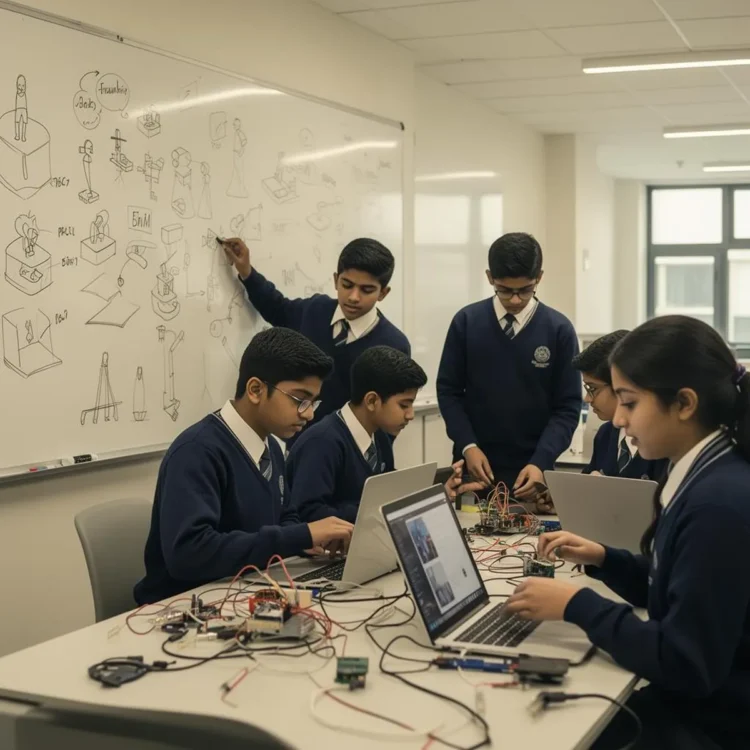
Comprehensive Learning Framework for Schools
The mission has been designed to offer a step-by-step learning pathway for different stakeholders in the education system. Under the programme, students from Classes 3 to 12 will receive AI education tailored to their age and academic level. The framework also includes specialised resources for teachers and school administrators to help them effectively integrate AI concepts into classroom learning.
Alongside the curriculum, the mission will provide live learning sessions, a dedicated learning management system, video-based lessons, interactive classroom activities and teaching material that schools can use directly. Policy guidance and educational resources have also been included to support institutions as they introduce AI education.
Focus on Responsible Use of Artificial Intelligence
Speaking at the launch event, Education Minister Ashish Sood highlighted the growing influence of artificial intelligence in modern education. He said digital technology has already become a regular part of classrooms, making it important for both students and teachers to understand how AI works and how it should be used responsibly.
According to the minister, introducing AI education at an early stage can help young learners develop the confidence and critical thinking required to engage with emerging technologies. He stressed that students should not only learn how AI functions but also understand its ethical use and the responsibilities that come with adopting such technology in everyday life.
Support for Teachers and School Leaders
A major component of the mission is professional development for educators. The programme aims to equip teachers with practical knowledge and teaching strategies so they can confidently explain AI concepts to students. School leaders will also receive guidance and policy resources to help implement the curriculum in a structured and consistent manner.
By combining teacher training with ready-to-use educational content, the initiative seeks to reduce barriers that schools may face while introducing AI-based learning. Interactive lessons and digital tools are expected to make classroom instruction more engaging and accessible for students across different age groups.
Preparing Students for a Technology-Driven Future
HAILM Chief Visionary Manit Jain said artificial intelligence is already shaping the way children learn, solve problems and make decisions in their daily lives. He noted that as AI becomes increasingly present in education and other sectors, it is essential for students to understand both the opportunities it creates and the responsibilities associated with its use.
Jain said the mission is intended to help young learners develop informed perspectives on AI while encouraging responsible digital behaviour. Through structured learning, practical activities and educator support, the programme aims to prepare students for a future in which artificial intelligence is expected to play a significant role in education, employment and everyday decision-making.
The launch of the HUMAIN AI Literacy Mission reflects a broader effort to strengthen digital education by ensuring that AI learning is introduced in a systematic, age-appropriate and responsible manner. With a combination of curriculum, teacher training and digital learning resources, the initiative seeks to help schools build AI awareness while supporting students with the knowledge needed to navigate an increasingly technology-driven world.