
Education – Jammu University Faces Protests Over Jinnah Chapter Inclusion
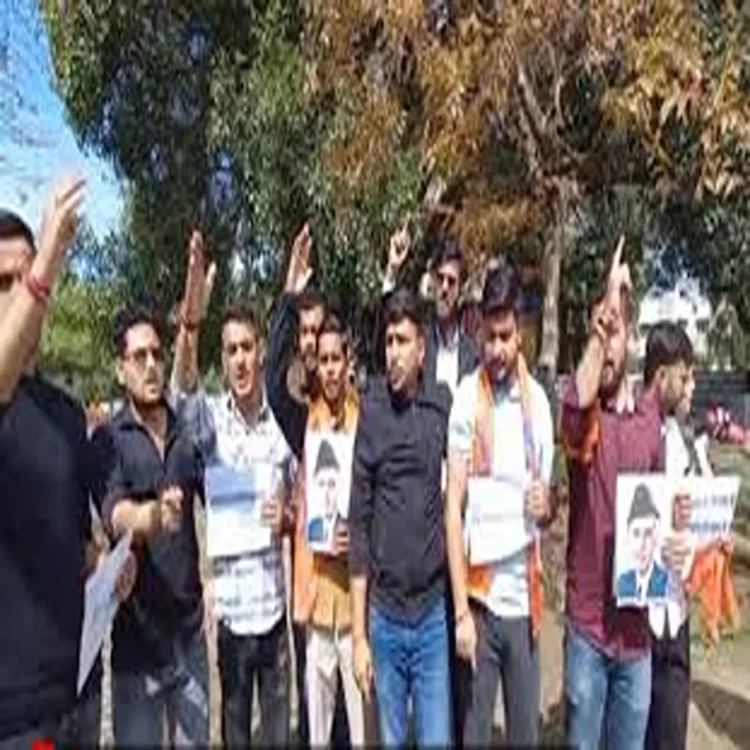
Education – A dispute has emerged at the University of Jammu after members of the Akhil Bharatiya Vidyarthi Parishad (ABVP) staged a protest on Friday, objecting to the inclusion of a chapter on former Pakistan president Muhammad Ali Jinnah in the revised postgraduate political science syllabus under the National Education Policy (NEP) 2020.
Protest Erupts Over Curriculum Changes
The demonstration was led by ABVP’s Jammu and Kashmir secretary Sannak Shrivats, with activists gathering on campus and voicing strong opposition to the university’s decision. Protesters raised slogans against the administration and demanded that the chapter be removed from the “Modern Indian Political Thought” section, which is part of a paper focusing on minorities and nationhood.
During the protest, participants also tore posters of Jinnah and warned that their agitation would intensify if their demands were not addressed. The group expressed concern that the syllabus presents certain historical figures as representatives of minorities, despite their association with events like the partition of India.
Concerns Raised by Student Group
ABVP leaders argued that the inclusion of figures such as Muhammad Ali Jinnah and Sir Syed Ahmed Khan in the curriculum raises questions about the message being conveyed to students. They maintained that these individuals were linked to ideological positions, including the Two-Nation Theory, which contributed to the division of the country.
According to Shrivats, academic decisions should remain sensitive to public sentiment. He stated that if the university does not reconsider the content, the organisation may expand its protest across the region through democratic means.
The student body also suggested that if minority representation is necessary in the syllabus, it should highlight personalities who worked towards unity and social harmony rather than those associated with divisive historical developments.
University Defends Academic Framework
Responding to the controversy, the university administration clarified that the syllabus follows established academic standards and aligns with guidelines issued by the University Grants Commission (UGC). Officials emphasised that the inclusion of such figures is not unique to Jammu University but is common across institutions in India.
Baljit Singh Mann, head of the Political Science Department, explained that the curriculum is designed to provide students with a comprehensive understanding of modern political thought. He noted that the syllabus includes a wide range of thinkers, from Mahatma Gandhi and B R Ambedkar to Jawaharlal Nehru, Sardar Patel, Vinayak Damodar Savarkar and M S Golwalkar, alongside Jinnah and others.
Focus on Critical Academic Study
Mann stressed that the objective of including diverse political figures is to encourage analytical thinking rather than promote any particular ideology. He said the course allows students to examine different viewpoints and understand the evolution of political ideas over time.
He further pointed out that several historical figures, including Jinnah, Muhammad Iqbal and Sir Syed Ahmed Khan, held varying perspectives throughout their lives. Studying these shifts, he added, helps students gain a deeper and more nuanced understanding of history.
Academic Implications Highlighted
The university also underscored the practical importance of maintaining such topics in the syllabus. Mann explained that removing them could put students at a disadvantage in national-level competitive exams such as the National Eligibility Test (NET), where similar content is widely covered.
He added that the syllabus had been reviewed and approved by a designated academic committee, ensuring that it reflects collective academic judgment rather than an individual decision. Comparable curricula, he noted, are followed in universities across states like Rajasthan, Maharashtra and West Bengal.
Ongoing Debate Between Sentiment and Scholarship
The situation has brought attention to the broader debate between academic freedom and public sentiment in higher education. While student groups continue to push for changes, the university remains firm in its position that academic curricula must remain inclusive of diverse historical perspectives.
As discussions continue, it remains to be seen whether the administration and protesting groups can reach a resolution that balances educational objectives with concerns raised by students.