
Traffic – Delhi Police Launches Project SANGAM to Improve City Mobility
Traffic – Delhi Traffic Police has introduced a new initiative aimed at easing congestion and improving daily commuting experiences across the capital. Acting on directions from Lieutenant Governor Taranjit Singh Sandhu, the department has rolled out Project SANGAM, a coordinated effort that brings together civic bodies and local communities to address persistent traffic challenges.
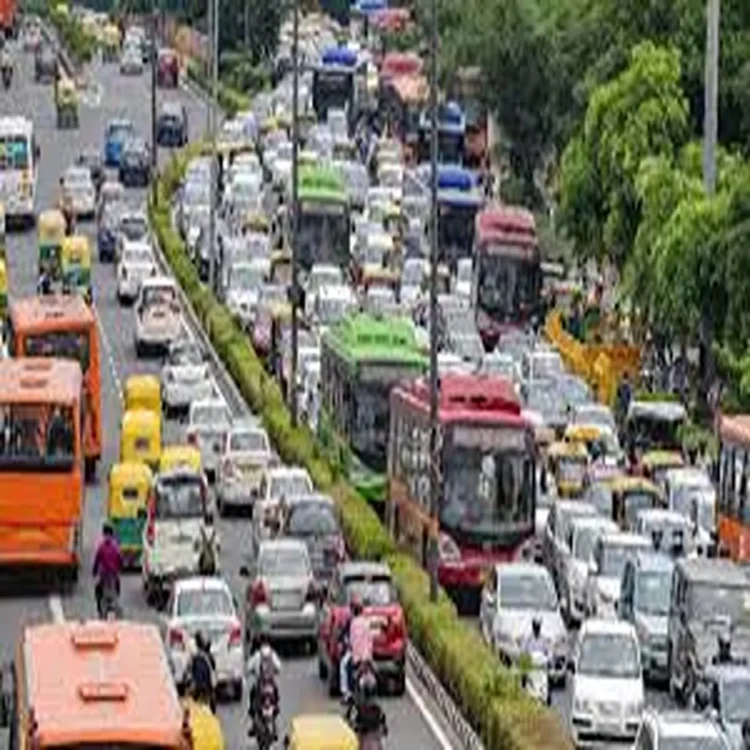
Collaborative approach to traffic management
Project SANGAM, which stands for Synergistic Action and Networked Governance for Area Mobility, reflects a shift toward inclusive governance in handling urban traffic issues. The initiative seeks to bridge the gap between enforcement agencies and residents by encouraging active participation from Resident Welfare Associations (RWAs) and market associations.
Officials believe that involving local communities can lead to more practical and sustainable solutions, especially in areas where traffic congestion and parking shortages are a daily concern. By working closely with citizens, authorities aim to better understand ground realities and implement targeted measures.
Multi-agency coordination at the core
One of the defining features of the project is its multi-agency framework. The Delhi Traffic Police is working in coordination with the Municipal Corporation of Delhi (MCD) and the Public Works Department (PWD), among others. This integrated approach is expected to ensure that decisions are not made in isolation but reflect a broader administrative consensus.
Such collaboration is particularly important in a city like Delhi, where traffic issues often stem from overlapping responsibilities among different departments. Through Project SANGAM, authorities hope to streamline communication and improve the execution of traffic-related policies.
Initial rollout in key commercial and residential areas
The initiative has already been implemented in several prominent locations, including Karol Bagh, Chanakyapuri, Saket, Connaught Place, Khan Market, Rajouri Garden, South Extension, and Defence Colony. These areas were chosen due to their high traffic density and frequent parking challenges.
In these zones, local stakeholders are being consulted to identify specific issues such as illegal parking, bottlenecks, and inefficient traffic flow. Based on feedback, authorities are expected to introduce localized solutions that can deliver immediate relief.
Focus on parking and local traffic issues
A major focus of the project is the management of parking spaces, which remains one of the biggest contributors to congestion in Delhi. The Lieutenant Governor had specifically instructed the traffic police to involve RWAs in addressing parking-related concerns.
By engaging residents directly, the administration aims to develop community-driven strategies such as designated parking zones, better signage, and improved enforcement mechanisms. These measures are expected to reduce roadside encroachments and enhance overall traffic discipline.
Expansion planned across the city
Encouraged by the initial rollout, officials have indicated that Project SANGAM will soon be extended to additional localities. The expansion will depend on the success of pilot areas and the level of participation from local communities.
Authorities are optimistic that the initiative can serve as a model for other urban centers facing similar challenges. If implemented effectively, it could redefine how cities approach traffic management by placing citizens at the center of decision-making.
A step toward smarter urban governance
Project SANGAM represents a broader effort to modernize governance practices in Delhi. By combining administrative coordination with public participation, the initiative aims to create a more responsive and efficient system for managing urban mobility.
While it is still in its early stages, the project has generated interest among urban planners and policymakers. Its success will ultimately depend on consistent execution and sustained collaboration between agencies and citizens.