
Campus – Tensions Escalate After Violence at JNU Protest March
Campus – Fresh tensions surfaced at Jawaharlal Nehru University in New Delhi after clashes broke out during a student-led protest march, triggering strong political reactions and raising concerns about campus safety and administration.
Union Minister Criticises Campus Developments
Union Minister Giriraj Singh strongly reacted to reports of violence involving members of the Akhil Bharatiya Vidyarthi Parishad at the university. Speaking to news agency IANS, he alleged that the campus environment has deteriorated over the years. He claimed that the institution has increasingly become a centre for what he described as urban Naxal-linked activities, holding previous governments, including those led by the Indian National Congress and Left parties, responsible for what he called a permissive atmosphere.
Singh argued that the nature of incidents on campus reflected ideological radicalism and said successive administrations had failed to address the issue effectively.
JD(U) Urges Calm and Administrative Accountability
Leaders of the Janata Dal (United) offered a more cautious response, calling for restraint and institutional responsibility. Party spokesperson Neeraj Kumar described Jawaharlal Nehru University as a respected academic institution whose legacy should not be overshadowed by political confrontations.
He stated that ideological disagreements are natural in universities but stressed that maintaining order is primarily the responsibility of the university administration. He urged authorities to ensure that dialogue and mutual understanding prevail over confrontation.
JD(U) national spokesperson Rajeev Ranjan Prasad termed the matter a law and order issue, adding that the Delhi Police were taking appropriate steps to address the situation.
Protest March and Vice-Chancellor Controversy
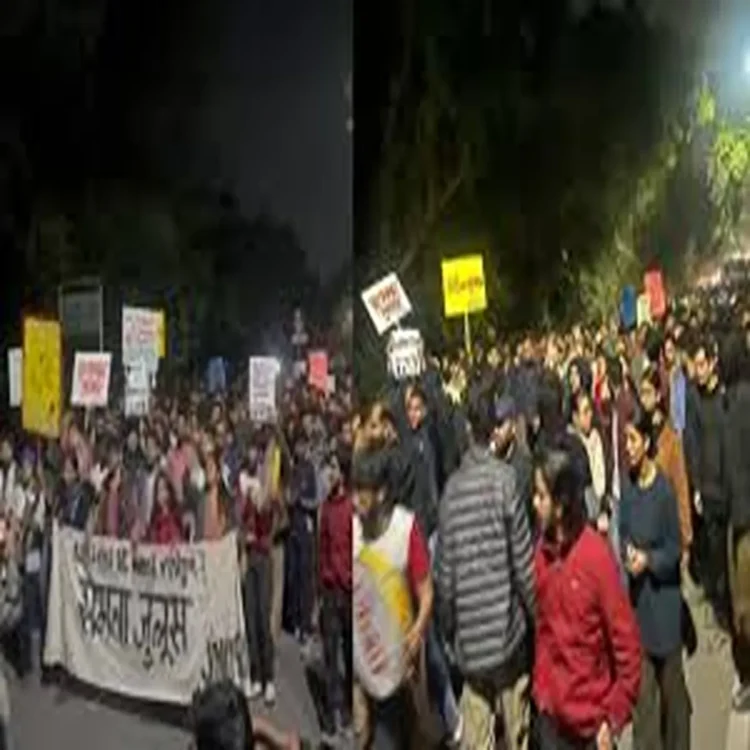
The confrontation occurred late Monday evening when a protest rally organised by the Jawaharlal Nehru University Students’ Union escalated into violence. The student body had announced an “Equality March” demanding the resignation of Vice-Chancellor Santishree Dhulipudi Pandit.
The demand followed remarks she allegedly made in a podcast released on February 16. According to the Students’ Union, the comments touched upon caste issues, University Grants Commission regulations, Dalit concerns and affirmative action policies, which they described as inappropriate and discriminatory.
In addition to seeking the Vice-Chancellor’s resignation, the union had also called for the withdrawal of rustication orders issued against four student office-bearers. The disciplinary action had been taken in connection with alleged vandalism of university property during an earlier protest.
Allegations and Counter-Allegations
Tensions intensified as both sides accused each other of instigating the violence. Protesters claimed that members of the Akhil Bharatiya Vidyarthi Parishad confronted the marchers and that the administration failed to engage with the demonstrators beforehand.
The ABVP denied the accusations, asserting that Left-backed student organisations were responsible for provoking the situation. The group also alleged that misleading narratives were being circulated about the sequence of events.
Meanwhile, Left-affiliated student bodies, including the All India Students’ Association, alleged that ABVP members threw stones at the protest encampment and attacked unarmed students, resulting in several injuries. They demanded accountability and immediate action to ensure student safety.
Police Response and Ongoing Investigation
Authorities confirmed that the Delhi Police were monitoring the situation and taking necessary measures to restore calm. Officials indicated that further details would emerge after reviewing reports and statements from those involved.
The latest episode adds to a series of politically charged confrontations that have periodically surfaced at Jawaharlal Nehru University, an institution long known for active student engagement in national debates. While political leaders continue to exchange sharp remarks, students and faculty members have called for dialogue and stability to preserve the academic environment.
As investigations continue, attention remains focused on how the administration and law enforcement agencies handle the aftermath of the violence and whether constructive engagement can prevent further escalation on campus.