
MigratoryBirds – Rare Pallas’s Gull Officially Recorded at Spiti’s Chandratal Lake
MigratoryBirds – A rare migratory bird species, the Pallas’s Gull, has been officially documented for the first time in Himachal Pradesh’s Spiti Valley, marking an important development in India’s bird conservation records. The sighting was reported from Chandratal Lake, a high-altitude Ramsar wetland located in the Lahaul and Spiti district, during a scientific field survey conducted last year.
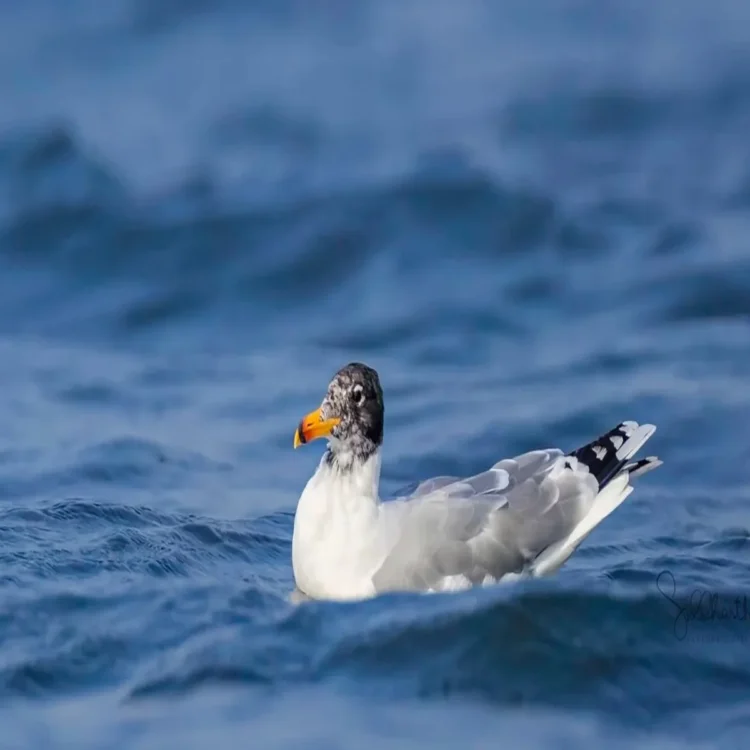
Historic Observation Confirmed by Experts
Forest officials and wildlife researchers confirmed that the bird, scientifically known as Ichthyaetus ichthyaetus, was seen on August 31, 2025, at an elevation of nearly 4,300 metres above sea level. The finding has now been accepted and published in the Journal of the Bombay Natural History Society, giving the observation formal scientific recognition.
According to officials, this is the first verified record of the species from the Spiti Valley region. Earlier sightings in India had mainly been limited to Ladakh and Pong Dam, making the latest discovery geographically significant for Himachal Pradesh.
Goldy Chabra, Divisional Forest Officer of Lahaul and Spiti, said the documented sighting highlights the ecological value of Trans-Himalayan wetlands. He noted that such habitats are increasingly being recognised as important resting and transit zones for migratory birds travelling along Central Asian flyways.
Chandratal Lake Gains Ecological Importance
Wildlife experts believe the discovery strengthens the environmental significance of Chandratal Lake, which already serves as one of the highest wetland ecosystems supporting migratory bird activity in the Himalayan region.
Researchers involved in the study explained that the gull was identified through direct field observation supported by photographic and video evidence. The team used binoculars and a high-resolution camera to carefully examine the bird while it was resting near the edge of the lake.
The weather at the time of observation was cold and cloudy, with light drizzle and temperatures hovering around 4 degrees Celsius. Despite the conditions, researchers managed to capture clear visual records that later helped experts verify the species.
Identification Process and Scientific Review
The published report stated that the observed bird was a first-winter juvenile gull. Researchers compared its physical features with similar species, including the Black-headed Gull and Brown-headed Gull, before confirming it as Pallas’s Gull.
Its noticeably larger body size and distinct appearance helped experts differentiate it from other gull species commonly seen in the region. After a peer-review process conducted by specialists, the observation was officially accepted for publication.
Experts said no previous published records of the species existed from the Lahaul and Spiti district, making the sighting a valuable addition to India’s avifaunal database.
Migratory Pattern Highlights Regional Connectivity
Wildlife researchers noted that the presence of the species in Spiti indicates a wider ecological connection between Himalayan wetlands and migratory routes stretching across Central Asia.
Pallas’s Gull is known to breed in inland lakes and marshlands, where it nests on the ground and lays between two and four eggs during the breeding season. During winter months, the bird migrates southward to regions including the eastern Mediterranean, Arabia, and parts of the Indian subcontinent.
Experts believe the latest sighting reflects the healthy condition of the Chandratal wetland ecosystem. They added that the availability of safe resting areas and suitable environmental conditions may encourage more migratory birds to use the lake during seasonal movements.
The finding has also renewed interest in long-term monitoring of high-altitude wetlands in Himachal Pradesh, which are increasingly being recognised for their role in supporting biodiversity and migratory wildlife.