
ShippingCrisis – Strait of Hormuz Incidents Deepen Global Maritime Security Concerns
ShippingCrisis – Commercial shipping activity near the Strait of Hormuz faced renewed uncertainty on Thursday after one vessel was reportedly seized near the United Arab Emirates while another cargo ship sank off Oman following an attack, raising fresh concerns over maritime safety in one of the world’s most critical energy corridors.
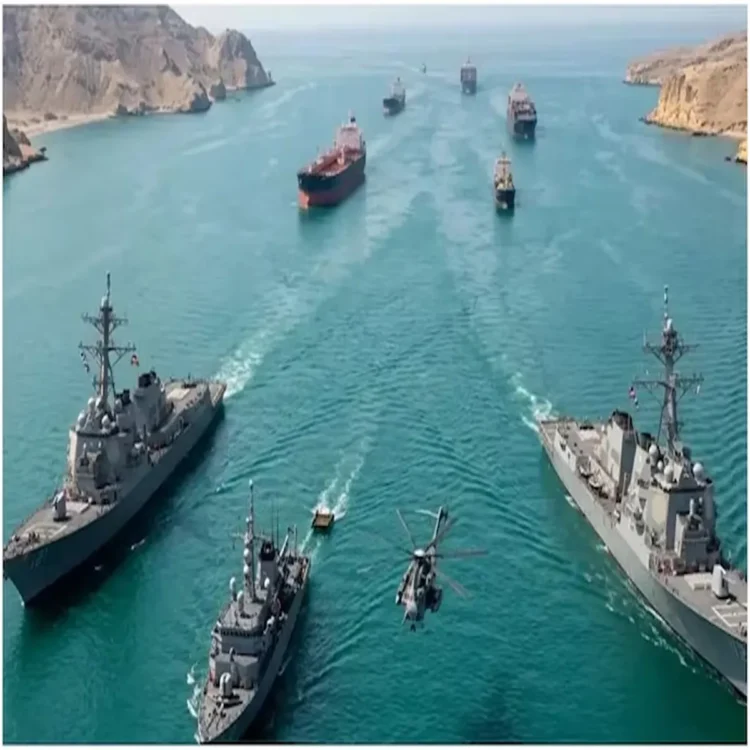
The developments come at a highly sensitive diplomatic moment as tensions between Iran and the United States continue to influence regional stability and international trade routes. Officials have not publicly identified those responsible for either incident, though the events unfolded amid renewed Iranian statements asserting authority over the Strait of Hormuz and defending the right to detain vessels linked to the United States.
Concerns Rise Around Vital Oil Passage
The Strait of Hormuz remains one of the most strategically important waterways globally, carrying a major share of international oil shipments. Ongoing instability in the region has continued to affect energy markets, with concerns over shipping disruptions contributing to higher fuel prices and increased uncertainty across global trade sectors.
At the same time, diplomatic discussions linked to regional security and maritime access remain under pressure. The situation gained additional international attention as U.S. President Donald Trump held talks with Chinese President Xi Jinping in Beijing. According to the White House, both leaders agreed on the importance of keeping the Strait of Hormuz accessible for international navigation.
Tensions in the area escalated further after recent confrontations involving Iranian oil tankers and U.S. naval forces near the strait.
Vessel Seized Near UAE Coast
The United Kingdom Maritime Trade Operations center confirmed it had received reports that a ship anchored northeast of Fujairah was boarded and taken over by unauthorized personnel. The vessel was reportedly located about 38 nautical miles from the UAE port, which serves as a major oil export hub in the Gulf region.
British authorities said the ship later began moving toward Iranian waters. Officials did not publicly identify the vessel and stated that investigations into the incident are ongoing.
Fujairah has repeatedly attracted international attention in recent years because of its strategic location and its role in regional energy exports.
Cargo Ship Sinks After Attack Near Oman
In a separate development, Indian officials confirmed that an Indian-flagged cargo vessel sank off the coast of Oman after an onboard fire broke out following an attack. The ship had been traveling from Somalia to Sharjah in the UAE at the time of the incident.
Mukesh Mangal, a senior official in India’s shipping ministry, said all 14 Indian crew members were safely rescued by Oman’s coast guard. No casualties were reported.
India’s foreign ministry strongly criticized the continued targeting of civilian shipping and commercial maritime workers, describing such attacks as unacceptable. However, authorities stopped short of naming any group or country responsible.
Diplomatic Pressure Intensifies
Iranian media outlets reported that Chinese vessels had begun moving through the Strait of Hormuz under what were described as newly coordinated arrangements with Tehran. According to those reports, Chinese officials requested assistance from Iran to ensure safe passage for several ships.
The reports surfaced shortly after Israeli Prime Minister Benjamin Netanyahu disclosed a previously unannounced visit to the UAE during the broader regional conflict involving Iran. Emirati authorities later denied the claim.
Relations between the UAE and Israel have remained under close regional scrutiny since the two countries normalized ties in 2020. Iran has frequently criticized the agreement and has alleged that Israel maintains security-related operations inside the Gulf nation.
Analysts in Israel suggested Netanyahu’s comments may have been linked to domestic political considerations ahead of upcoming elections.
Iran Sets Conditions for Future Negotiations
Iranian officials also signaled a tougher position regarding any future negotiations with Washington. According to reports carried by Iranian media, Tehran is demanding several conditions before resuming talks, including recognition of Iran’s authority over the Strait of Hormuz and compensation linked to the recent conflict.
Iran’s First Vice President Mohammadreza Aref stated that Tehran considers the waterway part of its sovereign territory and would not surrender control under any circumstances.
Meanwhile, Iran’s judiciary spokesperson defended the country’s right to seize vessels associated with the United States, accusing Washington of violating maritime laws through its actions in the region.
U.S. Military Monitors Situation
Adm. Brad Cooper, the top U.S. military commander overseeing operations in the Middle East, told lawmakers that while Iran’s military capabilities had weakened significantly, its public threats alone were affecting global shipping and insurance industries.
He added that the United States maintains the operational capability to secure maritime traffic through the strait if necessary, though decisions regarding future actions remain tied to ongoing diplomatic discussions.