
GilgitBaltistan – Reports Raise Concerns Over Crackdown on Shia Protesters
GilgitBaltistan – Pakistan’s counter-terrorism authorities have reportedly detained dozens of Shia students who were taking part in demonstrations, charging many of them under terrorism-related laws. The arrests have intensified concerns among local residents in Pakistan-occupied Gilgit-Baltistan, a region where the Shia population forms the majority. Observers say tensions between the community and security institutions have existed for decades, with repeated allegations that authorities portray local Shias as a security threat.
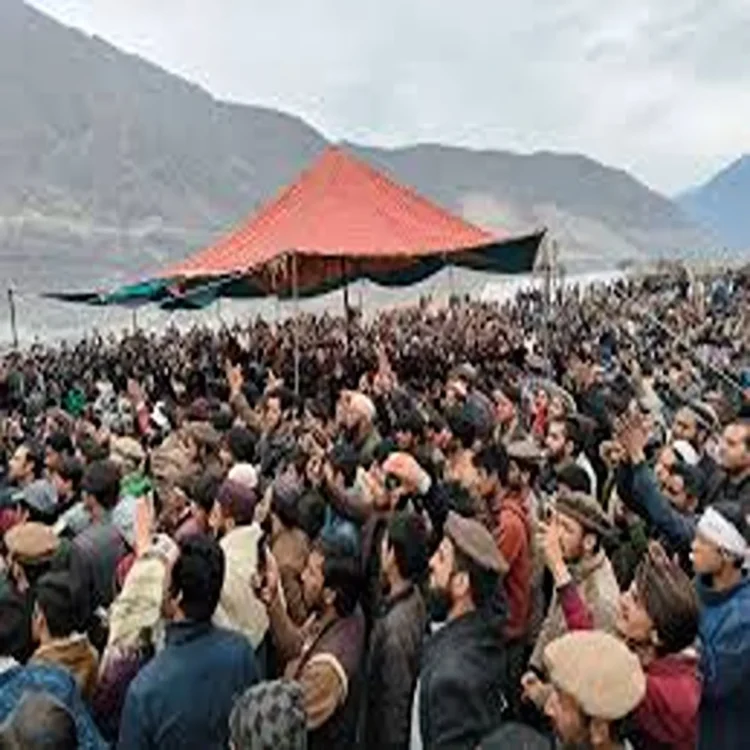
Background of Sectarian Tensions in Gilgit-Baltistan
A recent report by Global Strat View claims that sectarian divisions in the region date back to the years following 1947, when Pakistan took control of Gilgit-Baltistan. According to the report, the Pakistani military allegedly encouraged early clashes between Shia and Sunni groups to consolidate political influence and gain support from sections of the Sunni minority.
The analysis suggests that since that period, many Shia residents have faced violence, displacement, or intimidation. It further alleges that armed groups operating with indirect backing from state actors have contributed to instability and fear among communities in the region.
Recent Incident and Civilian Casualties
The situation escalated again on March 1 when protests reportedly turned violent. The report states that at least 14 civilians were killed and around 60 others were injured during the unrest. Among those wounded were eight boys under the age of 15.
The demonstrations were organized after the reported assassination of Iran’s Ayatollah Ali Khamenei, an event that sparked anger and grief among some members of the Shia community. Authorities, however, accused protesters of attacking government property, including military offices and educational buildings.
One local Shia leader who spoke to a journalist in Islamabad alleged that security forces opened fire on civilians during the crackdown. According to his account, four women were killed in front of him during the operation. These claims could not be independently verified at the time of the report.
Daily Life Under Curfew
Following the unrest, strict curfew measures were imposed in several parts of Gilgit-Baltistan. Residents say the restrictions have created severe difficulties, especially during the holy month of Ramadan.
According to accounts cited in the report, many families are struggling with limited access to basic services such as electricity, fuel, clean water, and food supplies. Local infrastructure issues and administrative challenges have reportedly reduced electricity and water availability to only a few hours every three days in some areas.
Community members say the shortages have made fasting during Ramadan particularly challenging. At the same time, food prices across Pakistan typically rise during the month due to increased demand, further adding to the financial strain on households.
Comparisons With Neighboring Regions
The report also drew comparisons with Shia communities living in India’s Ladakh and Kashmir regions. It stated that large demonstrations were held there on the same day in response to the same international developments, but no deaths were reported during those protests.
According to the analysis, the difference reflects contrasting governance approaches toward Shia populations on both sides of the Line of Control. The report claims that Shias in Ladakh and Kashmir are integrated into India’s political and social systems, while Gilgit-Baltistan remains under a disputed administrative framework.
Demographic and Political Concerns
Another issue raised in the report relates to demographic changes in Gilgit-Baltistan. It alleges that long-term policies have gradually reduced the proportion of the local Shia population, which once dominated the region.
In contrast, the report notes that the Shia population share in Ladakh has increased from about 40 percent to approximately 46 percent in recent decades. It also highlights the absence of widespread accusations such as blasphemy, treason, or terrorism against Shias in that region.
Meanwhile, growing frustration among residents in Gilgit-Baltistan has reportedly led to renewed calls for political reform and greater autonomy. According to the report, large groups of protesters have recently taken to the streets expressing strong opposition to Pakistan’s military leadership.
Observers say the situation underscores long-standing tensions in the strategically important Himalayan region, where governance disputes, sectarian divisions, and political grievances continue to shape local dynamics.