
Floods – Assam Faces Widespread Flooding as Heavy Rain Disrupts Lives Across Six Districts
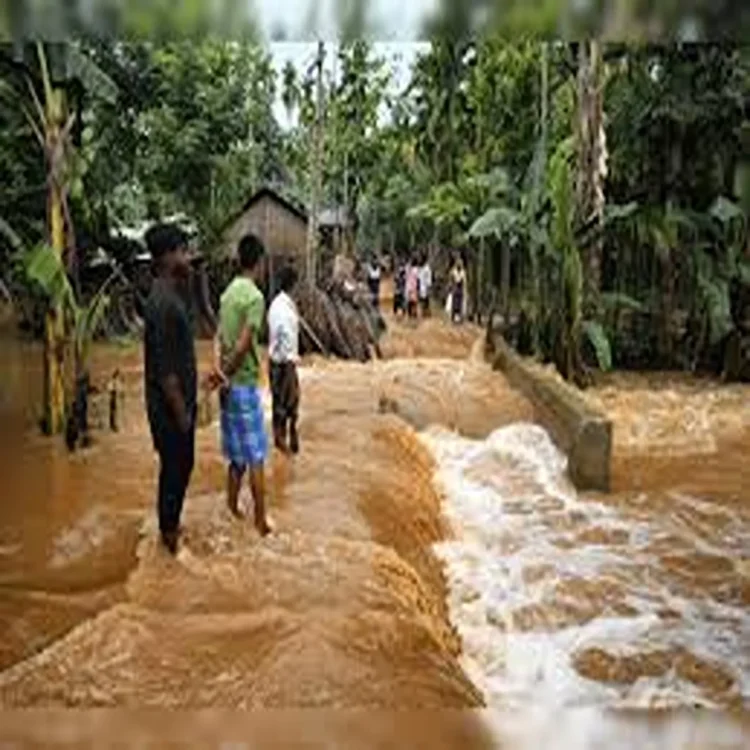
Floods – The first spell of monsoon flooding has begun affecting several parts of Assam, leaving thousands of residents struggling with rising water levels after days of persistent rainfall across the state and neighbouring Arunachal Pradesh. According to the Assam State Disaster Management Authority (ASDMA), more than 22,000 people have been impacted in six districts, while authorities continue to monitor the evolving situation as rain persists in many regions.
Dhemaji Records the Highest Impact
Official figures released by ASDMA show that 22,124 people have been affected in Dhemaji, Nalbari, Dibrugarh, Chirang, Lakhimpur and Kokrajhar districts. Among these, Dhemaji has emerged as the worst-hit district, where 15,483 residents are dealing with floodwaters that have spread across large parts of the area following continuous rainfall.
Local administrations remain engaged in assessing the situation while keeping a close watch on vulnerable locations that may face further flooding if weather conditions do not improve.
Villages and Farmland Remain Under Water
The floodwaters have submerged 96 villages across the affected districts, disrupting normal life and creating challenges for local communities. Officials also reported that nearly 1,690 hectares of agricultural land have been damaged, with standing crops suffering extensive losses.
The damage has raised concerns among farming communities, as agriculture remains a primary source of livelihood in many of the affected areas. Authorities are continuing field assessments to determine the full extent of crop losses.
Rising River Levels Increase Concern
The latest flood bulletin issued by ASDMA stated that the Disang River in Sivasagar district is flowing above the danger mark at Nanglamuraghat. Officials said the river’s increasing water level could lead to additional flooding in nearby low-lying areas if rainfall continues over the coming days.
Disaster management teams and district administrations have been instructed to stay prepared and respond quickly should water levels rise further.
Livestock Also Suffers During Floods
Apart from the impact on residents and agriculture, the floods have also affected livestock across the region. Government officials said that 48,199 animals have been impacted by the ongoing inundation, adding another challenge for rural households that depend heavily on livestock for their income and daily needs.
Authorities are coordinating with local departments to assess the requirements of affected communities and livestock owners.
Railway Bridge Damage Disrupts Train Operations
Heavy rain and riverbank erosion also caused partial damage to a railway bridge over the Simen River in Dhemaji district, resulting in the suspension of train services on the affected section.
According to the Northeast Frontier Railway, the area around Dhemaji received more than 110 mm of rainfall, leading to severe flooding and erosion near the bridge. Railway officials explained that although the bridge, originally constructed in 1965 and later converted to broad gauge, remained structurally stable, continuous erosion washed away a significant portion of the riverbank supporting one of its bridge piers.
As a safety measure, train services between Archipathar and Simen Chapari stations have been halted until further notice while engineers inspect the site and restoration work is planned.
Authorities Continue Monitoring the Situation
Government agencies are maintaining regular surveillance of flood-affected areas as rainfall continues in parts of Assam and adjoining Arunachal Pradesh. District administrations have been directed to remain on alert, monitor river levels closely and take precautionary measures to protect residents in vulnerable locations.
Officials have indicated that emergency response teams are prepared to act if the weather situation worsens, while assessments of damage to infrastructure, agriculture and affected communities continue across the flood-hit districts.