
Healthcare – Nadda Highlights NFHS-6 Gains Amid Congress Criticism
Healthcare – Union Health Minister JP Nadda on Saturday defended the Central government’s record on healthcare and nutrition, responding to criticism raised by Congress president Mallikarjun Kharge regarding key findings from the latest National Family Health Survey (NFHS-6). Nadda said the survey reflects notable improvements in several health indicators and demonstrates how India’s healthcare system has evolved over the past two decades.
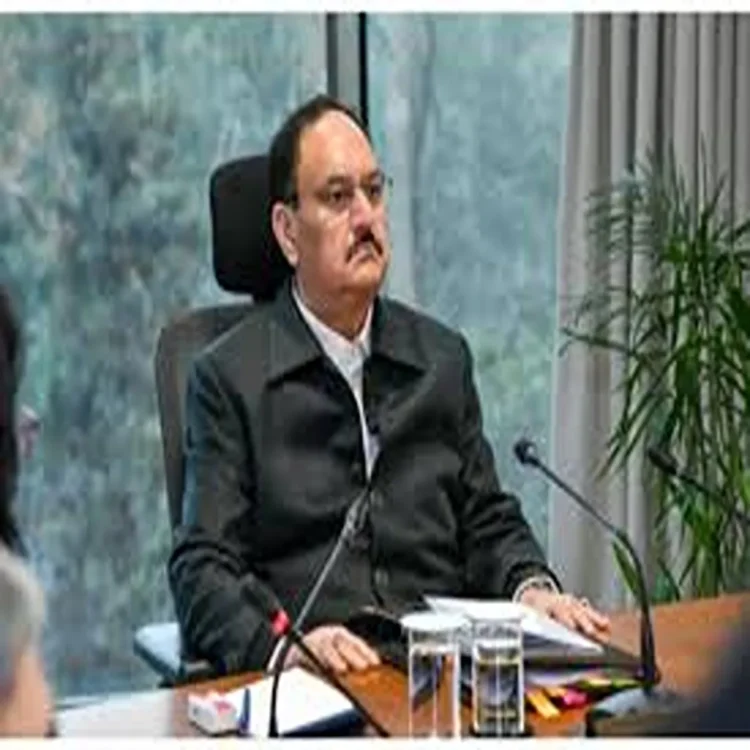
Minister Cites Long-Term Improvement in Health Services
In a series of statements shared on social media platform X, Nadda accused the Congress leadership of presenting only selected portions of the survey while ignoring broader trends. According to him, public health discussions should be guided by complete data rather than political narratives.
Referring to NFHS-6 (2023-24) findings, the minister said the latest figures reveal considerable progress in maternal and child healthcare compared to the situation recorded in NFHS-3 during 2005-06, when the United Progressive Alliance (UPA) was in power.
Maternal Healthcare Indicators Show Significant Growth
Nadda highlighted several areas where healthcare access has expanded. He noted that the percentage of women registering for antenatal care during the first trimester increased from 43.9 percent to 76.2 percent. Institutional deliveries also rose sharply from 38.7 percent to 90.6 percent, while births attended by trained health professionals climbed from 46.6 percent to 91.3 percent.
According to the minister, these improvements indicate that more women are receiving timely medical attention during pregnancy and childbirth, contributing to safer deliveries and better health outcomes across the country.
Expansion Seen in Immunisation and Insurance Coverage
The Union minister also pointed to advancements beyond maternal healthcare. He said full immunisation coverage has reached 87.1 percent, reflecting broader access to preventive healthcare services. At the same time, health insurance coverage has increased substantially from 4.9 percent to 60.2 percent.
Nadda further noted that the use of hygienic menstrual protection products has expanded significantly, reaching 79.2 percent. He described these developments as evidence of growing awareness, improved healthcare delivery systems and wider social welfare outreach.
Child Nutrition Indicators Reflect Positive Trends
Addressing nutrition-related concerns, Nadda said the latest survey records a decline in child stunting levels. According to the NFHS data cited by the minister, the rate has fallen from 48 percent to 29.3 percent over the years.
He credited these changes to sustained investments in healthcare infrastructure, nutrition programmes, sanitation initiatives, financial inclusion measures and improved delivery of government services. Nadda said the gains reflected in the survey are linked to long-term policy implementation rather than short-term interventions.
Response to Congress Allegations
The minister’s remarks came after Kharge questioned the government’s performance on health and nutrition indicators earlier this week. The Congress president alleged that serious challenges affecting women and children continue to persist and claimed that important health-related information was not being adequately addressed.
Kharge referred to data indicating that a significant proportion of children face malnutrition, underweight conditions and inadequate dietary intake. He also cited figures related to anaemia among women and concerns regarding undernourishment.
Government Acknowledges Remaining Challenges
Responding to those observations, Nadda argued that comparisons should take into account historical conditions and the progress achieved over time. He said India had faced longstanding issues involving limited healthcare access and weak service delivery mechanisms for many years.
While defending the government’s performance, the minister acknowledged that several challenges still require attention. He stated that efforts to improve healthcare and nutrition outcomes remain ongoing and that authorities continue to work on unresolved concerns.
Nadda concluded by saying that the NFHS-6 findings provide measurable evidence of improvements in healthcare access, maternal and child welfare services, and social protection programmes. He added that the survey should be viewed as an important indicator of progress while recognising the work that remains ahead.