
ScreenHealth – Growing Concern Over Holiday Screen Habits and Teen Spine Health
ScreenHealth – School holidays often bring a welcome break from studies, but health experts are raising concerns about a less visible consequence of extended leisure time: increased screen exposure among children and teenagers. With many young people spending hours on smartphones, tablets, laptops, gaming consoles, and streaming platforms, specialists warn that excessive device use may negatively affect posture and spinal health during crucial developmental years.
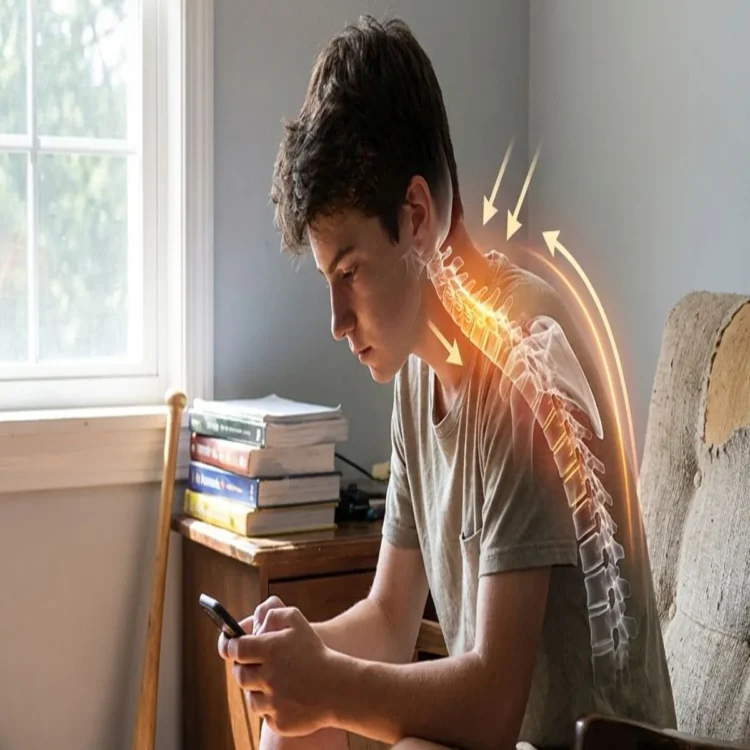
Rise in Cases of Text Neck Among Young Users
Orthopaedic experts report a noticeable increase in posture-related complaints linked to prolonged device usage. According to spine specialists, one of the most common issues emerging among adolescents is a condition widely known as text neck.
Text neck develops when individuals repeatedly bend their heads forward for long periods while looking at screens. Although the human head weighs roughly 10 to 12 pounds in a neutral position, the pressure placed on the neck rises significantly as the head tilts downward. This additional strain can gradually affect muscles, joints, and spinal alignment.
Research published in the Journal of Surgical Technology International has indicated that looking down at a smartphone can place as much as 60 pounds of force on the neck, depending on the angle of tilt.
Why Adolescents Face Greater Risk
Medical professionals say teenagers are increasingly visiting clinics with complaints such as neck discomfort, shoulder rounding, upper back pain, and poor posture. Conditions that were once more common among older adults are now appearing at much younger ages.
Because children and adolescents are still undergoing physical growth, their bones and muscles are more vulnerable to long-term effects caused by unhealthy posture habits. Spending extended periods leaning over screens may contribute to muscle imbalance, stiffness, headaches, and gradual changes in spinal positioning.
Specialists also point out that posture-related problems can influence more than just the musculoskeletal system. Poor body alignment may affect breathing efficiency, sleep quality, concentration levels, and overall physical well-being.
Sedentary Routines Add to the Problem
Health researchers have linked excessive screen use with increased reports of bone and muscle discomfort in children. Studies referenced by the National Library of Medicine suggest that prolonged screen exposure is associated with posture-related concerns and physical discomfort among young users.
Experts note that the situation often worsens during vacation periods when children spend more time indoors. Many use their devices while reclining on beds, slouching on sofas, or sitting in unsupported positions for extended periods. Such habits can place additional stress on the neck, shoulders, and lower back.
Another concern is the reduction in physical activity. A sedentary lifestyle can weaken core muscles, which play a vital role in supporting the spine and maintaining healthy posture.
Small Lifestyle Changes Can Protect Spine Health
Doctors emphasize that technology itself is not the problem; rather, the issue lies in how devices are used. Making simple adjustments can significantly reduce the risk of posture-related complications.
Experts recommend positioning screens at eye level whenever possible and maintaining an upright sitting posture. Taking short movement breaks every 30 to 40 minutes can also help reduce muscle strain and improve circulation.
Parents are encouraged to ensure that screen time is balanced with outdoor activities and regular exercise. Physical activities such as swimming, cycling, walking, and outdoor games help strengthen muscles, improve flexibility, and support healthy spinal development.
Healthcare professionals also advise families to pay attention to warning signs including recurring neck pain, headaches, shoulder stiffness, back discomfort, and visible posture changes. Early intervention can help prevent minor issues from developing into long-term health concerns.