
Terrorism – Pakistan Faces Mounting Pressure Over Militant Networks
Terrorism – Pakistan’s civilian and military leadership is facing renewed calls to address the long-standing consequences of policies that have allowed militant groups to operate from its territory. A recent report highlights how decades of strategic tolerance toward such organisations have not only destabilised the region but have also made Pakistan one of the countries most severely affected by terrorism.
A Long-Ignored Global Concern
For years, the presence of armed groups within Pakistan has largely been viewed as a regional issue, primarily affecting South Asia. It was often seen as a persistent complication in India-Pakistan relations and a factor in Afghanistan’s instability. Western governments, according to the report, have tended to treat the matter as one best handled locally, rather than as a broader international security threat.
However, this perception is now being challenged. New findings have brought greater clarity to the scale and complexity of militant activity in Pakistan, suggesting that the issue extends far beyond regional boundaries.
Findings Highlight Extensive Militant Presence
The report draws on recent data from the United States Congressional Research Service, released on March 25. According to these findings, around 15 militant organisations are currently operating from Pakistani soil. Of these, 12 have been officially designated as Foreign Terrorist Organisations under US law.
These groups vary widely in their objectives and operations. Some maintain links to global jihadist networks, while others are focused on regional conflicts. Their activities span multiple fronts, including cross-border operations, sectarian violence, and attacks on state institutions.
The presence of such a diverse range of groups points to a deeply rooted infrastructure that has evolved over decades. Analysts note that this network is not limited to a single ideology but represents a broader ecosystem supported by overlapping resources, financing channels, and recruitment mechanisms.
The Paradox of Victim and Enabler
One of the most striking aspects highlighted in the report is Pakistan’s dual role in the context of terrorism. On one hand, the country has suffered significant losses due to militant violence, with thousands of civilians and security personnel affected over the years. On the other hand, policies that once tolerated certain groups for strategic reasons have contributed to the persistence of these networks.
For years, some militant organisations were seen as serving specific geopolitical interests, particularly in relation to neighbouring countries. This approach was based on the assumption that such groups could be controlled or managed. However, experts now argue that this calculation has proven flawed.
The same networks that were once considered assets have increasingly turned against the state. Militant groups that share resources, ideology, and logistical support have expanded their reach, making it difficult to contain their activities within defined boundaries.
Rising Internal Security Challenges
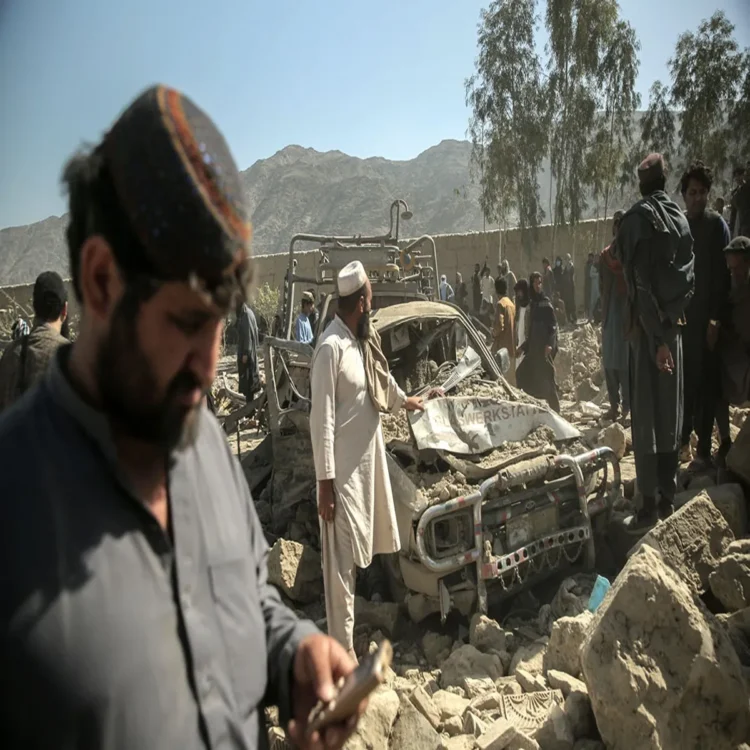
The consequences of this evolving situation are becoming more visible within Pakistan itself. Security forces and their families have increasingly been targeted, highlighting the growing threat posed by domestic militancy. The interconnected nature of these groups means that actions against one network often have limited impact unless the broader infrastructure is addressed.
Observers note that financial systems, recruitment pipelines, and ideological platforms continue to sustain multiple organisations simultaneously. This makes the challenge of counterterrorism more complex and requires a coordinated and comprehensive response.
The Need for Policy Reassessment
The report underscores that the key issue is no longer whether Pakistan has been affected by terrorism, as the evidence clearly shows it has. Instead, the focus has shifted to whether sufficient steps are being taken to dismantle the systems that allow these groups to function.
There is growing consensus that addressing the problem requires more than targeted operations. It involves rethinking long-standing strategic approaches and prioritising internal security over geopolitical considerations.
Many analysts believe that the Pakistani public, which has borne the brunt of militant violence, deserves a policy shift that places their safety at the forefront. Without such changes, the cycle of violence is likely to continue, with implications not only for Pakistan but for regional and global security as well.