
EducationPolicy – Supreme Court to Review CBSE Three-Language Rule Next Week
EducationPolicy – The Supreme Court has agreed to examine a petition challenging the Central Board of Secondary Education’s latest decision to make the study of three languages compulsory for Class 9 students from July 1. The matter was raised before the court on Friday and is expected to be heard next week after concerns were expressed over the possible impact of the new rule on students, parents, and teachers across the country.
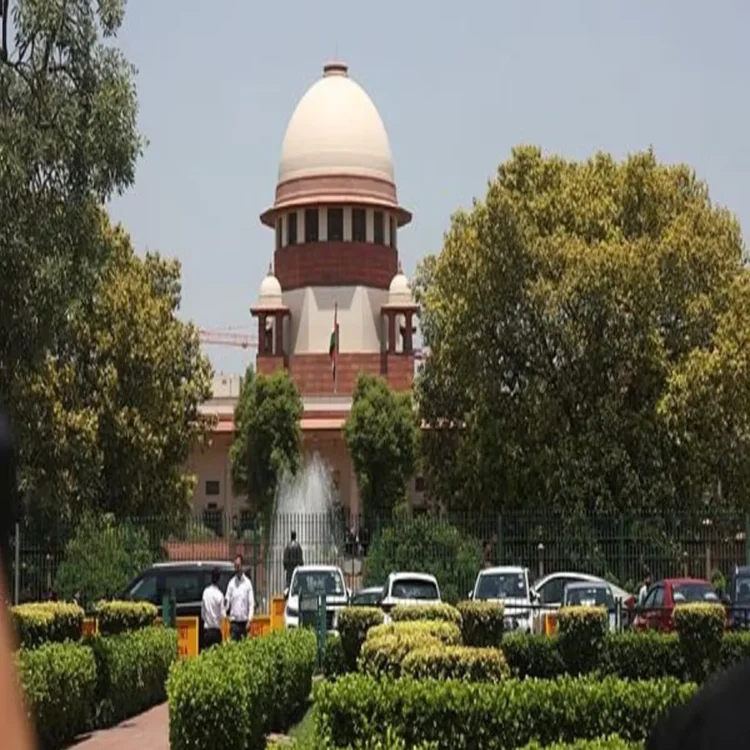
Petition Raises Concerns Over New Academic Requirement
Senior advocate Mukul Rohatgi mentioned the case before a bench headed by Chief Justice Surya Kant along with Justices Joymalya Bagchi and Vipul M Pancholi. He informed the court that the plea had been filed as a public interest litigation and involved concerns from several groups connected to school education.
According to Rohatgi, the petitioners include students, teachers, and parents who believe the new CBSE language policy may place additional pressure on Class 9 students. He argued that the sudden implementation of the rule could create confusion in schools and disrupt academic planning ahead of the new session.
The counsel requested an urgent hearing and urged the bench to take up the matter on Monday. During the proceedings, he stated that immediate judicial attention was necessary because the policy could lead to “chaos” once implemented in schools affiliated with the board.
Supreme Court Schedules Matter for Next Week
The bench, however, declined the request for an immediate hearing. Chief Justice Surya Kant informed the counsel that the court was currently functioning during a miscellaneous week and that the matter would be listed for hearing sometime next week.
Although the court did not issue any interim direction at this stage, its decision to hear the petition has drawn attention to the ongoing debate around language education in schools. The case is likely to focus on whether the policy was introduced with adequate consultation and whether students will face practical difficulties under the revised framework.
Legal observers believe the hearing could also examine broader questions related to educational policy, student workload, and implementation timelines in schools operating under the CBSE system.
Details of the CBSE Circular
Under a recent circular issued by the Central Board of Secondary Education, students entering Class 9 from July 1 will be required to study three languages as part of the curriculum. The policy further states that at least two of these languages must be native Indian languages.
The move is seen as part of wider efforts to align school education with multilingual learning goals. Supporters of the proposal argue that promoting Indian languages can help strengthen cultural understanding and improve linguistic diversity in classrooms.
However, critics of the decision claim that many schools may not have the necessary teaching staff or infrastructure to smoothly implement the requirement within a short period. Parents and teachers have also raised concerns about whether students shifting from different educational backgrounds may struggle to adapt to the revised language structure.
Debate Over Language Policy Continues
The issue has triggered discussions among education experts and school administrators regarding the balance between national educational goals and practical classroom realities. Some education professionals believe multilingual education can offer long-term benefits, while others feel the transition should be introduced gradually to avoid placing additional stress on students preparing for board-level studies.
Several schools are reportedly awaiting further clarification from CBSE regarding implementation guidelines, subject combinations, and evaluation methods linked to the language requirement.
The Supreme Court’s upcoming hearing is expected to provide greater clarity on whether the policy will continue as scheduled or face judicial scrutiny before being enforced nationwide.