
Sambhal – Judicial Report Highlights Key Findings on 2024 Violence Investigation
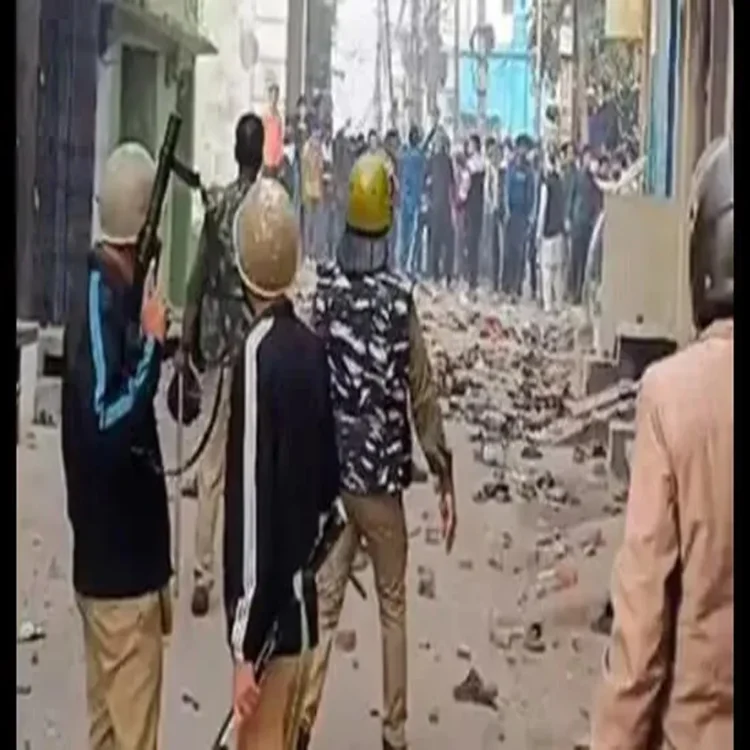
Sambhal –The judicial commission report on the November 2024 violence in Sambhal has outlined its findings on the clashes that erupted during a court-directed survey of the Shahi Jama Masjid. The report, recently presented in the Uttar Pradesh Legislative Assembly, states that the incident was the result of a pre-planned conspiracy rather than a sudden outbreak of violence. It also concludes that the bullets responsible for the four fatalities were not fired by police personnel, while several officers sustained injuries during the unrest.
Former DGP Explains Commission’s Findings
Former Uttar Pradesh Director General of Police Vikram Singh discussed the commission’s conclusions while speaking to ANI. Referring to the events of November 2024, he said the violence took place during a court-ordered survey of the Shahi Jama Masjid and involved stone-pelting and the use of weapons. According to him, the inquiry found that although four people lost their lives during the clashes, the deaths occurred in crossfire and were not caused by police firing.
Singh noted that the inquiry was conducted by a judicial panel headed by retired High Court judge Devendra Kumar Arora, along with IAS officer Amit Mohan and former DGP A.K. Jain. He said the panel examined the circumstances surrounding the violence before submitting its findings.
Individuals Named in the Inquiry
Speaking about the report, Vikram Singh said the commission identified several individuals whose roles came under scrutiny during the investigation. Among those mentioned were Samajwadi Party MP Zia ur Rahman Barq, Suhail Iqbal, advocate Afzal Ali, and other local figures.
According to Singh, the inquiry alleged that certain individuals attempted to obstruct the court-mandated survey by putting forward unlawful demands. He also stated that the commission appreciated the restraint shown by police personnel while recommending continued monitoring of the situation.
Assembly Receives Judicial Commission Report
The judicial commission’s report was tabled in the Uttar Pradesh Assembly on Wednesday. It describes the Sambhal violence as a planned conspiracy rather than an unexpected confrontation. The report also states that some members of the crowd allegedly attempted to seize weapons from police personnel during the disturbances.
The commission reportedly examined the roles of several local leaders, including Sambhal MP Zia ur Rahman Barq, Suhail Iqbal, son of Samajwadi Party MLA Iqbal Mahmood, as well as members of the Jama Masjid management committee, including President Zafar Ali and Secretary Mashhood Ali Farooqui.
BJP Leaders Seek Strict Action
Following the presentation of the report in the Assembly, several Bharatiya Janata Party leaders called for firm action against those found responsible if the allegations are established through the legal process.
BJP Rajya Sabha MP Manan Kumar Mishra said the government should take the strongest action based on the findings of the investigation. He expressed confidence that the authorities would proceed according to the conclusions reached by the inquiry commission.
Background of the Sambhal Violence
The judicial inquiry was constituted to investigate the violence that broke out on November 24, 2024, outside the Shahi Jama Masjid during a court-directed survey of the ASI-protected monument. The survey had been ordered after a petition filed by senior advocate Vishnu Shanker Jain sought to determine whether the mosque had originally been a temple.
The clashes claimed four lives and left dozens of police personnel injured, prompting the state government to establish the commission to examine the circumstances leading to the violence and assess the actions of all concerned parties.
Separate Assembly Demand on Historical Place Names
During a Special Mention in the Uttar Pradesh Assembly, another issue was also raised regarding roads and public landmarks named after historical rulers described by the speaker as aggressors and invaders.
A proposal was made for the formation of a commission to review such names and consider renaming roads, monuments, and public places after individuals who made significant contributions to the country. The demand also included a review of certain outdated laws.