
Football – FIFA World Cup 2026 Group Stage Ends with Historic Records Across Three Host Nations
Football – The group stage of the FIFA World Cup 2026 has wrapped up after delivering weeks of competitive football across Canada, Mexico and the United States. As the first edition featuring 48 participating nations, the expanded tournament has already established several new milestones both on the field and in the stands. With 72 matches completed in 16 host cities, fans witnessed one of the most diverse and widely attended group phases in World Cup history.
Tournament Sets New Attendance and Participation Benchmarks
FIFA reported that 4,644,549 spectators attended group-stage matches, reflecting the strong global interest generated by the tournament’s expanded format. Stadiums across the three host countries welcomed supporters from every continent, while approximately 300,000 hot dogs were sold during the opening phase. According to FIFA, if those hot dogs were placed end to end, they would stretch around 45 kilometres, roughly matching the distance between New York New Jersey Stadium and John F. Kennedy International Airport.
The governing body also confirmed that 1,248 footballers from 48 national teams were registered for the tournament, with 999 players featuring during the group stage. Attention now shifts to the knockout rounds, where 32 teams remain in contention for the title.
Knockout Qualification Reflects Growing Global Competition
The Round of 32 includes 13 European teams, nine African representatives, five South American sides, three teams from the Concacaf region and two Asian nations. FIFA highlighted that Africa has achieved its strongest-ever representation in the knockout phase, with nine CAF teams advancing. This surpasses the previous best, when only two African nations progressed from the group stage in both 2014 and 2022.
Concacaf also matched its best performance, as Canada, Mexico and the United States all secured places in the knockout rounds, equalling the region’s previous record set in 2014.
Several Nations Celebrate Historic Achievements
Bosnia and Herzegovina, Cabo Verde, Canada, DR Congo, Côte d’Ivoire, Egypt and South Africa all reached the FIFA World Cup knockout stage for the first time. Among the tournament newcomers, Cabo Verde completed the group phase without suffering a defeat. Midfielder Kevin Pina also created national history by scoring the country’s first-ever FIFA World Cup goal during the match against Uruguay.
Goals and Attacking Football Dominate Group Stage
The opening phase produced 215 goals from 72 matches, averaging three goals per game and establishing a new World Cup group-stage scoring record. For comparison, the entire Qatar 2022 tournament produced 172 goals.
France, Germany and the Netherlands finished as the highest-scoring teams of the group stage, each registering 10 goals. FIFA also recorded 1,774 total shots, an average of 24.6 attempts per match, with Belgium leading all teams after producing 73 shots. Panama was the only nation that failed to score during the group stage, while the overall World Cup goal tally has now reached 2,935.
Canada’s 6-0 victory over Qatar became the first occasion on which a Concacaf nation scored more than four goals in a single FIFA World Cup match. The United States also entered the record books by defeating Paraguay 4-1, marking the country’s first four-goal performance at the tournament.
Star Players Continue to Rewrite World Cup History
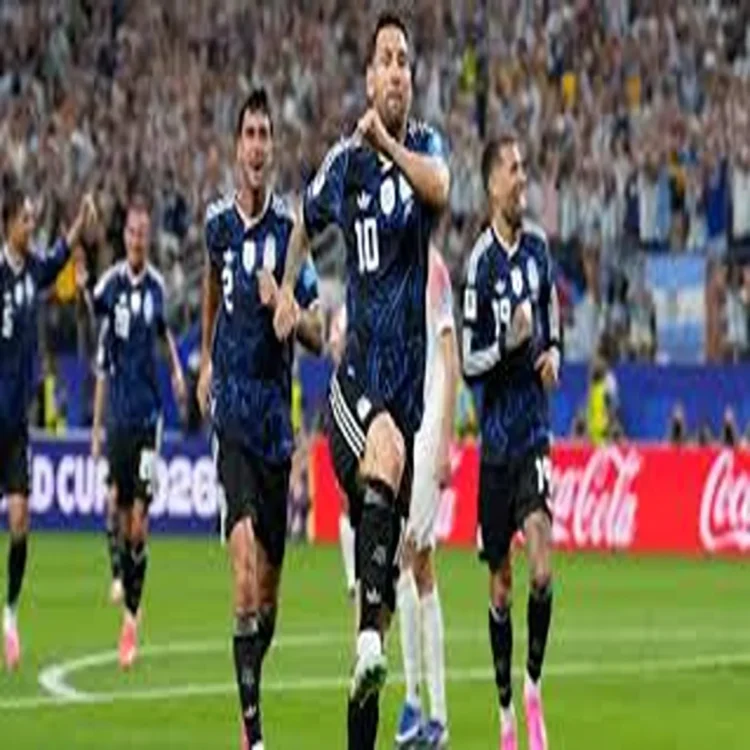
Argentina captain Lionel Messi added several remarkable achievements to his career. He became the first footballer to score in seven consecutive FIFA World Cup final tournament matches and extended his all-time tournament scoring record to 19 goals. Messi also became the oldest player to record a World Cup hat-trick at 38 years and 357 days.
Portugal captain Cristiano Ronaldo reached another personal milestone by taking his World Cup goal tally to 10, moving ahead of Eusebio as Portugal’s highest scorer in tournament history. England captain Harry Kane also claimed a new national record by becoming England’s leading FIFA World Cup scorer with 11 goals.
Coaches and Teams Establish New Records
Several coaching records were also broken during the group stage. Curacao manager Dick Advocaat became the oldest head coach in FIFA World Cup history at 78 years and 271 days. South Africa’s Hugo Broos became the oldest coach to win a World Cup match, surpassing the record previously set by Carlos Queiroz earlier in the tournament.
Morocco midfielder Ismael Saibari became the first African player to score in three consecutive FIFA World Cup matches. Japan’s 4-0 victory over Tunisia was recorded as the 1,000th match in FIFA World Cup history and also became the largest victory ever achieved by an AFC nation in the competition. Mexico secured four straight World Cup wins for the first time, while Senegal became the first African side to score five goals in a single FIFA World Cup match, highlighting the growing competitiveness of teams from every region.