
Technology – IIT Delhi Receives Major Donation to Boost AI Research Growth
Technology – The Indian Institute of Technology (IIT) Delhi has received a fresh financial boost aimed at strengthening its research capabilities and upgrading campus facilities. Anant Yardi, a former student of the institute and founder of Yardi Systems, has pledged ₹75 crore to support advanced work in artificial intelligence and infrastructure development.
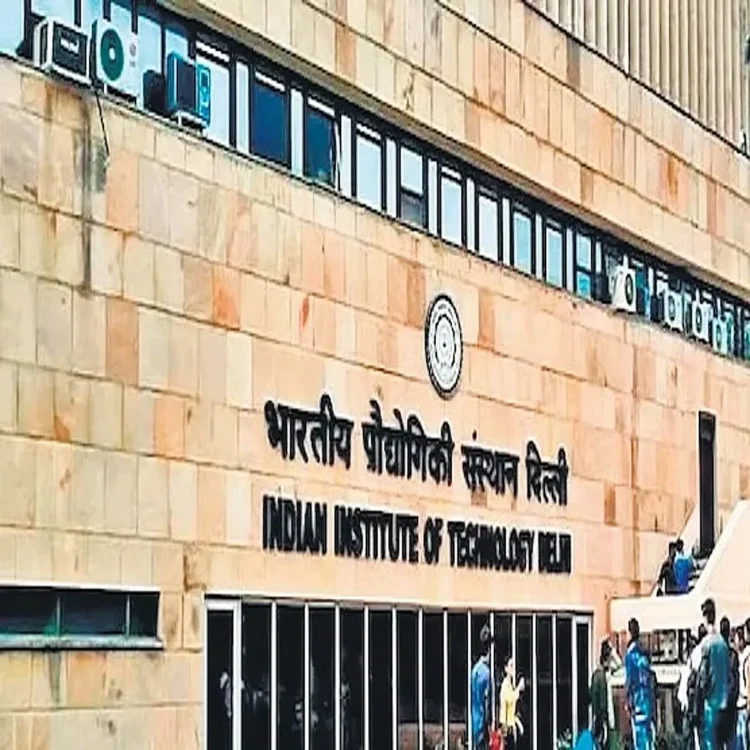
Contribution Reflects Long-Term Association
The 79-year-old alumnus, who completed his studies at IIT Delhi in 1968, has consistently supported his alma mater over the years. This latest contribution matches an earlier donation of the same amount, underlining his continued commitment to academic progress and innovation at the institute.
Officials at IIT Delhi said a significant share of the newly pledged funds will be allocated to the Yardi School of Artificial Intelligence. The remaining portion will be directed towards improving campus infrastructure, ensuring the institute remains equipped to meet growing academic and residential needs.
Focus on Expanding Campus Infrastructure
A key part of the funding will go toward modernising the institute’s physical facilities. IIT Delhi has outlined plans to expand its campus to accommodate increasing student intake and research activities. The first phase of this development programme includes constructing additional housing units as well as a new academic building.
These developments are intended to address space constraints while also providing improved living and learning conditions for students, researchers, and faculty members. The infrastructure upgrade is expected to support future growth and maintain the institute’s reputation as one of India’s leading engineering institutions.
Strengthening Artificial Intelligence Research
The Yardi School of Artificial Intelligence, established in September 2020, is set to benefit significantly from this funding. The school focuses on education and research in areas such as artificial intelligence, machine learning, and data science.
It has been designed to encourage interdisciplinary collaboration, bringing together experts from various academic departments. Research conducted at the school spans multiple sectors, including healthcare, robotics, transportation systems, weather prediction, materials science, and advanced manufacturing technologies linked to Industry 4.0.
By supporting such diverse applications, the initiative aims to create practical solutions to real-world challenges while advancing theoretical knowledge in AI-related fields.
Collaborative Academic Environment
Currently, the Yardi School of Artificial Intelligence involves more than 40 faculty members from different disciplines. This collaborative approach allows researchers to combine expertise from engineering, science, and technology domains, fostering innovation and problem-solving.
Institute officials noted that the latest financial support will enhance ongoing research projects and help attract new talent. It is also expected to improve access to advanced tools, laboratories, and computational resources required for cutting-edge AI research.
Boost to India’s Innovation Ecosystem
The donation is seen as a significant step toward strengthening India’s position in the global artificial intelligence landscape. With increased funding and improved infrastructure, IIT Delhi aims to expand its research output and contribute more actively to technological advancements.
Experts believe such contributions from alumni play a crucial role in supporting higher education institutions, especially in areas that demand continuous investment like artificial intelligence and data science.
An IIT Delhi official stated that the contribution would help the institute further develop its capabilities in advanced research and reinforce its standing as a leading centre for AI innovation in the country.
As institutions across India look to scale up their research efforts, partnerships between academia and industry leaders are becoming increasingly important. This latest pledge highlights how such collaborations can drive both academic excellence and technological progress.