
Technology – Army Expands Drone Training Network to Strengthen Battlefield Capabilities
Technology – Computer monitors show detailed terrain maps, moving targets and real-time flight data as young soldiers guide virtual drones through complex obstacle courses. While the setup resembles a video game at first glance, the scenarios are carefully designed to mirror real combat environments, where precision and quick decision-making are critical.
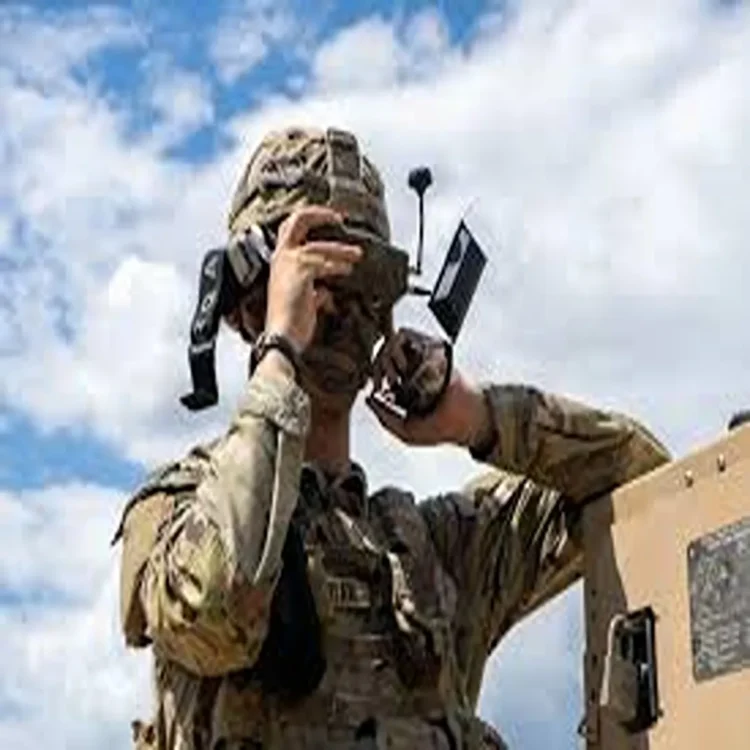
Expanding Training After Recent Operations
The Indian Army has been steadily strengthening its drone training infrastructure, particularly after operational experiences gained during Operation Sindoor. As part of this effort, several forward training nodes have been established along sensitive sectors, including the western front. These facilities are focused on preparing a new generation of unmanned aerial vehicle operators who can handle both surveillance and combat roles.
Drones have evolved significantly in recent years. Earlier used mainly for intelligence gathering and reconnaissance, they now play a vital role in direct battlefield operations. Their ability to provide continuous surveillance and carry out precision strikes has made them indispensable, especially in fast-changing combat situations.
Lessons from Operation Sindoor
During Operation Sindoor, UAVs were actively used for monitoring enemy positions, identifying targets and carrying out loitering munition strikes. This enabled frontline units to access real-time information without depending heavily on higher command structures. The result was faster decision-making and improved coordination across tactical formations.
These operational lessons have directly influenced the Army’s approach to training. The focus is now on creating highly skilled operators who can function independently in dynamic and high-pressure environments.
Structured Training and Simulation-Based Learning
To achieve this, the Army began setting up specialised drone training labs around two years ago. These labs are now operational across infantry units and independent brigades, ensuring a consistent and standardised training process.
Training begins with advanced simulators developed using indigenous software. These systems allow soldiers to understand drone controls, mission planning and emergency handling in a risk-free environment. According to officers overseeing the programme, simulation plays a crucial role in building reflexes and situational awareness.
Although the interface may appear similar to a gaming setup, the objective is far more serious. Trainees are taught to respond quickly to changing conditions, manage unexpected technical issues and operate effectively under pressure.
Transition to Live Systems and Advanced Modules
Once trainees complete the required simulator hours, they move on to operating real drone systems. The training covers a wide range of platforms, including small reconnaissance UAVs, first-person view drones and loitering munitions.
The curriculum includes mission planning, payload management and operations in challenging environments. Special attention is given to handling electronic interference and signal disruptions, which are common in modern warfare. Trainees must also complete obstacle-based tests designed to assess their control, precision and adaptability in confined and high-risk situations.
Those who demonstrate strong performance are selected for advanced roles, including instructor positions. Each training lab is capable of conducting up to 40 courses annually, ensuring a steady flow of skilled operators.
Joint Training and Inter-Agency Coordination
These facilities are not limited to Army personnel alone. When required, they also train members of the Border Security Force as part of coordinated efforts to address cross-border drone threats. This collaborative approach helps strengthen overall security and ensures better coordination between different agencies.
Integration into Combat Units
The trained operators are directly deployed into active units, where drone capabilities are being integrated at multiple levels. Infantry units are now being equipped with specialised platoons designed for surveillance and precision strike missions.
Similarly, artillery formations are incorporating UAV-based targeting systems to enhance accuracy and efficiency. Dedicated units are also being developed to carry out long-range operations using advanced drone swarms and remotely piloted aircraft.
The Armoured Corps is also moving towards integrating drone capabilities within mechanised units. Plans are underway to establish dedicated squadrons that will support reconnaissance and strike operations alongside traditional armoured platforms.
This shift reflects a broader transformation in military strategy, where unmanned systems are becoming central to modern warfare.