
Security – Army neutralizes World War II bomb found in riverbed
Security – A potentially dangerous relic from the Second World War was safely neutralized by the Indian Army after it was discovered in a river in Jharkhand, while the state also witnessed developments in governance and anti-insurgency efforts.
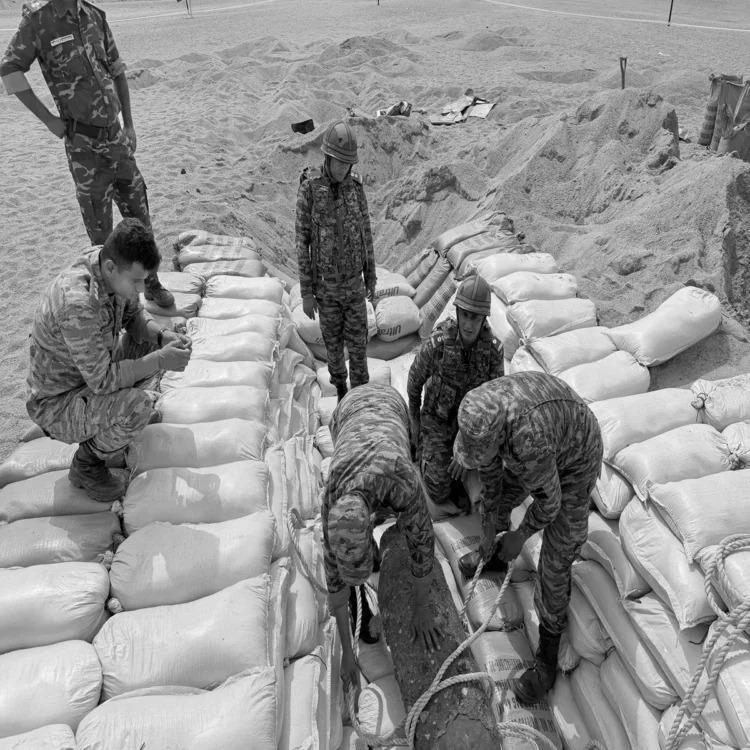
Old explosive uncovered as river levels drop
A large bomb believed to date back to World War II was defused by the Indian Army on Tuesday after being recovered from the Subarnarekha River near Baharagora in East Singhbhum district. Officials estimated the weight of the explosive device to be between 200 and 227 kilograms, indicating a high level of risk.
The bomb came to light on the night of April 15 when local villagers, who had gone fishing, spotted the object on the riverbed. Authorities noted that falling water levels due to rising summer temperatures exposed the long-buried explosive. This marked the third such recovery in the area within a few weeks, raising concern among residents about hidden wartime remnants in the region.
Earlier, on April 16, fear had spread across nearby villages including Panipoda and Nagudisai following the discovery of a similar device. Security teams responded promptly in both instances to ensure public safety and prevent any mishap.
Lokayukta appointment ends years-long vacancy
In a separate development, Jharkhand filled a key constitutional position that had remained vacant for several years. Governor Santosh Kumar Gangwar administered the oath of office to retired High Court judge Amitabh Kumar Gupta, who has now taken charge as the state’s Lokayukta.
The post had been unoccupied since June 2021, leading to concerns over delays in addressing complaints related to corruption and maladministration. The appointment is being viewed as a significant step toward strengthening accountability mechanisms within the state administration.
During the oath-taking ceremony, Justice Gupta emphasized his commitment to carrying out his responsibilities strictly within the bounds of law. He stated that his decisions would be guided by fairness and impartiality, without being influenced by external pressures or personal considerations.
Continued action against Maoist groups
Meanwhile, security forces continue to intensify operations against left-wing extremist groups active in the state. According to police data, 49 Maoists remain active across Jharkhand despite ongoing efforts to curb insurgency.
To accelerate the crackdown, authorities have announced a combined reward of ₹5.20 crore for credible information leading to the arrest of these individuals. The list includes 42 members associated with the CPI (Maoist), along with operatives from other groups such as the Jharkhand Jan Mukti Parishad, People’s Liberation Front of India, and Tritiya Prastuti Committee.
Officials noted that the number of wanted extremists has reduced from 58 to 49, reflecting progress in recent operations. However, they acknowledged that significant challenges remain in completely eliminating the threat.
Among those most wanted are senior figures such as Asim Mandal, linked to the Belpahari squad, and Politburo member Misir Besra. A reward of ₹1 crore each has been announced for information leading to their capture.
Focus on safety and stability
These developments highlight a broader focus on both public safety and institutional strengthening in Jharkhand. While the discovery of wartime explosives points to historical risks resurfacing due to environmental changes, the appointment of a Lokayukta and ongoing anti-insurgency measures indicate efforts to reinforce governance and law enforcement.
Authorities have urged residents to report any suspicious objects or activities immediately, particularly in areas where water levels are receding and buried items may become exposed.