
Regulation – Deadly Tamil Nadu Firecracker Blast Raises Oversight Concerns
Regulation – A powerful explosion at a firecracker manufacturing unit in Tamil Nadu’s Virudhunagar district on Sunday left at least 22 people dead and six others injured, drawing attention to significant weaknesses in the country’s regulatory system for hazardous industries.
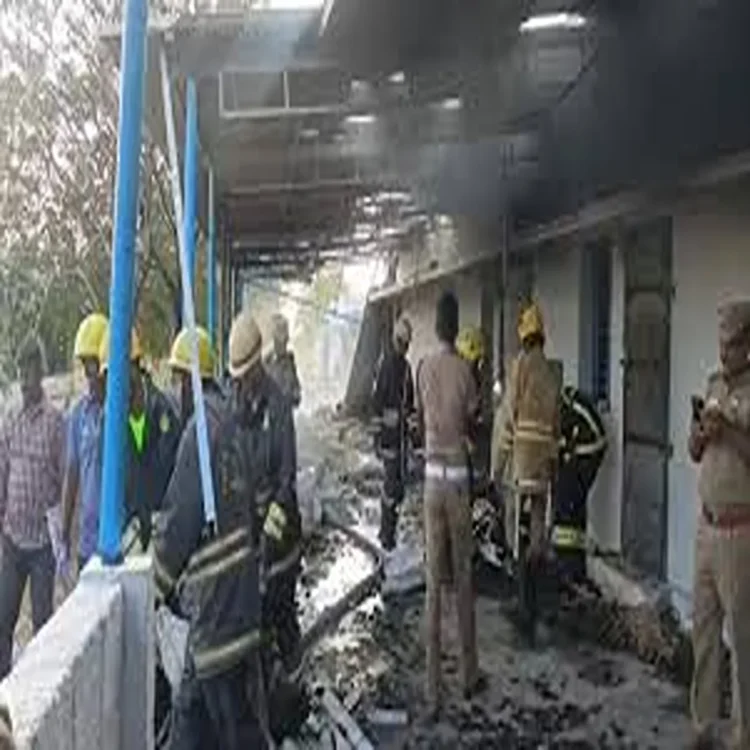
Massive Blast and Immediate Response
The incident occurred at the Vanaja Fireworks facility located in Kattanarpatti village. According to local accounts, the impact of the blast was so intense that it was felt several kilometres away, reportedly up to a 10-kilometre radius. Authorities described the situation as deeply distressing, with the state government dispatching senior officials to oversee relief and investigation efforts. Emergency teams worked through debris to locate victims and secure the site.
Fragmented Oversight Structure
In the aftermath, officials pointed to deeper structural issues within India’s regulatory framework governing explosive and hazardous industries. Responsibility for licensing and inspection of firecracker units lies with the Petroleum and Explosives Safety Organisation (PESO), operating under the Ministry of Commerce and Industry. However, limitations in staffing have significantly reduced its ability to conduct regular inspections.
At the same time, fire safety guidelines are framed by another central body, the Directorate General of Fire Services, Civil Defence and Home Guards under the Ministry of Home Affairs. Despite setting national standards, this agency does not possess enforcement authority. Implementation is left entirely to state governments, resulting in uneven compliance across regions. Officials familiar with the system noted that the lack of coordination between these institutions often leads to gaps in oversight.
Inspection Gaps Highlight Systemic Weakness
Data from recent official reports underscores the scale of the issue. In the 2023–24 financial year, only a small fraction of licensed explosive units underwent inspection. Out of more than 1.36 lakh such facilities, just over 12,000 were checked, representing less than 10 percent coverage. Inspections under related petroleum regulations were even lower, covering just over 5 percent of registered premises.
When combined, inspections accounted for barely 6.62 percent of nearly 3.9 lakh licensed hazardous units nationwide. This means that more than 90 percent of such facilities operated without direct regulatory scrutiny during the year. Officials have acknowledged that this gap poses serious safety risks, particularly in industries dealing with volatile materials.
Staffing Shortages and Resource Allocation
The shortfall in inspections has been largely attributed to workforce limitations within PESO. A significant number of sanctioned positions remain vacant, including senior-level roles. Roughly one-third of the organisation’s total posts are unfilled, limiting its operational reach.
Interestingly, financial data shows that the organisation continues to generate substantial revenue through licensing and related fees. In the 2023–24 period, it collected over Rs 300 crore, while operational expenditure remained comparatively low. Despite maintaining a surplus for several consecutive years, resource constraints persist, raising questions about allocation and capacity-building efforts.
Weak Adoption of Licensing Systems
Further concerns have been raised about the limited adoption of centralised licensing mechanisms at the district level. Reports indicate that many local authorities have not fully implemented these systems, which are intended to streamline approvals and monitoring.
Additionally, safety advisories issued by the Directorate General of Fire Services remain recommendatory rather than mandatory. Since states are not legally bound to enforce these guidelines, adherence varies widely, contributing to inconsistent safety standards across the country.
A Disjointed Framework Under Scrutiny
The tragic incident in Virudhunagar has brought renewed focus on the need for stronger coordination between regulatory bodies and more effective enforcement mechanisms. Experts suggest that without addressing staffing shortages, improving inspection coverage, and ensuring accountability at all levels, similar risks may persist in the future.