
Politics – Proposed Lok Sabha Expansion Sparks Concerns Over Regional Balance
Politics – The Union government’s reported move to expand the strength of the Lok Sabha and revise constituency boundaries has triggered a sharp political response, particularly from leaders in southern India. Karnataka Deputy Chief Minister DK Shivakumar on Wednesday expressed strong reservations, warning that such changes could weaken the representation of southern states in Parliament.
Concerns Over Representation Imbalance
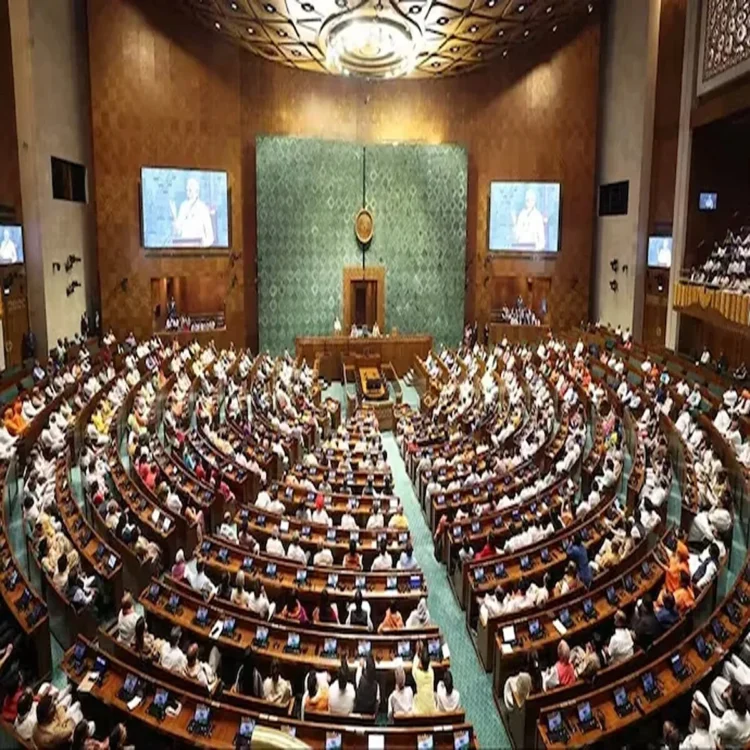
Shivakumar argued that increasing the number of Lok Sabha seats from 543 to a proposed 850 could disproportionately affect states that have successfully controlled population growth. According to him, the plan risks diluting the political voice of southern regions while benefiting states with higher population increases.
He described the proposal as a structural shift that may alter the balance of representation in India’s federal system. In his view, rewarding states based solely on population growth, without considering governance outcomes, could create long-term disparities.
Allegations of Political Motive
Taking to social media, Shivakumar suggested that the Centre’s approach reflects an attempt at political recalibration. He maintained that such a large-scale change should not be rushed without adequate discussion and transparency.
He further noted that undertaking such reforms during an election period raises concerns about intent and timing. According to him, decisions that reshape democratic representation must involve wider consultation and consensus among states.
Support for Women’s Reservation, With Conditions
The Congress leader clarified that his party fully supports the idea of reserving seats for women in legislative bodies. He pointed out that the concept has long been part of the party’s vision and has been central to national discussions on gender representation.
However, he emphasized that the implementation of women’s reservation should not be tied to delimitation or seat expansion. Linking the two processes, he argued, could complicate and delay the rollout of reservation policies meant to enhance women’s participation in governance.
Call for Federal Balance
Shivakumar stressed the importance of maintaining equilibrium within India’s federal structure. He said that southern states are likely to come together to protect their interests and ensure that their representation is not reduced.
He highlighted that India’s strength lies in balanced governance, where all regions have an equitable voice. Any move that disrupts this balance, he suggested, could lead to political friction and undermine cooperative federalism.
Background of Proposed Changes
The debate comes in the context of the Nari Shakti Vandan Adhiniyam, 2023, which provides for 33 percent reservation for women in legislatures. The implementation of this law is currently linked to the delimitation process, which is expected to follow the next census exercise.
Sources indicate that the government is considering amendments to separate delimitation from the census timeline, enabling earlier implementation of women’s reservation—possibly before the 2029 general elections.
At the same time, proposals to increase the total number of Lok Sabha seats to 850 have surfaced. Of these, around 815 seats are expected to be allocated to states, while 35 would be reserved for Union Territories. This marks a significant increase from the current strength of 543 seats.
Broader Political Implications
The proposed changes have opened up a wider discussion on how representation should be determined in a diverse country like India. While population remains a key factor, questions are being raised about whether other indicators—such as development and governance—should also play a role.
As discussions continue, the issue is expected to remain a major point of debate among political parties and state governments in the coming months.