
Politics – Congress Challenges Election Commission Notice Over Kharge Remarks Row
Politics – The Congress party has strongly pushed back against a notice issued by the Election Commission, arguing that it unfairly targets its president over remarks made during a political speech. The response comes after the Commission flagged comments by Mallikarjun Kharge as a potential violation of the Model Code of Conduct (MCC), citing alleged derogatory references to Prime Minister Narendra Modi.
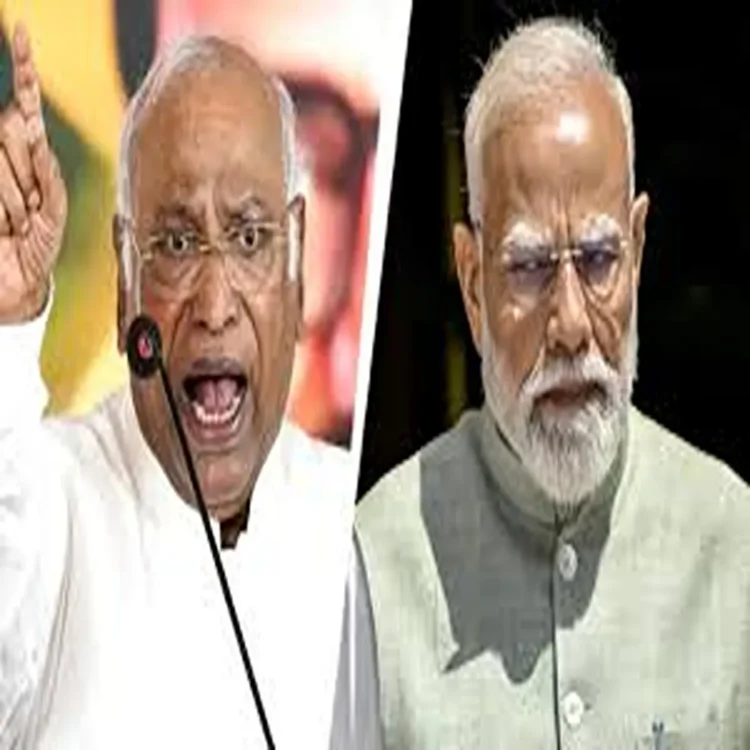
Congress questions intent behind notice
In its reply, the party suggested that the notice reflects a selective reading of Kharge’s statement and ignores the broader context in which it was delivered. Congress general secretary Jairam Ramesh stated that the explanation had already been made public, yet authorities appeared to rely on an isolated excerpt presented by the complainant.
According to the party, such an approach raises concerns about whether due consideration was given before issuing the notice. Ramesh argued that the remarks, when read in full, do not violate election guidelines or any existing law.
Clarification from Kharge on remarks
The Congress response included Kharge’s own clarification, in which he denied using the term “terrorist” for the Prime Minister. Instead, he explained that his comments referred to what he described as a climate of pressure created through institutions like enforcement agencies.
Kharge maintained that his words were meant to highlight concerns about political intimidation rather than to label any individual. The party emphasized that the distinction had been clearly stated and should have been taken into account by the Commission.
Concerns over limited response time
Another point raised by the Congress leadership was the short window provided to respond. The notice reportedly required a reply within 24 hours, which the party described as inadequate given Kharge’s ongoing campaign commitments.
Ramesh requested additional time to submit a comprehensive response and proposed that a senior delegation of party leaders be allowed to present their position directly. He suggested that the tight deadline gave the impression of procedural formality rather than a genuine effort to ensure fairness.
Discrepancies in issued notices highlighted
The Congress also pointed to what it described as inconsistencies in the documentation itself. According to the party, two notices bearing the same reference number and date were issued but signed by different officials.
One of these notices reportedly mentioned a complaint filed by Derek O’Brien of the Trinamool Congress, while the other omitted the complainant’s name. The party questioned why such variations existed and whether any withdrawal or correction had been formally communicated.
Allegations of selective enforcement
In its reply, Congress alleged that the Commission’s actions reflect a pattern of responding primarily to complaints aligned with the ruling establishment, rather than independently assessing violations.
The party further argued that similar or more serious instances involving senior leaders of the ruling side had not received comparable attention. It cited recent remarks and campaign statements as examples that, in its view, warranted scrutiny under the MCC.
References to statements by senior leaders
Among the issues raised, Congress referred to a recent national address by Prime Minister Modi, claiming that it included direct criticism of the opposition during a period when such remarks are restricted.
Additionally, the party mentioned campaign statements made by Home Minister Amit Shah, suggesting that certain promises could fall under provisions of election law governing inducements. Congress argued that these instances should have prompted independent action by the Election Commission.
Call for consistent application of rules
The party concluded its response by urging the Commission to ensure that rules are applied uniformly across political actors. It stressed that maintaining public confidence in the electoral process requires impartial enforcement and careful evaluation of context in political speech.
As the election campaign continues, the exchange highlights ongoing tensions between political parties and regulatory authorities over the interpretation and application of the Model Code of Conduct.