
Parliament – Women’s Reservation Bill Fails After Heated Political Clash
Parliament – The rejection of the Constitution (131st Amendment) Bill, 2026, in the Lok Sabha has triggered a sharp political exchange, with Congress leaders accusing the Union government of lacking seriousness and turning a key issue into a political spectacle.
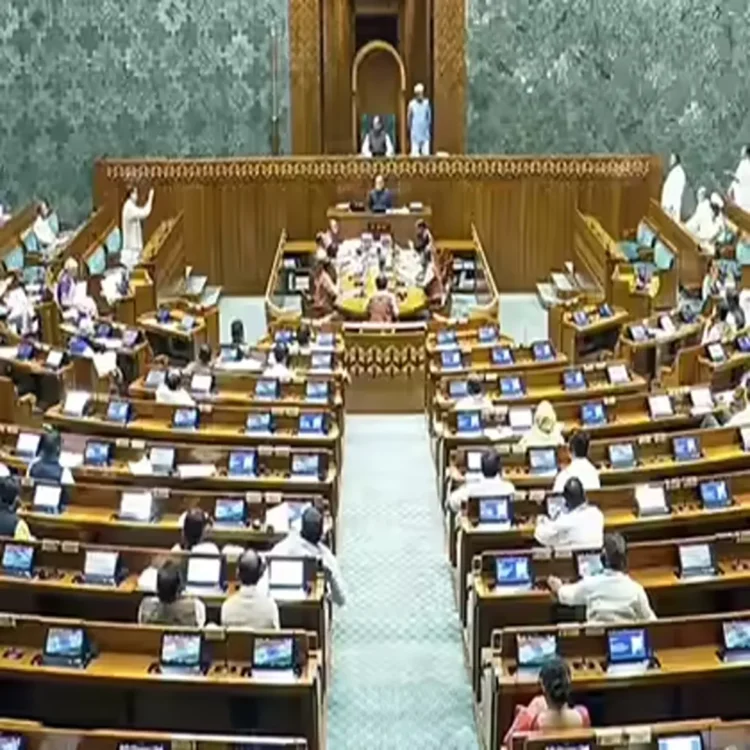
The proposed legislation, which aimed to introduce 33 per cent reservation for women in Parliament and increase the total number of seats, fell short of the special majority required for constitutional amendments. Despite securing more votes in favour than against, the Bill could not meet the two-thirds threshold necessary for passage.
Opposition Questions Government’s Intent
Soon after the outcome, Congress leaders voiced strong criticism of the government’s handling of the Bill. Party MP Imran Masood said the result was predictable, claiming the government never intended to see the proposal through. He described the entire exercise as a poorly executed political event, arguing that there was no genuine commitment behind the move.
Masood further stated that his party had consistently supported women’s reservation, adding that the idea was not new. He credited the origins of the proposal to former Prime Minister Rajiv Gandhi, pointing out that similar efforts in the past had faced opposition from groups that are now backing the idea.
Congress Reaffirms Support for Reservation
Congress General Secretary (Organisation) KC Venugopal reiterated the party’s long-standing position on women’s representation. He said the party has always supported legislation aimed at ensuring greater participation of women in politics and urged the government to move quickly to implement such measures before the 2029 general elections.
According to Venugopal, the need for women’s reservation is widely accepted across political lines, and delays in implementation only weaken democratic representation. He stressed that the government must take concrete steps instead of limiting the issue to debates and proposals.
Strong Reactions Over Democratic Process
Congress MP Pramod Tiwari also weighed in, framing the Bill’s defeat as a moment that protected democratic principles. He argued that attempts to alter political structures without broader consensus should be resisted. Tiwari suggested that the failure of the Bill prevented what he described as an inappropriate attempt to reshape the political framework of the country.
His remarks reflected a broader concern within the Opposition that constitutional amendments require careful deliberation and consensus, rather than being driven by political calculations.
Voting Outcome and Legislative Requirements
The Bill was put to vote after a day-long discussion in the Lok Sabha. It received 298 votes in favour and 230 against. While this indicated majority support, constitutional amendments require a special majority, meaning at least two-thirds of the members present and voting must approve the measure.
As a result, the Bill failed to pass despite crossing the simple majority mark. The voting took place on April 17, marking a significant moment in the ongoing debate over women’s representation in India’s legislative bodies.
Political Tensions Continue
The development has intensified the ongoing confrontation between the ruling NDA alliance and the Opposition. While the government has not yet issued a detailed response to the criticism, the issue is expected to remain a key political talking point in the coming months.
The debate over women’s reservation has a long history in India, with multiple attempts made over the decades to introduce such provisions. The latest setback highlights both the complexity of constitutional amendments and the challenges of building consensus on politically sensitive reforms.
As discussions continue, the focus is likely to remain on whether a renewed effort can bridge political differences and bring the long-pending proposal closer to reality.