
Missile – India Tests Indigenous Naval Strike Missile in Bay of Bengal
Missile – India marked a significant step forward in its homegrown defence capabilities on Wednesday, as the Defence Research and Development Organisation (DRDO) and the Indian Navy successfully conducted the first-ever salvo launch of the Naval Anti-Ship Missile Short Range (NASM-SR).
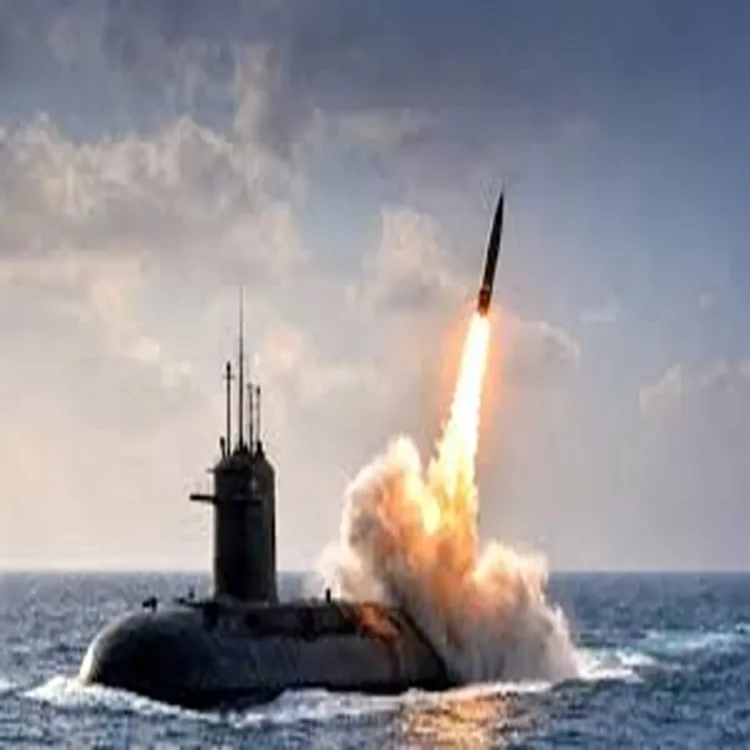
The test involved firing two missiles in quick succession from a Sea King helicopter over the Bay of Bengal, off the coast of Odisha. The launch was carried out from the Integrated Test Range (ITR) at Chandipur, demonstrating coordinated strike capability under operational conditions.
First Salvo Launch Demonstrates Operational Readiness
This trial represents the first time an indigenous air-launched anti-ship missile system has been tested in a salvo configuration. Such a capability is crucial in modern naval warfare, where multiple missiles are deployed rapidly to overwhelm enemy defences.
According to an official statement, all planned objectives of the mission were achieved successfully. Data collected through radar systems, electro-optical tracking, and telemetry confirmed the missile’s performance throughout the test.
The trial also validated the system’s ability to execute coordinated strikes, a key requirement for real-world naval engagements.
Precision Strike at Waterline Achieved
One of the standout features demonstrated during the test was the missile’s ability to hit targets at the waterline. This strike approach is designed to inflict maximum structural damage on enemy vessels by targeting the most vulnerable section of a ship’s hull.
Officials noted that both missiles successfully executed this profile, highlighting the system’s effectiveness in achieving mission-critical outcomes such as disabling or neutralising hostile ships.
Indigenous Replacement for Legacy Systems
The NASM-SR has been developed as India’s first domestically designed helicopter-launched anti-ship missile. It is intended to replace the ageing Sea Eagle missile currently deployed on naval Sea King helicopters.
Beyond the Sea King platform, the missile is also expected to be integrated with other aircraft in the future, including the MH-60R Seahawk and the HAL Dhruv Advanced Light Helicopter. This flexibility is likely to enhance the Indian Navy’s operational reach and versatility.
Advanced Technology and Design Features
The missile is powered by a solid-propellant system that includes an ejectable booster and a sustained propulsion phase, enabling it to achieve a range of approximately 55 kilometres. It operates at subsonic speeds while maintaining a sea-skimming trajectory, which helps reduce detection by enemy radar systems.
Several advanced technologies have been incorporated into its design. These include an imaging infrared seeker for target acquisition, a fibre-optic gyroscope-based inertial navigation system, and a radio altimeter for accurate altitude control.
Additionally, the missile features integrated avionics, electro-mechanical actuators, and jet vane control systems. A high-bandwidth two-way data link allows for lock-on-after-launch capability and enables operators to retarget the missile during flight if required.
Collaborative Development and Industry Participation
The NASM-SR programme has been led by the Research Centre Imarat in Hyderabad, working in collaboration with multiple DRDO laboratories across the country. These include the Defence Research and Development Laboratory, the High Energy Materials Research Laboratory, and the Terminal Ballistics Research Laboratory, among others.
The Integrated Test Range at Chandipur also played a key role in facilitating the trial.
Under the Development-cum-Production Partner model, Adani Defence and Aerospace has been designated as the primary manufacturing partner. The programme also involves contributions from micro, small and medium enterprises, start-ups, and various Indian industry suppliers providing components and subsystems.
This collaborative approach reflects a broader push to strengthen domestic defence manufacturing and reduce reliance on imported systems.
Strengthening Maritime Strike Capability
The successful test is seen as a major milestone in enhancing India’s maritime strike capabilities. With increasing focus on indigenous defence technologies, the NASM-SR programme underscores the country’s efforts to build self-reliant and technologically advanced military systems.