
Kashmir – How the Events of July 13, 1931 Reshaped the Region’s Political Journey
Kashmir –History records several moments that permanently influence the future of a society, and July 13, 1931, remains one of the most significant dates in the history of Jammu and Kashmir. The deaths of 22 protesters outside Srinagar Central Jail became far more than an isolated tragedy. The incident marked a turning point that altered political discourse, social relationships, and public perceptions across the princely state. Over the decades, its impact extended beyond Kashmir, influencing regional politics, the events surrounding Partition, and the wider strategic landscape of South Asia.
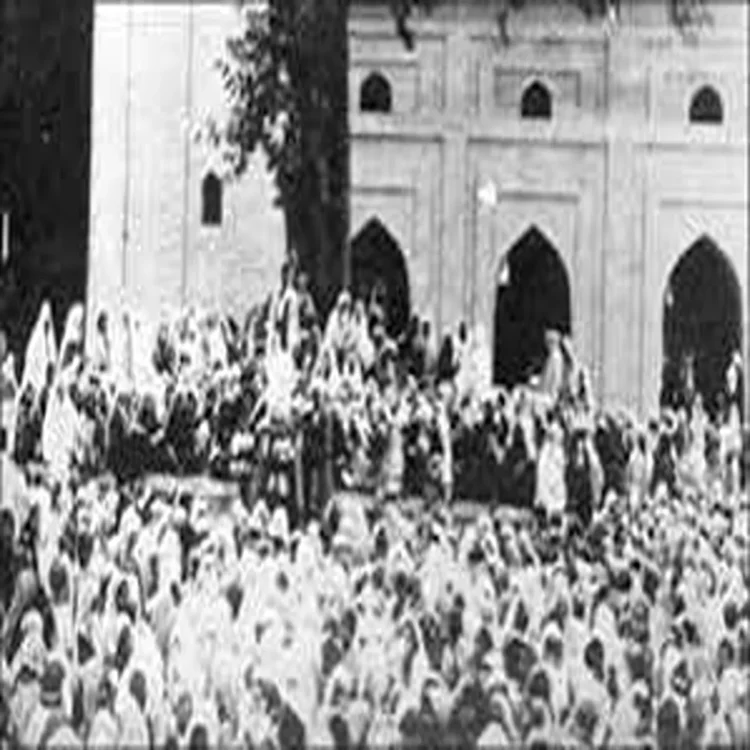
A Defining Moment in Kashmir’s History
The developments of July 1931 cannot be viewed through a single perspective. While many regard the incident as a struggle for political rights under an autocratic administration, others remember the violence that followed and its lasting impact on community relations. The day ultimately transformed existing grievances into competing political narratives, creating divisions that continued to influence generations. Even today, discussions surrounding the event reflect differing historical experiences among the communities of Jammu and Kashmir.
Conditions Before the 1931 Unrest
Before these events unfolded, Jammu and Kashmir was governed by Maharaja Hari Singh under the Dogra administration. The state faced several economic and administrative challenges. Many members of the Muslim majority expressed concerns about limited representation in government employment, taxation policies, and restricted opportunities in public administration. At the same time, the global economic slowdown severely affected the Valley’s silk and shawl industries, leading to rising unemployment and financial hardship.
Meanwhile, the Kashmiri Pandit community, though much smaller in population, held an important presence in government services due to generations of investment in education and scholarship. The community also remained concerned about protecting employment opportunities and preserving the State Subject regulations introduced in 1927. Despite these differences, the broader cultural identity of Kashmiriyat continued to provide a shared social foundation, preventing these concerns from becoming an irreversible communal divide.
The Incident Outside Srinagar Central Jail
Tensions escalated following the arrest of Abdul Qadeer, whose public speech challenged the authority of the Maharaja. During court proceedings held inside Srinagar Central Jail, a large crowd assembled outside seeking access to the trial. As the situation became increasingly tense, clashes broke out between demonstrators and state authorities. Police opened fire after official orders were issued, resulting in the deaths of 22 protesters.
The incident sent shockwaves throughout the princely state. In its aftermath, communal violence spread in parts of Srinagar, with attacks on properties and businesses and casualties reported from different communities. The violence weakened the long-standing tradition of coexistence that had shaped Kashmir’s social fabric for generations.
Political Changes That Followed
The events of 1931 significantly altered the political landscape of Jammu and Kashmir. Sheikh Mohammad Abdullah emerged as one of the Valley’s leading political figures. In 1932, the All Jammu and Kashmir Muslim Conference was established to represent political aspirations within the Muslim community. Seven years later, the organisation evolved into the National Conference, reflecting a broader political vision that sought to promote secular participation.
Although political objectives expanded over time, the emotional impact of the 1931 unrest continued to influence public opinion. Political mobilisation increasingly reflected religious identities, making it difficult to restore the earlier sense of social harmony.
Strategic Importance Beyond Internal Politics
The developments within Jammu and Kashmir also coincided with broader geopolitical interests. During this period, the British Empire viewed the northern frontier of the princely state as strategically important because of its location near Central Asia, Afghanistan, China, and key regional trade routes.
Gilgit became particularly significant due to its geographic position. Historians generally agree that British strategic interests played a central role in the 1935 lease of the Gilgit Agency. Many scholars also note that the political instability following the 1931 unrest reduced the negotiating strength of Maharaja Hari Singh, indirectly increasing British influence over the state’s frontier administration.
Influence on Later Historical Developments
The legacy of July 1931 extended well beyond the decade in which it occurred. The events preceding 1947, including the tribal invasion, the accession of Jammu and Kashmir to India, political developments in Gilgit, and the subsequent division of the former princely state, permanently reshaped the region’s political geography.
Strategic analysts have presented differing interpretations regarding the role of major powers during this period. A number of scholars argue that wider geopolitical considerations, particularly those linked to emerging Cold War priorities and regional security interests, influenced international approaches to Kashmir after Partition. These interpretations remain part of ongoing academic and strategic debate.
A Legacy That Continues to Shape Public Memory
More than nine decades later, July 13, 1931, continues to evoke different responses among the people of Jammu and Kashmir. For many Muslims, it represents the beginning of organised political assertion and demands for representative governance. For many Kashmiri Pandits, it recalls a period marked by insecurity following the communal violence that succeeded the firing. These contrasting memories gradually replaced older traditions of shared cultural identity with competing historical narratives.
Political developments after 2019 have introduced significant constitutional changes, yet discussions about reconciliation continue. Historians and policy experts broadly agree that any lasting peace in the region will require an understanding of historical experiences, mutual trust, and sustained efforts toward stability. The story of July 13, 1931, therefore remains an important chapter in understanding the evolution of Kashmir’s politics, society, and strategic significance within South Asia.