
Judiciary – Supreme Court Reviews Election Commission Appointment Dispute
Judiciary – The Union government has informed the Supreme Court that the Constitution does not make it mandatory to include members of the judiciary in the committee responsible for appointing the Chief Election Commissioner and Election Commissioners. According to the Centre, the decision to include or exclude judicial representatives from the selection process falls within the authority of Parliament and remains a matter of legislative policy rather than a constitutional obligation.
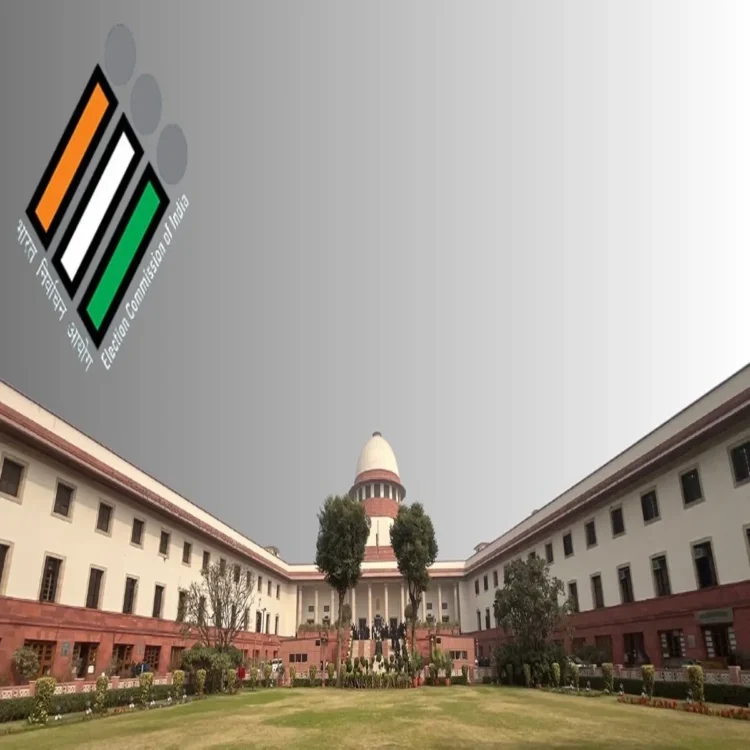
The government made its submissions while defending the recently enacted law governing appointments to the Election Commission of India. The Centre argued that replacing the Chief Justice of India with a Union cabinet minister in the selection panel does not violate constitutional principles or weaken the independence of the Election Commission.
Centre Defends Changes to Appointment Panel
In its affidavit before the apex court, the Centre maintained that the law passed by Parliament is legally sound and does not suffer from any constitutional defect. It stressed that for more than seven decades, appointments to the Election Commission were made through executive decisions, and during that period there was no evidence to suggest that elections in the country had been compromised.
The government also opposed claims made by petitioners that the absence of the Chief Justice of India from the appointment committee could undermine the neutrality of the Election Commission. According to the Centre, such concerns are speculative and unsupported by factual evidence.
It further stated that judicial review cannot be based on assumptions about what type of appointment mechanism may appear more desirable. The Centre argued that the court’s role is limited to examining the constitutional validity of a law and not deciding whether an alternative process might be preferable.
Government Questions Basis of Petitions
The affidavit submitted to the court said that the allegations raised against the law lacked legal foundation. The Centre pointed out that legislation cannot be challenged merely on the basis of alleged political motives or assumptions regarding future misuse.
Attorney General R. Venkataramani, representing the Union government, argued before the court that apprehensions about the future conduct of Election Commissioners cannot by themselves make a law unconstitutional. He requested the Supreme Court to dismiss the group of petitions challenging the legislation.
The government also emphasized that independence of constitutional institutions depends on several safeguards and cannot be judged solely on the composition of the appointment committee.
Supreme Court Hearing Multiple Petitions
The Supreme Court is currently hearing several public interest litigations questioning the constitutional validity of the law related to the appointment of the Chief Election Commissioner and Election Commissioners. The petitions challenge the exclusion of the Chief Justice of India from the selection committee and argue that the legislation was passed in Parliament without sufficient discussion.
Petitioners have contended that the earlier arrangement suggested by the Supreme Court, which included the Chief Justice of India in the panel, offered greater institutional balance. They believe replacing the judicial representative with a cabinet minister may increase executive influence in appointments.
However, the Centre rejected these arguments and maintained that Parliament has full authority to determine the structure of the appointment process. It insisted that no constitutional provision requires judicial participation in such committees.
Debate Over Institutional Independence Continues
The case has triggered wider discussions on the balance between executive authority and institutional independence in constitutional bodies. Legal experts and political observers are closely watching the proceedings, as the Supreme Court’s decision could influence future interpretations regarding appointments to key constitutional posts.
The Election Commission of India plays a central role in conducting free and fair elections across the country. As a result, the composition of the appointment panel has become an important constitutional and political issue.
The matter is expected to continue before the Supreme Court in the coming weeks as both sides present detailed arguments regarding the scope of parliamentary powers and constitutional safeguards.