
Judiciary – Supreme Court Halts NCERT Class 8 Textbook Nationwide
Judiciary – The Supreme Court of India on Thursday ordered an immediate suspension of a Class 8 social science textbook issued by the National Council of Educational Research and Training (NCERT), citing serious concerns over a chapter discussing corruption within the judiciary. The court directed authorities to withdraw all printed copies from circulation and remove digital editions without delay.
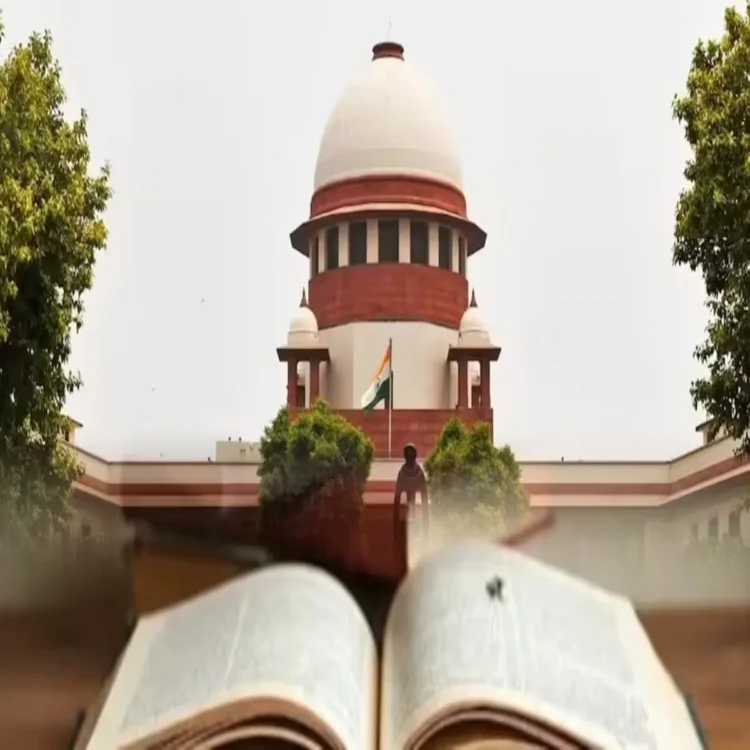
Court Orders Immediate Withdrawal
A Bench led by the Chief Justice instructed both central and state governments to ensure swift compliance. The judges made it clear that any failure to implement the directive would invite strict consequences. The order covers textbooks already distributed to schools as well as those available on online platforms.
In addition, the court issued notices to the NCERT Director and the School Education Secretary, asking them to explain the circumstances under which the chapter was approved and included in the curriculum. The Bench indicated that responsibility would be fixed after examining the responses.
During the hearing, the Chief Justice underscored the seriousness of the matter, stating that accountability would be determined. The court expressed concern that the material could influence young minds and potentially harm public trust in the judicial system.
Concerns Over Institutional Image
According to observations made in court, the judges felt that the chapter’s contents appeared to cast the judiciary in a negative light. The Bench remarked that such portrayals, if not carefully handled, might weaken confidence in constitutional institutions.
The court further noted that educational material must be drafted with sensitivity, especially when addressing subjects involving public institutions. It emphasized that maintaining respect for the judiciary is essential for preserving democratic values and the rule of law.
The judges also indicated that individuals involved in approving the content would not be exempt from scrutiny. The matter, they suggested, could warrant a more detailed inquiry to determine how the chapter cleared editorial and administrative processes.
Government Response and Apology
Representing the Union government, Solicitor General Tushar Mehta conveyed an unconditional apology on behalf of the Ministry of Education. However, the Bench pointed out that official communication from NCERT did not explicitly contain a similar expression of regret. Instead, it appeared to defend the inclusion of the chapter.
The court signaled that it may consider further steps after reviewing explanations from the concerned officials. The possibility of a comprehensive investigation remains open.
Background of the Controversy
The proceedings began after the court took suo motu cognisance of the chapter’s contents. The textbook section in question discussed challenges facing the judicial system, including corruption, case backlogs, and shortages of judges.
Data cited in the chapter stated that around 81,000 cases are pending before the Supreme Court. It also mentioned approximately 62.40 lakh pending matters in various high courts and nearly 4.70 crore cases in district and subordinate courts. These figures were presented as part of a broader discussion on systemic challenges.
The text further referred to internal accountability measures within the judiciary. It highlighted the Centralised Public Grievance Redress and Monitoring System (CPGRAMS) as a mechanism for filing complaints. According to the chapter, more than 1,600 grievances were registered through this platform between 2017 and 2021.
In addition, the book quoted former Chief Justice of India B R Gavai, who in July 2025 acknowledged that instances of misconduct had affected public perception of the judiciary. The quotation emphasized that restoring confidence requires transparent and decisive corrective action, describing accountability and openness as essential democratic principles.
Next Steps
With the textbook now barred from use, schools and education boards are expected to follow the court’s directive promptly. The Supreme Court’s decision highlights the sensitivity surrounding how constitutional institutions are represented in educational content.
Further hearings are likely after the concerned officials submit their responses. The outcome may shape future guidelines on curriculum development and oversight, particularly on topics involving key public institutions.