
Judiciary – Former Officials Raise Alarm Over CJI Environmental Remarks
Judiciary – A group of retired officers from the All India and Central Services has raised concerns over comments made by the Chief Justice of India during a recent Supreme Court hearing linked to the expansion of Gujarat’s Pipavav Port project. The former civil servants said the remarks could create an atmosphere that discourages citizens from approaching courts on environmental matters.
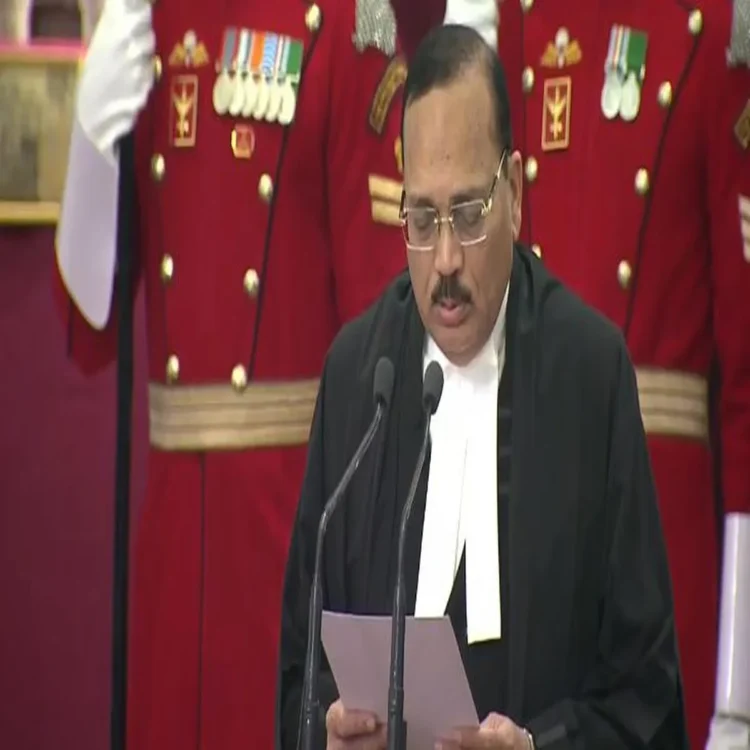
Former Bureaucrats Express Concern
The Constitutional Conduct Group, a forum of retired senior bureaucrats, released a public letter signed by 71 former officials. In the letter, they described the Chief Justice’s oral observations as troubling and said the comments reflected a possible sense of prejudice toward environmental litigants.
The issue arose during proceedings related to appeals against a November 2025 ruling of the National Green Tribunal’s western bench. The tribunal had upheld both environmental and Coastal Regulation Zone clearances granted for the Pipavav Port expansion project in Gujarat.
During the hearing, the Supreme Court indicated that it was not inclined to interfere with the tribunal’s decision. However, remarks made in court regarding environmental campaigners triggered criticism from several sections of civil society and former administrators.
Concerns Over Impact on Public Participation
According to the retired officials, even informal oral observations from the country’s highest court can have far-reaching consequences. They argued that such remarks may influence public perception and affect how lower courts deal with future environmental cases.
The letter stated that comments perceived as dismissive of environmental activism could weaken democratic participation and discourage citizens from seeking legal remedies in cases involving ecological damage or conservation issues.
The signatories also warned that repeated criticism of environmental litigation might indirectly weaken safeguards designed to protect forests, coastal zones, biodiversity, and natural resources.
Environmental Groups Join Criticism
On the occasion of the International Day of Biodiversity, several environmental groups and grassroots activists also addressed a separate communication to the Chief Justice. They appealed for the withdrawal of the remarks and stressed the importance of protecting citizens’ right to raise ecological concerns through legal channels.
Activists from multiple states, including Karnataka, Odisha, Uttarakhand, Haryana, and Rajasthan, gathered at the Press Club of India in New Delhi to discuss what they described as growing threats to India’s environmental protections.
Representatives from civil society organisations said environmental litigation often becomes the last available option for communities affected by industrial projects, mining activity, deforestation, or coastal development.
Activists Voice Strong Objections
Joseph Hoover, Managing Trustee of the United Conservation Movement based in Bengaluru, said the remarks had caused disappointment among conservation workers and grassroots groups. He noted that environmental defenders often work in difficult conditions and rely on the judiciary to ensure accountability in development-related decisions.
Prominent environmental activist Prafulla Samantara from Odisha also criticised the comments. Samantara, internationally recognised for his environmental work, said branding concerned citizens as obstacles to development undermines legitimate public participation.
Several speakers at the event argued that environmental activism should not be viewed as opposition to economic progress. Instead, they maintained that sustainable development requires balancing industrial growth with ecological protection and the rights of local communities.
Debate Over Development and Conservation
The controversy has once again highlighted the broader debate between infrastructure expansion and environmental safeguards in India. Large-scale industrial and port projects frequently face legal challenges over concerns related to coastal ecology, pollution, displacement, and biodiversity loss.
Legal experts and campaigners believe courts play a critical role in maintaining this balance. They argue that judicial neutrality is essential in cases where development interests intersect with environmental protection laws.
The retired civil servants and activists have urged institutions to ensure that public interest litigation related to ecology and conservation continues to receive fair and unbiased consideration within the legal system.