
Governance – Everyday Incidents Highlight Administrative and Policy Shifts
Governance – A series of recent events in Punjab and Himachal Pradesh has drawn attention to how public institutions respond to governance challenges, citizen concerns, and administrative accountability. From a cancelled early-morning outreach plan involving Punjab Chief Minister Bhagwant Mann to a student’s question leading to a significant education policy change, and a road enforcement drive affecting influential individuals in Himachal Pradesh, these incidents have generated discussion about transparency and fairness in public administration.
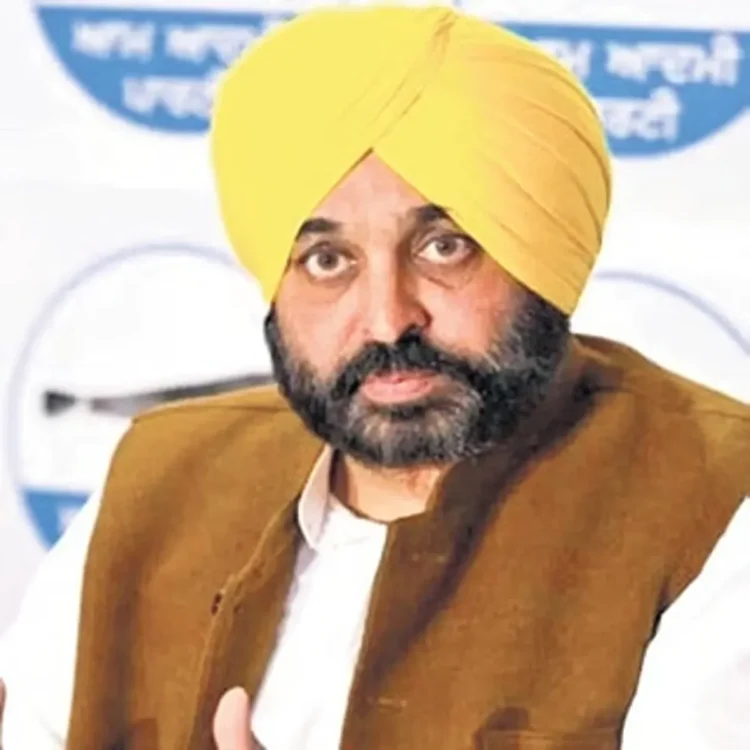
Planned Public Interaction Called Off
Officials in one Punjab district were recently put on alert after receiving a late-night message indicating that Chief Minister Bhagwant Mann was considering an early-morning visit to interact with local residents during their daily walk. Following the communication, district authorities reportedly began preparing before sunrise, activating security arrangements, route coordination, and logistical support.
Administrative teams moved quickly to ensure all necessary measures were in place for the proposed visit. However, the plan was withdrawn almost as quickly as it had emerged. The expected interaction with morning walkers did not take place, leaving officials and residents surprised after hours of preparation.
Student’s Question Leads to Examination Policy Revision
A classroom achievement ceremony turned into an important policy discussion when 17-year-old Gagandeep Kaur from Tahirpura village raised a question before the Chief Minister regarding student rankings.
Gagandeep had secured 98 percent marks in the Punjab School Education Board Class 10 examination. Two other students from her school achieved the same score. Despite having identical marks, rankings were determined using age, a practice that placed students differently even when their academic performance was equal.
Addressing the issue, the student argued that such distinctions appeared unfair. She pointed out that individuals already face various forms of discrimination and questioned why students with the same academic results should be separated based on age.
Her concern prompted an immediate response. The Chief Minister announced that the Punjab School Education Board would discontinue the use of age as a tie-breaking factor when students secure identical scores. The decision was welcomed as a move toward a more equitable evaluation process and highlighted the impact that thoughtful public participation can have on policy decisions.
Enforcement Drive Reaches Influential Vehicle Owners
In Himachal Pradesh, an unusual development unfolded following protests by members of the legal community over restrictions on a sealed road in Shimla. Lawyers had objected to limitations on road access and began checking whether vehicles using the route possessed valid permits.
As part of the protests, vehicles travelling on the road were stopped and their documents examined. When permits were found to be missing or invalid, police personnel were urged to issue penalties.
The enforcement action eventually extended beyond ordinary commuters. Vehicles linked to several prominent individuals, including Public Works Department Minister Vikramaditya Singh and former state Congress president Pratibha Singh, reportedly received challans. Senior officers from the administrative and police services were also among those affected.
Focus on Accountability and Fair Treatment
Although unrelated, the three developments reflect broader themes that frequently shape public debate. The abandoned outreach programme demonstrated how government machinery can mobilise rapidly in anticipation of official visits. The education policy revision showed that citizen feedback, even from a student, can influence decision-making at the highest level. Meanwhile, the Shimla enforcement exercise underscored the principle that regulations should apply equally regardless of a person’s position or status.
Together, these incidents illustrate how governance is often shaped by both administrative action and public engagement. Whether through policy reform, law enforcement, or planned citizen outreach, the events have highlighted ongoing efforts to balance efficiency, fairness, and accountability in public life