
FireSafety – Palam Blaze Raises Questions on Building Safety Measures
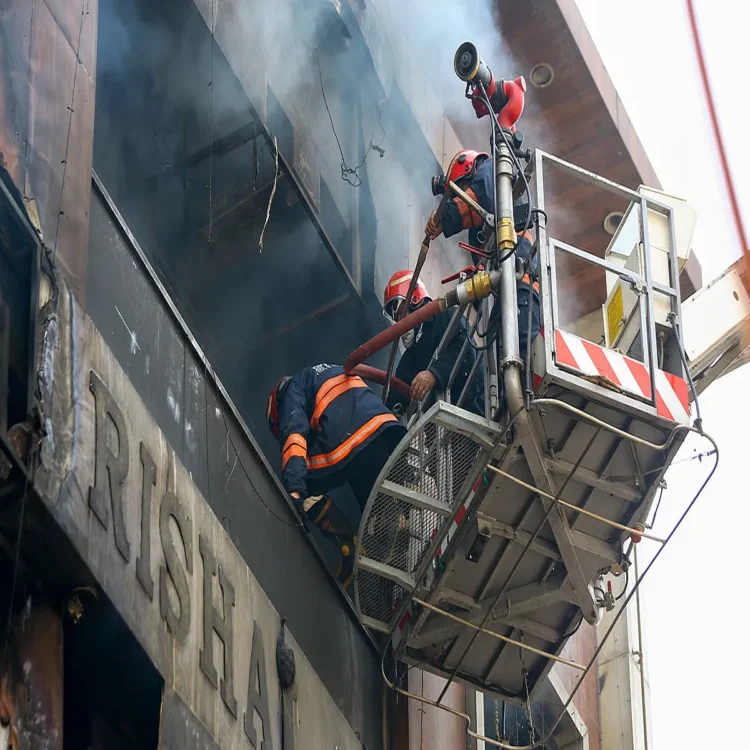
FireSafety – A preliminary assessment by the fire department has revealed serious safety lapses in a building in Palam where a recent fire broke out, prompting sharp political exchanges and renewed concerns over enforcement of safety norms.
Initial Findings Highlight Hazardous Storage
According to the early report, the basement of the affected structure contained a range of highly inflammable items, including garments, cosmetics, thinner, perfumes, and nail polish. Officials noted that the presence of such materials significantly increased the intensity and spread of the fire.
The report also pointed to a critical structural issue: the building had only one staircase connecting the ground floor to the terrace. This staircase was not accessible from outside, potentially hindering evacuation and rescue operations during the emergency.
Government Response and Relief Measures
Addressing the issue, Delhi Home Minister Ashish Sood stated that the administration responded swiftly after the incident. He said a magisterial inquiry was ordered within hours, and financial assistance was announced for the affected family.
He emphasized that the government chose not to engage in political blame following the tragedy and instead focused on immediate relief and accountability.
Political Tensions Surface Over Accountability
Despite the official response, the incident has triggered a political confrontation. Sood accused the opposition of indulging in blame-shifting rather than participating in constructive discussions. He also criticized their absence during a key assembly session addressing the issue, calling it reflective of their approach toward governance matters.
Past Incidents Resurface in Debate
During the discussion, the minister referred to several previous fire tragedies in the capital to highlight what he described as a pattern of inadequate response by earlier administrations.
He cited the 2018 Bawana industrial fire, which claimed 17 lives, where authorities had attributed the cause to licensing failures. Similarly, in the 2019 Karol Bagh hotel fire that resulted in 17 deaths, allegations of irregularities in safety clearances emerged.
Another major incident in Anaj Mandi in 2019 led to 43 fatalities, with officials at the time pointing to delays in urban redevelopment planning. A 2022 fire in Mundka, which killed 27 people, also became a subject of political contention, with responsibility being disputed.
Concerns Over Delayed Modernisation
Sood further argued that recommendations made in 2019 to upgrade fire services infrastructure were not implemented for several years. According to him, this delay affected preparedness and response capabilities.
He noted that significant steps are now being planned to strengthen the system. These include upgrading communication networks, deploying 50 quick response vehicles, and establishing a centralized command and control centre to improve coordination during emergencies.
Focus Shifts to Safety Compliance
The Palam incident has once again brought attention to the importance of strict adherence to fire safety norms, especially in densely populated urban areas. Experts have long stressed the need for regular inspections, proper storage regulations, and accessible evacuation routes in buildings.
As investigations continue, authorities are expected to examine whether existing safety regulations were violated and what corrective measures are needed to prevent similar incidents in the future.