
Fertilizer Crisis – India Explores Alternatives to Urea Amid Global Supply Disruptions
Fertilizer Crisis – India is evaluating alternative fertilizer options for paddy cultivation after global supply disruptions linked to the Iran conflict affected fertilizer availability and prices across several regions.
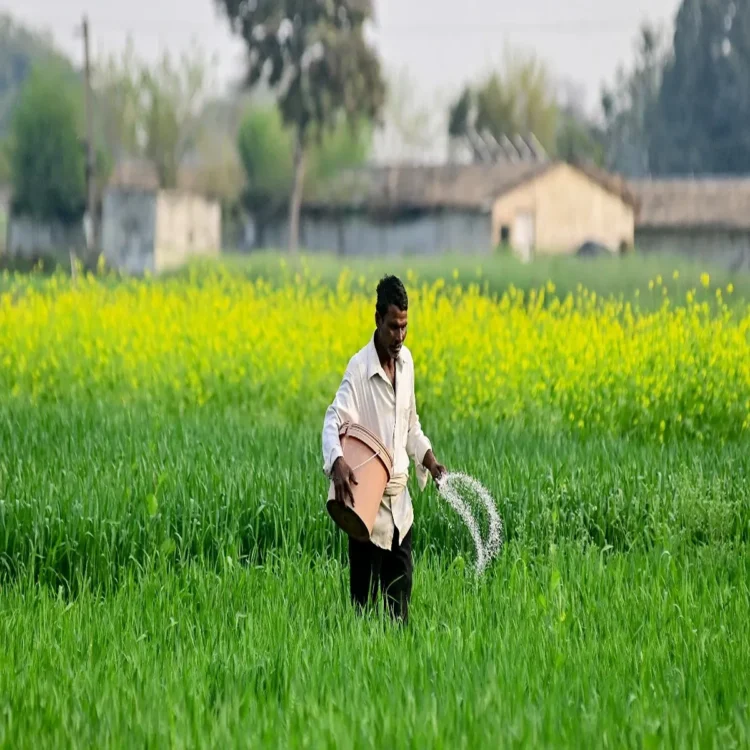
The Union government has advised state administrations to explore the use of ammonium sulphate as a substitute for urea in rice farming due to growing concerns over fertilizer shortages and rising import costs. The recommendation was shared through a recent communication issued by the Indian Council for Agricultural Research (ICAR), which operates under the Ministry of Agriculture.
Officials said the move is aimed at ensuring farmers continue to receive essential nutrients for crops despite uncertainty in international fertilizer markets. Urea remains one of the most widely used fertilizers in Indian agriculture, particularly for paddy cultivation, making any disruption in supply a major concern for both farmers and policymakers.
Supply Chain Disruptions Raise Concerns
The ongoing conflict involving Iran has reportedly impacted fertilizer trade routes and supplies from several countries in West Asia. India has traditionally depended on imports from nations such as Saudi Arabia, the United Arab Emirates, Qatar, Oman, and Israel for a substantial portion of its fertilizer needs. With geopolitical tensions affecting shipments and market stability, prices of key agricultural inputs have risen sharply in recent weeks.
Agriculture experts within the government believe ammonium sulphate could temporarily reduce pressure on urea demand. Unlike some other fertilizers, ammonium sulphate can also be produced domestically in India, which may help improve availability during periods of import uncertainty.
In addition to local manufacturing, authorities are considering sourcing ammonium sulphate from alternative international suppliers, including South Korea, Japan, Belgium, China, and Russia. Officials see diversification of import sources as an important step toward maintaining uninterrupted fertilizer supplies during the current global situation.
India’s Fertilizer Dependency Under Focus
India produces several major fertilizers domestically, including urea, di-ammonium phosphate (DAP), and complex fertilizers containing nitrogen, phosphorus, and potassium nutrients. However, domestic output often falls short of rising agricultural demand, making imports necessary to bridge the gap.
Muriate of potash (MOP), another key fertilizer used by farmers, remains entirely dependent on imports. Experts say fluctuations in global markets can therefore significantly affect India’s agricultural sector, especially during the sowing season when fertilizer demand peaks.
The government’s latest advisory reflects broader efforts to manage supply risks while ensuring farmers do not face severe shortages during crop cultivation. Officials are also monitoring price movements and stock positions across states to avoid disruptions in distribution.
Scientists Warn Against Excessive Usage
While ammonium sulphate is being considered as an alternative, some agricultural scientists have expressed caution over its large-scale promotion in paddy fields. Researchers point out that the fertilizer contains sulphur, which may not be suitable in excessive quantities for certain soil conditions.
Dr. Virender Singh Lather, a former principal scientist associated with ICAR, warned that high sulphur concentrations could potentially harm crops grown in waterlogged and heavy soils, conditions commonly associated with rice cultivation. According to experts, improper application may affect crop health if farmers use the substitute without proper guidance.
Agricultural specialists have stressed the importance of balanced nutrient management and region-specific recommendations before adopting alternative fertilizers on a wider scale. They say scientific monitoring and farmer awareness will be essential to prevent unintended impacts on crop productivity.
Government Balancing Supply and Farm Needs
Officials maintain that the recommendation is intended as a temporary and practical measure to support farmers during an uncertain period in global fertilizer trade. State governments are expected to evaluate local soil conditions and farming patterns before implementing any large-scale changes.
The development highlights the growing influence of global geopolitical events on agricultural supply chains and food production systems. As India prepares for upcoming cultivation cycles, maintaining stable fertilizer availability remains a key priority for both policymakers and the farming community.