
WaterGovernance – Centre Pushes New Reforms for Brahmaputra Basin Management
WaterGovernance – The Union Ministry of Jal Shakti has initiated a fresh round of water governance reforms and river basin planning measures aimed at improving flood management, infrastructure coordination, and sustainable use of water resources across the country.
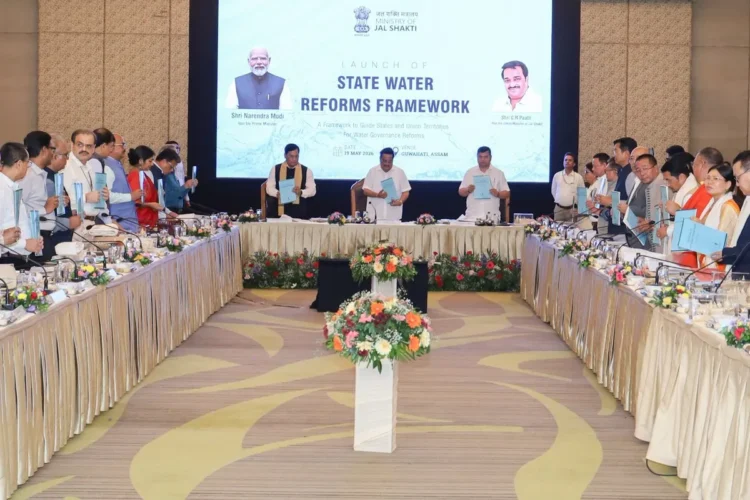
Union Minister for Jal Shakti, R.C. Patil, on Wednesday chaired the 14th meeting of the High-Powered Review Board in coordination with the Brahmaputra Board and representatives from multiple stakeholder groups. The meeting focused on long-term planning and management strategies for river systems in the Northeast region, particularly the Brahmaputra and Barak basins.
Masterplans Prepared for River Basins
During the discussions, officials identified 76 river basins and sub-basins where new masterplans will be developed or existing plans will be updated. The initiative is expected to strengthen flood control measures, riverbank protection projects, and scientific water resource management in the region.
Authorities also reviewed the use of modern technologies in river basin studies. Advanced tools such as GIS mapping, remote sensing, LiDAR surveys, and hydrological modelling are expected to play a major role in preparing detailed plans for future projects and risk assessment.
The review meeting also examined ongoing work linked to drainage systems, erosion control, springshed restoration, flood mitigation projects, and water conservation programmes in several northeastern states.
New Framework Introduced for Water Governance
Alongside the review meeting, the Jal Shakti Ministry launched the State Water Reforms Framework, a nationwide initiative intended to encourage reforms in water governance among states and union territories.
The framework has been structured around 75 performance indicators grouped into five major areas, including policy and regulation, infrastructure development, project monitoring, digital transformation and research, as well as public participation.
Officials said the framework has been designed to help states compare their progress, identify shortcomings in policy implementation, and adopt successful governance practices from other regions.
State governments have been given seven months to complete reform measures and submit responses against the prescribed indicators by January 31, 2027.
Focus on Sustainable and Accountable Systems
According to ministry officials, the reform framework encourages measurable action in several key sectors related to water security. These include groundwater regulation, wastewater recycling, river basin planning, dam safety standards, floodplain zoning, irrigation management, and institutional strengthening.
The initiative also aims to improve coordination between agencies by promoting integrated data systems and evidence-based planning. Officials believe the reforms will support the creation of more resilient and accountable governance structures aligned with the broader national development vision.
Speaking during the meeting, Minister Patil said that sustainable water management requires more than construction projects alone. He stressed the importance of strong institutions, effective policies, technological innovation, and active public participation in ensuring long-term water security.
Progress of Brahmaputra Board Reviewed
The High-Powered Review Board also assessed the functioning of the Brahmaputra Board in several operational areas. Discussions covered river management strategies, institutional reforms, digital transformation initiatives, capacity-building programmes, and the preparation of updated river basin masterplans.
Officials additionally reviewed proposed and ongoing projects connected to anti-erosion work, flood management infrastructure, drainage development, and springshed management in the Northeast.
Separately, the Union Minister chaired the sixth meeting of the Governing Body of the North Eastern Regional Institute of Water and Land Management under the Department of Water Resources, River Development and Ganga Rejuvenation. The institute works on research, training, and policy support related to water and land management in the northeastern region.