
Elections – Mamata Banerjee Alleges Voter Targeting Amid Manifesto Push
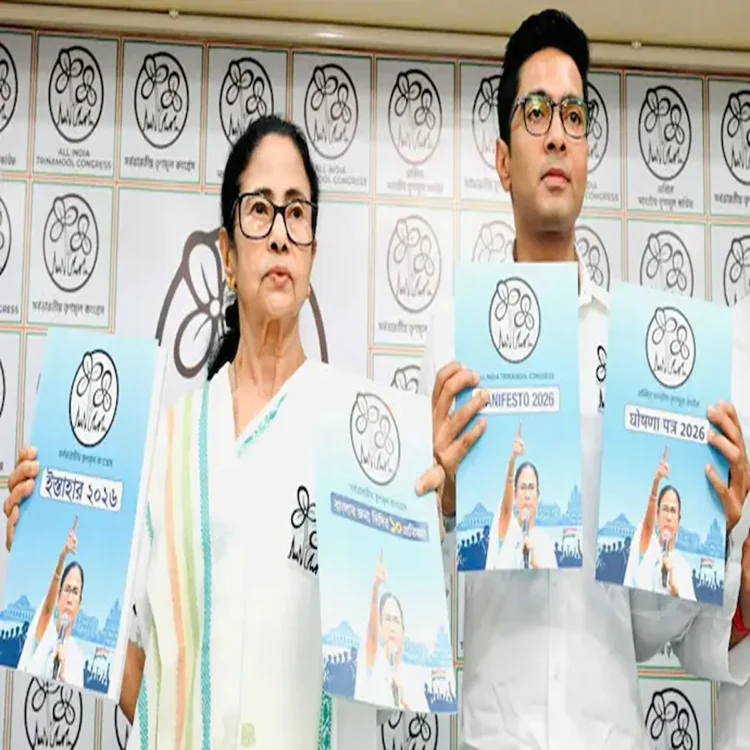
Elections – West Bengal Chief Minister Mamata Banerjee on Friday intensified her criticism of the Bharatiya Janata Party (BJP) and the Election Commission of India (ECI), raising concerns over the ongoing Special Intensive Revision (SIR) of electoral rolls. She alleged that the process has disproportionately affected certain communities while also presenting her party’s election roadmap focused on welfare and economic growth.
Concerns Over Voter List Revisions
Speaking alongside party leader Abhishek Banerjee, the Trinamool Congress (TMC) chief claimed that a significant number of voters have been excluded during the revision process. According to her, out of approximately 60 lakh cases reviewed, around 22 lakh have been processed so far, with nearly 10 lakh applications reportedly rejected.
She pointed out that many of the affected voters are from districts such as Malda, Murshidabad, and North Dinajpur. These areas, known for their substantial minority populations, are considered politically significant for the ruling party. Banerjee suggested that the deletions were not random but targeted in nature, though she also acknowledged that some Hindu and Matua community voters had been impacted.
Allegations Against BJP and Election Authorities
Banerjee accused the BJP of attempting to influence the electoral process, claiming that large-scale voter removals were part of a broader political strategy. She questioned whether the remaining cases could realistically be resolved within the limited time before the upcoming Assembly elections.
She further alleged that pressure tactics were being used, including phone calls and the deployment of election observers from outside the state. Raising logistical concerns, Banerjee also questioned how the state would manage the reported deployment of a large number of security personnel during elections, including accommodation, food, and other arrangements.
Debate Over Role of External Officials
The chief minister also expressed reservations about the appointment of officials from outside West Bengal to oversee election procedures. She argued that such officials may lack familiarity with the state’s local dynamics, administrative divisions, and cultural diversity.
According to Banerjee, effective election management requires a deep understanding of the region, including its language, traditions, and social fabric. She warned that any administrative lapses or disruptions during the election process would raise serious accountability questions.
Welfare-Focused Election Manifesto
Alongside her criticism, Banerjee unveiled key promises as part of the TMC’s election manifesto, aiming for a fourth consecutive term in office. The manifesto emphasizes expanding welfare initiatives and strengthening economic infrastructure across the state.
One of the major announcements includes an increase in monthly financial assistance for women, raising it to between Rs 1,500 and Rs 1,700. The party also pledged continued support for unemployed youth through targeted schemes.
Plans for Development and Public Services
The manifesto outlines a comprehensive development agenda, including a proposed agricultural budget of Rs 30,000 crore. It also promises universal access to permanent housing and piped drinking water for residents across the state.
In the healthcare sector, Banerjee announced the launch of “Duare Chikitsa” camps, which would bring medical services directly to local communities. Education infrastructure is also set to receive attention, with plans to modernize schools and introduce digital learning tools.
Additionally, the government aims to enhance trade and logistics by positioning West Bengal as a key economic gateway for eastern India. This includes the development of advanced infrastructure, ports, and a global trade centre to boost investment and commerce.
Administrative Expansion and Governance Plans
The manifesto also proposes the creation of seven new districts to improve administrative efficiency and governance. Banerjee stated that these measures are intended to bring government services closer to people while supporting long-term development goals.
As the state prepares for elections, the political atmosphere remains charged, with sharp exchanges between the ruling party and its opponents. The outcome will likely depend on how effectively these concerns and promises resonate with voters in the coming weeks.