
Diplomacy – Congress Criticises Government Over Pakistan’s Role in Talks
Diplomacy – The Congress party on Monday strongly criticised the central government, alleging that Pakistan’s reported involvement in facilitating talks between the United States and Iran reflects a serious diplomatic setback for India.
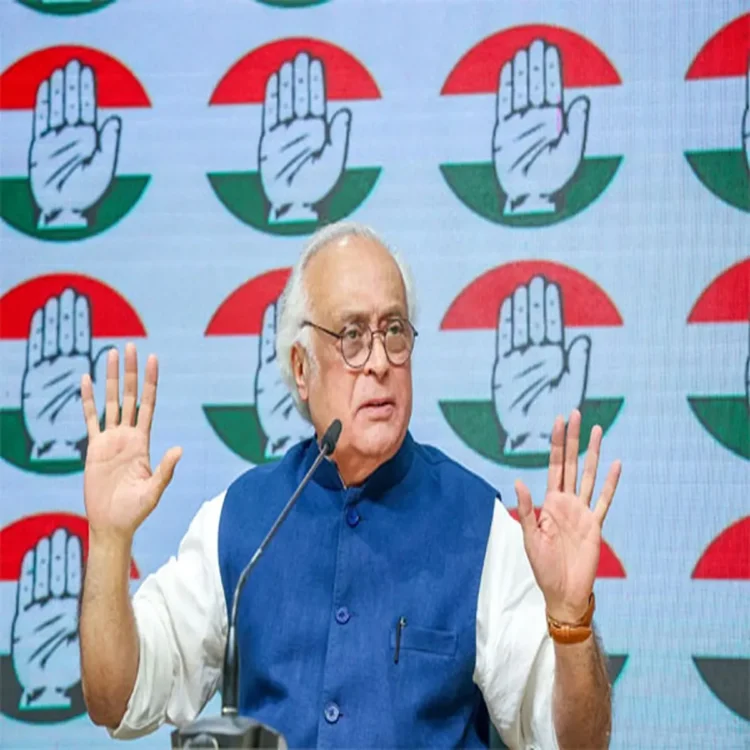
The remarks came as reports suggested that Islamabad is hosting another round of discussions between Washington and Tehran, raising concerns within opposition ranks about India’s global positioning.
Congress Questions Pakistan’s Emerging Diplomatic Role
Congress general secretary Jairam Ramesh took to social media to express concern over Pakistan’s role in the ongoing diplomatic efforts. He pointed out that the same country once criticised harshly by Indian leadership is now being seen as a host for sensitive international negotiations.
Ramesh also highlighted Pakistan’s fragile economic condition, noting that the country had recently relied on significant financial assistance from nations such as Saudi Arabia and Qatar to manage its debt obligations. Despite these challenges, he said, Pakistan appears to be gaining visibility in international diplomacy.
Concerns Over India’s Global Strategy
The Congress leader argued that India’s foreign policy approach in recent years has not succeeded in isolating Pakistan on the global stage. According to him, this marks a departure from earlier diplomatic efforts, particularly those undertaken after the 2008 Mumbai terror attacks, when India had managed to build broader international pressure against Pakistan.
He suggested that both the tone and execution of India’s current foreign engagements have not yielded the intended outcomes. In his view, Pakistan’s renewed diplomatic relevance indicates gaps in India’s strategy.
Reference to Security and Regional Issues
Ramesh also referred to past incidents involving Pakistan, including allegations related to terrorism and regional instability. He stated that despite such concerns, Islamabad is currently being engaged in high-level discussions, which he described as a worrying development.
Additionally, he mentioned last year’s Pahalgam terror attack, linking it to broader security concerns and arguing that such incidents should have led to greater international scrutiny of Pakistan rather than increased diplomatic engagement.
Remarks on US-Pakistan Relations
Another point raised by the Congress leader was the perceived closeness between Pakistan’s military leadership and former US President Donald Trump. He described this as a setback for India, suggesting that Pakistan has been more effective in building connections within influential political circles in the United States.
Ramesh claimed that Pakistan’s leadership has managed to navigate diplomatic channels more successfully in recent times, strengthening its ties with key global players while India has not matched that level of engagement.
Call for Policy Reassessment
In light of these developments, the Congress party has called for a comprehensive review of India’s foreign policy framework. Ramesh emphasised the need for a fresh approach to diplomatic strategy, including changes in both planning and execution.
He argued that evolving geopolitical dynamics require more adaptable and effective engagement, and expressed doubt about the current leadership’s ability to deliver such changes.
Background of US-Iran Talks
The criticism comes amid reports that the United States and Iran held rare direct discussions in Islamabad earlier this month. The initial round of talks reportedly concluded without a breakthrough, but another round is expected soon.
While the United States has indicated that its representatives will participate in the upcoming discussions, there has been no official confirmation from Iran regarding its involvement. The situation continues to develop, with observers closely monitoring any progress in negotiations.
The evolving scenario has added a new dimension to regional diplomacy, prompting debate within India about its own strategic positioning and long-term foreign policy priorities.