
Court – Supreme Court Raises Questions on Religious Exclusion and Equality Rights
Court – The Supreme Court on Tuesday raised a significant constitutional question while hearing matters related to religious practices and equality. The court asked whether a devotee who is prevented from touching a deity due to birth or social status can seek protection under constitutional provisions that guarantee equality and freedom.
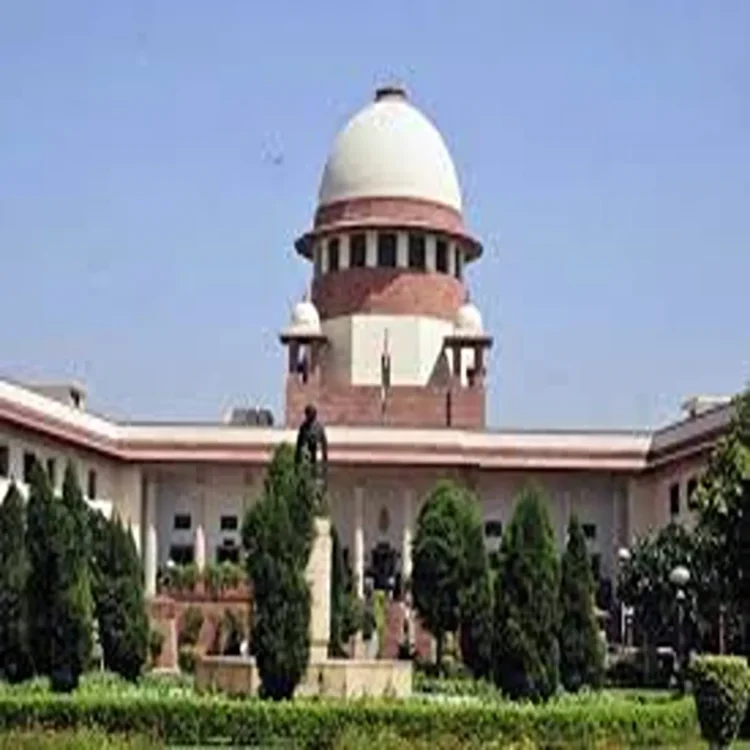
Bench Examines Scope of Religious Practices
The observation came during proceedings before a nine-judge Constitution bench that is reviewing broader issues of religious freedom and discrimination. The case is not limited to a single temple practice but looks at how far customary religious traditions can be protected when they appear to conflict with fundamental rights.
The bench is exploring whether long-standing rituals and customs can be considered essential to religion, and if so, whether they can still be challenged when they result in exclusion or unequal treatment among devotees.
Argument on Rituals and Religious Identity
During the hearing, counsel representing the chief priest of the Sabarimala Ayyappa Temple argued that rituals are deeply tied to the identity of a deity and the nature of worship. According to the submission, these practices are not arbitrary but stem from the intrinsic character of the deity, which devotees accept as part of their faith.
It was emphasized that religious followers voluntarily adhere to such traditions, and that altering them could interfere with the core of religious expression. The argument suggested that rituals must be preserved in their original form to maintain the sanctity and continuity of the belief system.
Court Questions Constitutional Limits
The bench, however, raised concerns about whether such practices can override the guarantees provided by the Constitution. Judges pointed out that denying a deeply devoted follower the ability to physically access or interact with a deity could raise serious questions about equality and dignity.
The court specifically questioned whether exclusion based on inherent factors such as birth or status could be justified under the framework of fundamental rights. It indicated that constitutional protections cannot be easily set aside in the name of tradition if they result in discrimination.
Debate on Essential Practices and Reform
In response, the counsel maintained that restrictions connected to essential religious practices may be permissible. However, it was acknowledged that complete exclusion from certain roles, such as priesthood, based solely on birth could potentially be addressed through legislative or state action.
The discussion also touched upon the balance between judicial review and religious autonomy. While courts have historically shown restraint in interfering with matters of faith, the bench indicated that practices leading to exclusion might still require scrutiny.
Context of Sabarimala Traditions
The case also revisits long-standing customs at the Sabarimala temple, where the deity is worshipped as a “Naishtika Brahmachari,” or eternal celibate. It was argued that several temple practices are structured around this belief and are therefore integral to the religious tradition.
Supporters of the existing customs contend that these practices are not discriminatory but are rooted in specific theological principles. However, the court’s line of questioning suggests a closer examination of whether such traditions can coexist with modern constitutional values.
Broader Implications of the Hearing
The outcome of this case could have far-reaching implications for how religious practices are interpreted under Indian law. It may help define the boundaries between faith-based customs and individual rights, particularly in cases where the two appear to be in conflict.
The bench’s observations indicate an effort to strike a careful balance—respecting religious freedom while ensuring that constitutional guarantees remain meaningful for all citizens.